
How to Choose a Build-to-Print Manufacturing Partner for Custom Parts
Direct answer: Choose a build-to-print manufacturing partner based on five criteria: quality system certifications, evidence of inspection capability with CMM and spectrometer, equipment list with Star Swiss turning machines and stamping presses, tooling investment and ownership terms, and supply chain depth with geographic risk diversification. VOLCRIX has operated as a build-to-print manufacturing partner since 1991 serving 500+ customers with full IATF 16949 quality system.
Ready to Start Your Build-to-Print Manufacturing Project?
Free DFM review · Quote within 24 hours · Prototype in 7–15 days
Common Applications
- OEM aerospace precision components — for build-to-print production of aircraft instrumentation parts, sensor housing fittings, and structural components per customer drawings
- Automotive Tier 1 supplier components — for build-to-print production of precision turned and stamped parts supplied per customer drawings with PPAP submission and full traceability
- Medical device OEM parts — for build-to-print production of surgical instruments, diagnostic equipment parts, and implant components per customer drawings with ISO 13485 compliance
- Industrial equipment OEM parts — for build-to-print production of precision components for industrial machinery, instrumentation, and automation equipment per customer specifications
Manufacturing Support from VOLCRIX
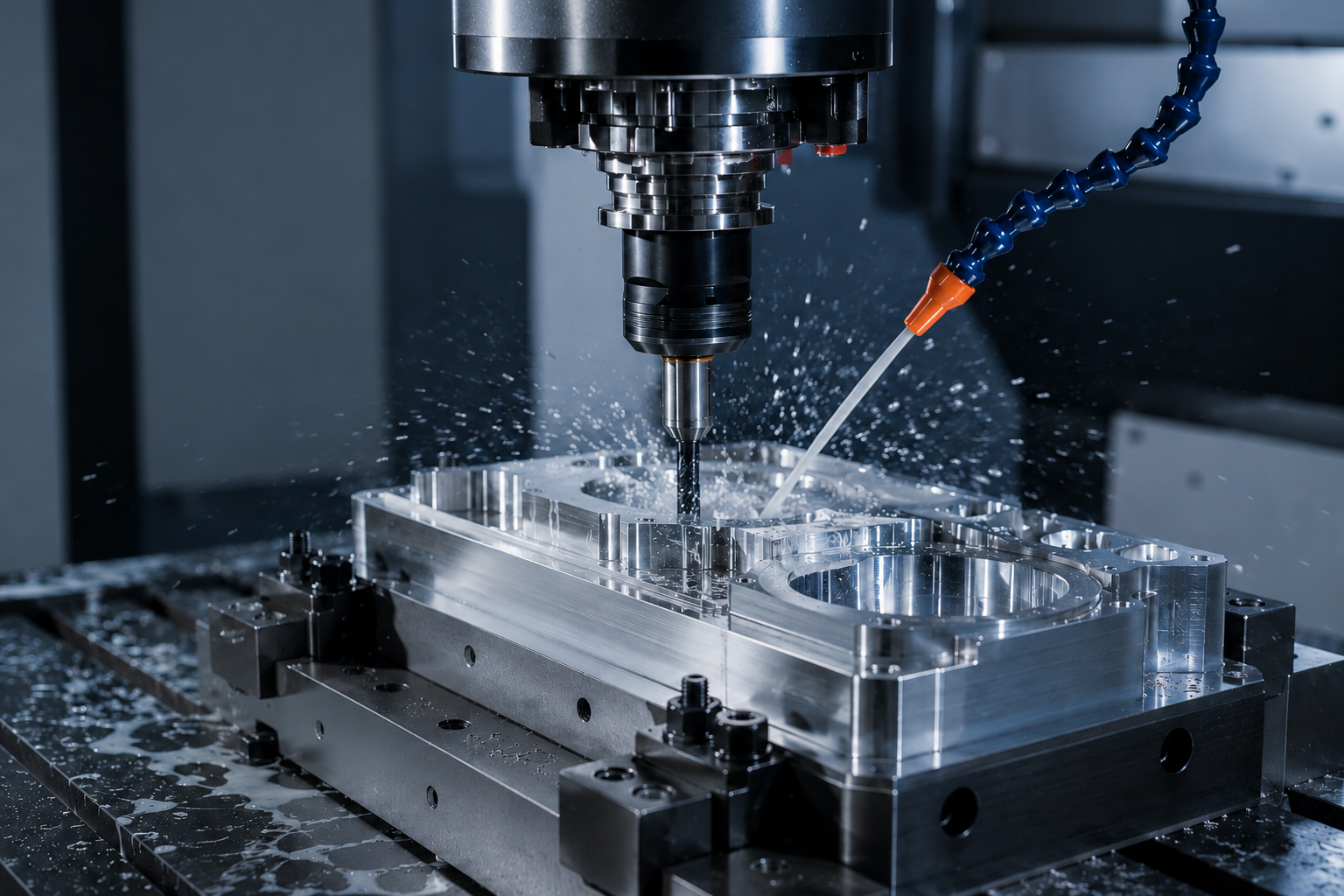
- 60+ Japanese Star Swiss turning machines — with material-specific tooling and cutting parameters optimized per customer drawings and material specifications
- In-house stamping and stamping tooling — — 40 stamping presses from 5 tons to 200 tons capacity with progressive die and transfer die capability
- Comprehensive inspection capability — — Zeiss CMM, optical comparators, surface roughness testers, plating thickness gauges, hardness testers, spectrometer
- PPAP submission for automotive — — full AIAG PPAP level 3 documentation including FAI report, material certificates, control plan, PFMEA, MSA studies, and Cpk capability studies
Buyer Checklist
- Verify quality system certifications are current and cover your product category through certification body databases
- Request equipment list and factory tour — current equipment with model years, in-house inspection tools, and tooling maintenance procedures
- Ask for sample FAI report for similar parts to your project — verifies inspection capability and documentation standards
- Define tooling ownership and transfer terms upfront — who owns the tooling, storage location, transfer conditions, replacement responsibility
Related Custom Manufacturing Services
- Custom Precision Pins — build-to-print connector pins
- How to Source CNC Turned Parts — CNC turning sourcing
- Stainless Steel Turned Parts Guide — stainless steel precision machining
- Custom Brass Turned Parts — brass precision machining
FAQ
What is build-to-print manufacturing?
Build-to-print manufacturing is a production model where the OEM or customer provides complete design drawings and specifications, and the manufacturer produces the parts exactly per those drawings. The customer owns the design, the manufacturer owns the production process. Build-to-print differs from build-to-spec where the manufacturer provides design assistance and the customer provides specifications only, and from design-and-build where the manufacturer designs and produces per customer requirements. Build-to-print is common for mature parts with established designs, aerospace and defense parts with strict customer IP control, and high-volume automotive programs.
What is the difference between build-to-print and build-to-spec?
Build-to-print: customer provides complete 2D drawings with all dimensions, tolerances, materials, and finishes specified. Manufacturer produces per drawings without design input. Build-to-spec: customer provides performance specifications and functional requirements. Manufacturer designs the part to meet specifications and produces per their own design. Most OEM-custom manufacturer relationships use build-to-print for production parts and build-to-spec for prototype or new product development.
How do you evaluate a build-to-print manufacturing partner?
Evaluate on five criteria: Quality system certifications ISO 9001 minimum, IATF 16949 for automotive, AS9100 for aerospace, ISO 13485 for medical. Inspection capability — CMM, spectrometer, optical comparators, calibrated gauges, FAI documentation. Equipment list — current model year CNC, Star Swiss turning machines, stamping presses, surface finishing capability. Tooling capability — in-house tooling design and build, progressive die stamping, CNC setup, fixture design. Supply chain depth — raw material sourcing, secondary operations, assembly, packaging, shipping.
What is the typical pricing structure for build-to-print manufacturing?
Build-to-print pricing structure: unit price based on material cost plus machining cost plus overhead and margin. Material cost: raw material cost per kg plus material yield and waste factor typically 5-10 percent. Machining cost: cycle time multiplied by machine hourly rate, typically 30-80 USD per hour for CNC, 50-150 USD per hour for Star Swiss turning. Overhead: factory overhead allocation typically 20-40 percent of machining cost. Margin: 15-30 percent for Tier 2 suppliers, 8-20 percent for Tier 1 suppliers. Annual price-down 3-5 percent common.
Ready to Start Your Build-to-Print Manufacturing Project?
Free DFM review · Quote within 24 hours · Prototype in 7–15 days
Certifications, Standards & Compliance
VOLCRIX products are built to international standards and customer specifications:
- ISO 9001:2015 — Quality management system
- IATF 16949 — Automotive quality management
- ISO 13485 — Medical device quality management
- AS9100D — Aerospace quality management
- AIAG PPAP — Production Part Approval Process
- AIAG APQP — Advanced Product Quality Planning
- VDA 6.3 — German automotive process audit
- RoHS 3 (EU 2015/863) — Restriction of Hazardous Substances
For specific compliance questions contact our sales team.