
Stainless Steel Turned Parts: Grades, Tolerances, and Precision Machining
Direct answer: Stainless steel turned parts are machined from grade 303, 304, 316, 17-4PH, and other variants depending on application requirements. Grade 303 free-machining stainless is preferred for high-volume CNC turning. Grade 316 is used for marine and medical applications requiring corrosion resistance. Grade 17-4PH is used for high-strength parts requiring heat treatment. VOLCRIX has machined stainless steel turned parts since 1991 on 60+ Japanese Star Swiss turning machines with plus or minus 0.01 mm tolerances.
Ready to Start Your Stainless Steel Turned Parts Project?
Free DFM review · Quote within 24 hours · Prototype in 7–15 days
Common Applications
- Marine and offshore equipment components — for valve bodies, pump shafts, sensor housing fittings, and fasteners in salt-water environments requiring grade 316
- Medical and surgical instruments — for surgical tool bodies, dental implant components, diagnostic equipment parts, and optical instrument housings
- Food and beverage processing equipment — for valve stems, fittings, pump components, and processing machinery parts requiring 304 or 316 stainless
- Aerospace structural components — for aircraft instrumentation, sensor housing fittings, fastener bodies, and avionics enclosures requiring 17-4PH
Manufacturing Support from VOLCRIX
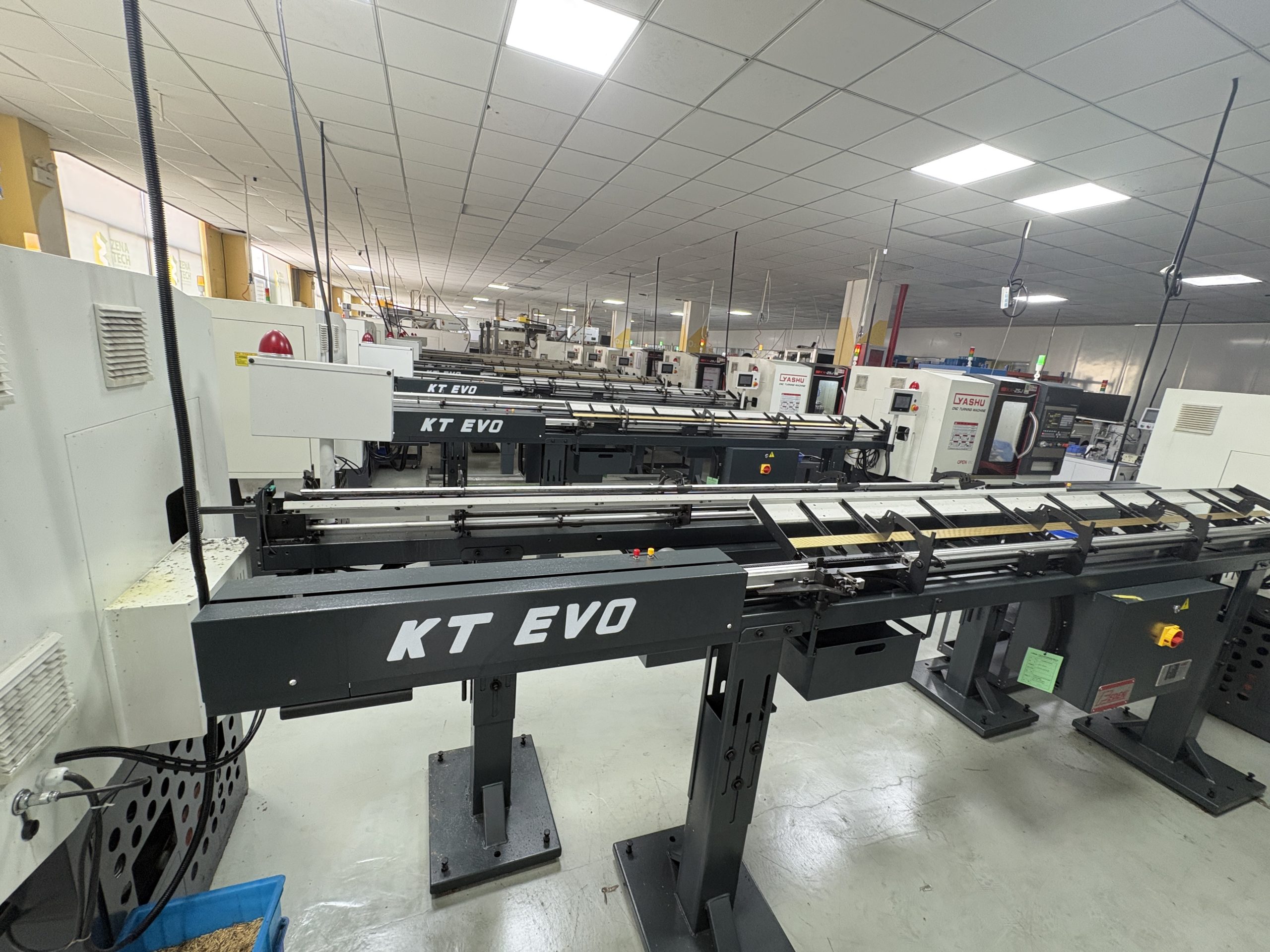
- 60+ Japanese Star Swiss turning machines — for stainless steel precision turned parts from 0.5 mm to 25 mm diameter range, with material-specific tooling
- Spectrometer material verification — for incoming raw material inspection per ASTM A484 for stainless steel wire and rod, with chemical composition traceable to mill certificates
- Heat treatment coordination — for precipitation hardening of 17-4PH stainless to H900, H1025, or H1150 condition per ASTM A564
- Passivation and surface finishing — for chemical passivation per ASTM A967 for enhanced corrosion resistance, plus electropolishing for sanitary applications
Buyer Checklist
- Specify stainless steel grade using UNS designation — e.g. UNS S30300 for grade 303, UNS S30400 for grade 304, UNS S31600 for grade 316, UNS S17400 for 17-4PH
- Define mechanical property requirements — tensile strength, yield strength, elongation, hardness, and condition per ASTM standards
- Indicate corrosion resistance requirements — for marine/medical applications specify 316 over 304, with ASTM A967 passivation and ASTM B117 salt spray testing
- Specify inspection requirements — dimensional inspection scope, material certification per heat lot, surface roughness on sealing surfaces, and IATF 16949 PPAP if automotive
Related Custom Manufacturing Services
- Custom Precision Pins — stainless steel connector pins
- How to Source CNC Turned Parts — CNC turning sourcing
- Custom Brass Turned Parts — brass precision machining
- Custom Precision Shafts — Swiss turned shafts
FAQ
What is the difference between 303 and 304 stainless steel?
303 stainless steel contains added sulfur or selenium 0.15 percent minimum for improved machinability, achieving 100 percent machinability rating versus 25 percent for 304. 303 is preferred for high-volume CNC Swiss turning of precision components where machining speed is critical. 304 stainless steel is the most common general-purpose austenitic stainless with 18 percent chromium and 8 percent nickel, providing good corrosion resistance and weldability. 303 has slightly lower corrosion resistance than 304 due to the sulfur additions, so 303 is preferred for indoor or controlled environments while 304 is preferred for general outdoor applications.
When should I use 316 stainless steel?
Use 316 stainless steel for marine applications (salt water exposure), medical applications (biocompatibility), chemical processing (acid/alkali exposure), food and beverage processing (sanitary), and pharmaceutical equipment. 316 contains 2-3 percent molybdenum for superior corrosion resistance compared to 304, especially against chlorides. 316L is the low-carbon version preferred for welded assemblies to avoid sensitization and intergranular corrosion. Cost premium: 316 typically costs 20-40 percent more than 304.
What is 17-4PH stainless steel and when to use it?
17-4PH precipitation hardening stainless steel contains 17 percent chromium, 4 percent copper, and small additions of niobium for precipitation hardening. It combines high strength up to 1,310 MPa tensile in H900 condition with corrosion resistance similar to 304 stainless. Used for aerospace structural components, high-performance valve stems, pump shafts, fasteners, and nuclear components. Heat treatment conditions: H900, H1025, H1075, H1150, H1150M each providing different strength-toughness balance. Machinability is best in annealed condition before final aging.
What is ASTM A484 and why is it important?
ASTM A484 is the standard specification for general requirements for stainless steel wire and wire rods, including chemical composition, mechanical properties, dimensional tolerances, surface finish, marking, and packaging. ASTM A484 covers grade 302, 304, 305, 316, 321, 347, and other austenitic stainless steels in wire, rod, and bar forms. Compliance with ASTM A484 ensures the raw material meets standard requirements for stainless steel parts manufacturing. ASTM A484 is typically referenced in material certificates for stainless steel CNC turning and stamping applications.
Ready to Start Your Stainless Steel Turned Parts Project?
Free DFM review · Quote within 24 hours · Prototype in 7–15 days
Certifications, Standards & Compliance
VOLCRIX products are built to international standards and customer specifications:
- ISO 9001:2015 — Quality management system
- IATF 16949 — Automotive quality management
- ASTM A484 — Stainless steel general requirements
- ASTM A240 — Stainless steel plate specification
- ASTM A276 — Stainless steel bars and shapes
- ASTM A582 — Free-machining stainless steel bars
- EN 10088 — European stainless steel standard
- DIN 17440 — German stainless steel standard
For specific compliance questions contact our sales team.