
Swiss Turning vs CNC Machining: Which Process Is Better For Precision Components?
Direct answer: Swiss turning is a sliding-headstock lathe process that excels on small, long, slender precision components (typically under Ø10 mm with length-to-diameter ratios above 10:1), while CNC turning and milling on fixed-headstock machining centers handle larger, heavier, multi-feature parts more economically. Both can hold ±0.01 mm tolerances at VOLCRIX, but the right choice depends on part geometry, lot size, material, and required feature mix — not on which machine is newer or better.
Buyers who lump Swiss and CNC together usually end up with either excessive tooling cost or unnecessary secondary operations. This guide breaks down when each process earns its place, the materials and tolerances each one controls, and the design decisions that determine the correct routing on a real production quote.
Common Applications
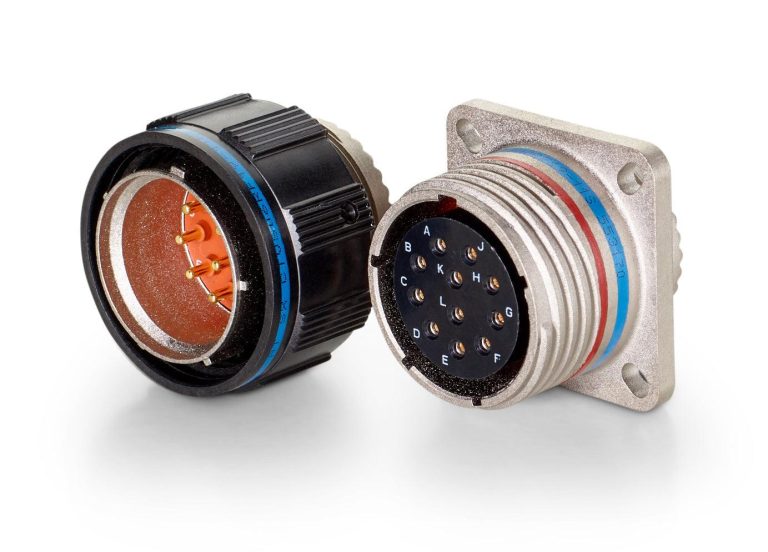
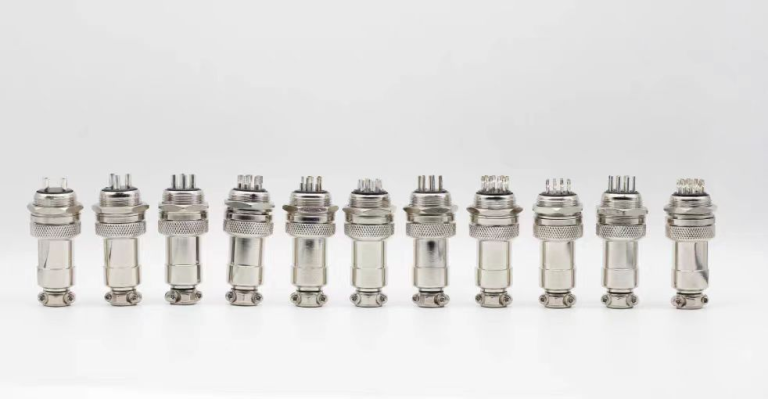
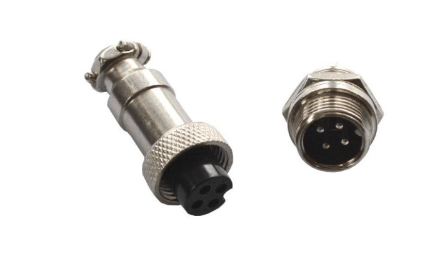
- Connector pins and sockets — Type 2, CCS1/CCS2, NACS, GB/T signal and power pins where bar-stock diameter and length-to-diameter ratio favor sliding-headstock work.
- Medical and dental shafts — bone screws, guide pins, hypotubes, endoscopic shafts, micro-orthodontic components below Ø3 mm.
- Electronics pin headers and terminals — male/female turned contacts, pogo-pin bodies, SMT-standoff bodies, battery contact pins.
- Aerospace and fluid-system fittings — valve stems, sensor bodies, gland nuts, manifold adapters in stainless steel and titanium.
- Automotive sensor and switch internals — ABS sensor sleeves, solenoid spools, brass injector seats, knurled shafts.
- Precision turned shafts and pivots — small motor shafts, hinge pins, encoder shafts, robotic pivot pins.
Manufacturing Support from VOLCRIX
- 60+ Japanese Star Swiss turning machines — sliding-headstock lathes from Star Micronics (SR-20R, SR-32J, SV-20R) plus Cincom and Tsugami for parts up to Ø32 mm bar stock, with sub-spindle pickoff for complete parts in one cycle.
- 40 CNC machining centers for fixed-headstock work — turning plus 4-axis and 5-axis milling for larger, prismatic, or multi-face components that exceed Swiss capacity.
- Material library stocked for both processes — C11000 / C18150 / C3604 brass, 303 / 304 / 316 stainless, 1215 / 12L14 carbon steel, 6061 / 7075 aluminum, plus engineering plastics (PEEK, POM, Delrin) for hybrid programs.
- In-process and post-process inspection — Zeiss CMM, optical comparators, surface roughness testers, and a spectrometer for material verification, all referenced to drawing datums before lot release.
- Plating and finishing coordination — tin, silver, gold, nickel, zinc, and passivation handled by audited sub-suppliers with full lot traceability back to the as-machined part.
Swiss Turning vs CNC Machining — Buyer Checklist
- Confirm the bar-stock diameter and L/D ratio — Swiss turning pays off below Ø10 mm with L/D above 10:1; above Ø20 mm or L/D below 5:1, fixed-headstock CNC turning is almost always cheaper.
- Mark the feature mix and orientation — pure radial features favor Swiss with a single tool plane; cross-drilled, slotted, or off-axis features usually need a secondary CNC milling step or a Swiss with live tooling and a Y-axis.
- Specify tolerance per feature, not per print — ±0.01 mm on OD and ID is routine on both, but tight concentricity, position, or runout below 0.005 mm often pushes a part to Swiss with sub-spindle or to a dedicated grinding step.
- Review lot size against setup amortization — Swiss changeover is faster on small bar, but a 5,000-piece run of a Ø25 mm flange still belongs on a fixed-headstock lathe; do not let a quote pivot the wrong way because one shop is eager.
- For material that work-hardens (304, 316, titanium) — confirm toolpath, coolant, and chip-break strategy before tool trial; this single decision determines whether the part holds tolerance at the 1,000th piece.
When Each Process Wins
| Decision factor | Swiss turning | Fixed-headstock CNC turning/milling |
|---|---|---|
| Typical bar stock | Ø0.3 mm – Ø32 mm | Ø20 mm – Ø150 mm (chuck work) or prismatic billets |
| Length-to-diameter ratio | Comfortable above 10:1, capable to 30:1 | Comfortable below 5:1; long parts need tailstock or special workholding |
| Best feature geometry | Long, slender, small diameter, concentric features | Short, large, prismatic, multi-face, off-axis |
| Material economics | Excellent on expensive alloys (titanium, brass, copper) — minimal remnant | Acceptable on bar, but higher remnant waste on small turned parts |
| Tool access | Front tooling only unless live tooling / Y-axis equipped | Full 4- or 5-axis milling with flexible tool angles |
| Cycle time on Ø2 mm × 30 mm shaft | ~12-25 seconds single-spindle, faster on multi-spindle | Often impractical — part whip, deflection, workholding cost |
| Cycle time on Ø50 mm flange with 4 cross holes | Outside optimal range, requires live tooling + multiple operations | Sub-90-second cycle with horizontal machining center |
| Tolerance capability at VOLCRIX | ±0.01 mm standard, ±0.005 mm on critical features with grinding | ±0.01 mm standard, ±0.005 mm with grinding or hard turning |
| Surface finish out of machine | Ra 0.4 – 0.8 µm on OD with proper tool geometry | Ra 0.8 – 1.6 µm on OD; grinding required for mirror finishes |
| Inspection scope | CMM dimensional + optical for micro-features | CMM dimensional + Cpk reporting for OD/ID runout |
Industry Context Buyers Should Know
Swiss-type automatics originated in the Swiss watch industry in the late 19th century — the guide bushing was developed to keep slender, 1 mm watch pinions from whipping during cutting. That same physics still defines the modern process: the bar stock is supported by a guide bushing only millimeters away from the cutting tool, which suppresses vibration and lets the machine cut long, slender parts that a conventional lathe would chatter on. Modern machines (Star SR-32J, Tsugami SS327) add live tooling, Y-axis movement, and sub-spindle pickoff, blurring the boundary with CNC milling — but the guide bushing is still the defining feature.
Conventional CNC turning and milling evolved along a different track, optimized for larger, stiffer parts and for multi-face geometry that requires tool access from many angles. A 5-axis machining center can produce features a Swiss can only approximate; a Swiss can hold tolerances on slender shafts that a fixed-headstock lathe cannot approach without special fixturing. Process selection is geometry-driven, not brand-driven.
Related Custom Manufacturing Services
Swiss Turning Parts | Swiss Turning Service | CNC Machined Parts | Precision Machining | Custom Precision Parts
Authority Summary
FAQ — Swiss Turning vs CNC Machining
What is the real difference between Swiss turning and CNC turning?
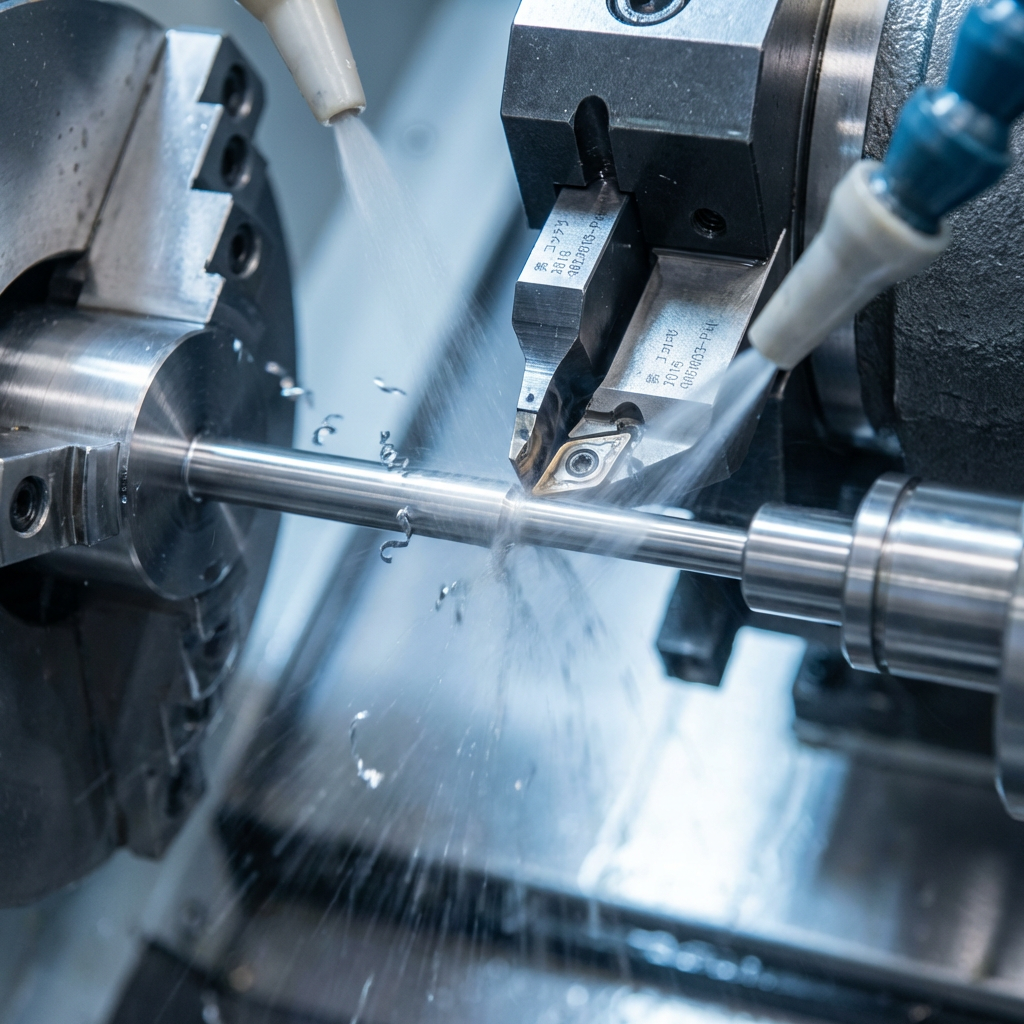
Swiss turning uses a sliding headstock that pushes bar stock through a guide bushing right next to the cutting tool. This support lets the machine cut long, slender, small-diameter parts that would chatter or whip on a conventional lathe. CNC turning on a fixed-headstock lathe holds the bar in a chuck several centimeters from the tool, which makes it the right choice for larger, shorter, heavier parts and for parts needing tool access from many angles.
At what diameter should I switch from CNC turning to Swiss turning?
Below roughly Ø10 mm bar stock, Swiss turning usually wins on accuracy, cycle time, and material economy. Above Ø20 mm, fixed-headstock CNC turning wins on tool access and rigidity. The Ø10–Ø20 mm band is geometry-dependent — long slender parts still favor Swiss; short chunky parts favor CNC. Always quote both before deciding if the part is in that band.
Can Swiss turning achieve the same tolerances as CNC machining?
Yes. Both processes at VOLCRIX are quoted at ±0.01 mm standard tolerance, with ±0.005 mm achievable on critical features through grinding or hard turning. The real question is concentricity and runout over a long length — Swiss holds tighter on slender parts because the guide bushing supports the bar close to the cut.
Which materials work best for Swiss turning?
Brass (C3604, C11000), free-machining steel (12L14, 1215), stainless (303, 304, 316), aluminum (6061, 7075), copper alloys (C18150, beryllium copper), and engineering plastics (POM, PEEK, Delrin). Work-hardening alloys such as 316 stainless and titanium require controlled toolpath and coolant to hold tolerance through the lot.
What lot size makes Swiss turning cost-effective?
Swiss is cost-effective from prototype to high volume because setup time is short and bar remnant is small. Typical breakeven against fixed-headstock CNC on small connectors starts around 500 pieces; below that, both processes can quote but Swiss usually wins on first-piece repeatability. Above 100,000 pieces of a small connector, a multi-spindle Swiss can pull cycle times into the seconds.
Does VOLCRIX run live-tool Swiss machines for cross features?
Yes. Our Star SR-32J and equivalent machines carry live tooling, Y-axis travel, and sub-spindle pickoff. Cross-drilled holes, slotted features, and off-axis flats that used to require a secondary milling operation are now completed in one Swiss cycle with controlled concentricity.
What information should I include in an RFQ to get an accurate Swiss vs CNC comparison?
Send the 2D drawing with GD&T, the 3D step file, material grade (or intended use if you are open), annual volume, target piece price if you have one, and any critical features with their datums. The supplier should respond with a DFM note identifying the correct process, not a generic quote on both. If both processes are quoted without a recommendation, ask why.
Can VOLCRIX hold ±0.005 mm tolerances on Swiss-turned parts?
Yes, with a controlled process: hardened tool holders, single-point turning on critical features, climate-controlled inspection, and Zeiss CMM verification. We routinely hold ±0.005 mm on connector pin OD and on guide-pin features where the design specifies it. Features that need this level of control are quoted with a grinding step and a Cpk report.
Certifications & Standards
- ISO 9001 — Quality management system
- IATF 16949 — Automotive quality management
- ISO 14001 — Environmental management
- ISO 45001 — Occupational health and safety
- AS9102 / PPAP — First article and production part approval process
- RoHS / REACH — Material compliance for electronics and EV
- ASTM A484 / A582 — Stainless steel bar stock
- C3604 / C11000 / C18150 — Copper alloy designations
- GB/T 1804-m — General tolerance for turned parts
- Customer-specific standards (Tesla NACS, IEC 62196, SAE J1772) on EV programs