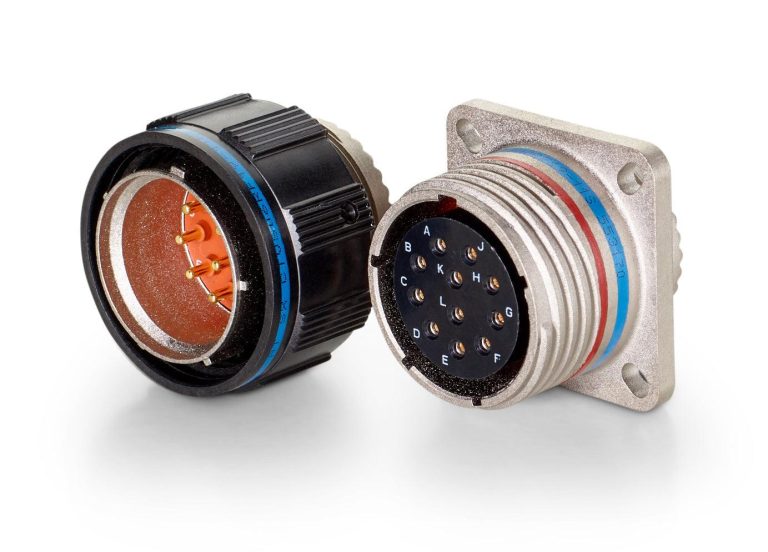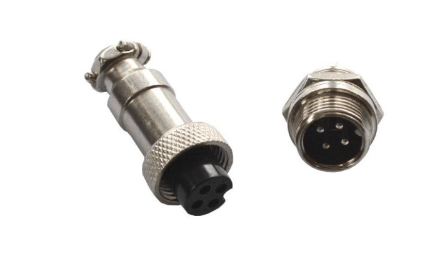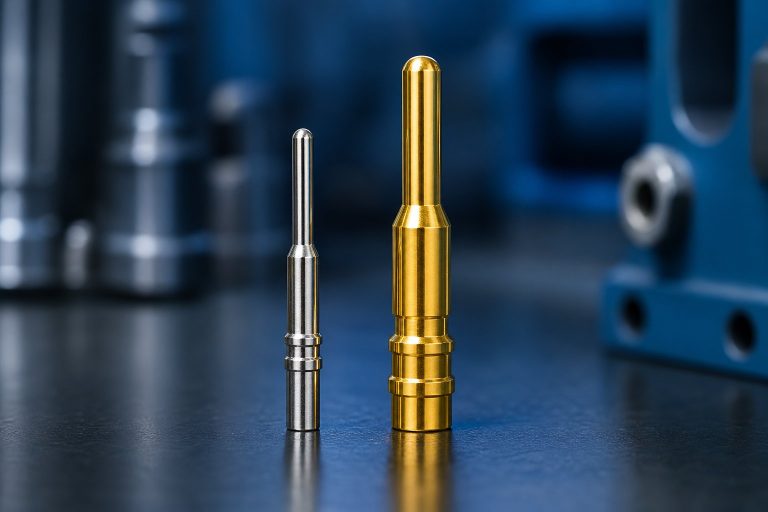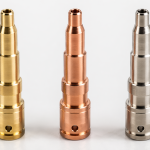
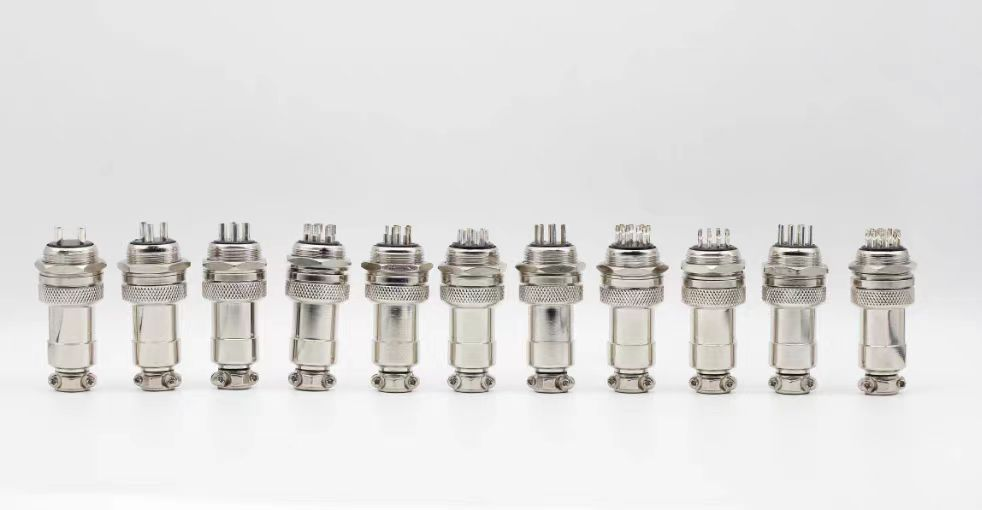

When sourcing connector pins for demanding applications, buyers face a fundamental choice: military-spec MIL-DTL-38999 contacts or industrial GX series (GX12, GX16, GX20) pins. They look similar — small precision-machined metal contacts in circular connectors — but the specifications, materials, qualification requirements, and cost are very different. This guide explains the differences so you can choose the right pin for your project and source it correctly.
MIL-DTL-38999 vs GX Series: Key Differences
| Parameter | MIL-DTL-38999 Contacts | GX Series Pins |
|---|---|---|
| Standard | U.S. military specification (DLA) | Industrial convention (no single spec) |
| Typical market | Defense, aerospace, harsh environment | Industrial, robotics, automation, instrumentation |
| Qualification | QPL-listed suppliers, formal qualification | No formal qualification required |
| Materials | Copper alloy, stainless, specified per MIL spec | Brass, copper — flexible per application |
| Plating | Gold per MIL-G-45204, silver per QQ-S-365 | Gold, silver, tin — per buyer preference |
| Reliability testing | Vibration, shock, salt spray, mating cycles per spec | Depends on manufacturer and application |
| Cost | High (qualified source, documentation) | Lower (no qualification overhead) |
What MIL-DTL-38999 Contacts Involve
MIL-DTL-38999 is a military specification for subminiature circular connectors used in aerospace and defense. The contacts (pins and sockets) inside these connectors are machined to precise dimensions, with materials, plating, and performance requirements defined by the spec. Qualified parts come from QPL-listed manufacturers with formal testing and traceability.
For buyers, this means MIL-DTL-38999 contacts are typically more expensive and slower to source. Replacement contacts for legacy systems are a common pain point — and one reason buyers look for a machining partner who can reproduce the geometry to their drawing.
What GX Series Pins Involve
GX12, GX16, GX20, and GX25 are industrial circular connector series widely used in Chinese and global equipment manufacturing. They are not governed by a single formal specification — each manufacturer defines the contact geometry, though sizes are roughly standardized by shell diameter. This flexibility makes GX pins cheaper and faster to source, with custom machining common.
Can One Machining Partner Do Both?
Yes. The manufacturing process is similar: Swiss turning or CNC turning of small-diameter metal contacts, followed by plating and inspection. At VOLCRIX, we machine both industrial GX pins and contacts to military-spec drawings — the difference is in the drawing requirements, tolerances, and documentation, not the machine.
- For GX series: quick-turn custom pins, flexible materials and plating
- For 38999-style contacts: machined to your drawing with ±0.01 mm tolerance, full dimensional reports
- Note: we are a machining partner, not a QPL-listed connector manufacturer. For formal military qualification, use a qualified source; for replacement or custom contacts machined to spec, we can help.
Which Should You Source?
- Defense or aerospace program requiring formal qualification → source from a QPL-listed manufacturer; use custom machining only for non-flight spares or prototypes.
- Industrial equipment, robotics, instrumentation → GX series with custom machined pins is cost-effective and flexible.
- Legacy replacement contacts → a machining partner can reproduce the geometry from a sample or drawing, often at a fraction of the branded price.
Custom Machining at VOLCRIX
Send us your pin drawing or a sample — GX12, GX16, GX20, or a 38999-style contact. We provide DFM feedback, material and plating recommendations, and a quotation within 24 hours. Prototypes in 7-15 days, production in 3-4 weeks, with Zeiss CMM inspection and full dimensional reports.
Is a machined 38999-style contact as good as a QPL-listed one?
For form, fit, and function it can be — if machined to the same drawing and tolerances. But formal qualification (testing, traceability, QPL listing) is separate. Use qualified parts for flight-critical systems; custom machining works for spares, prototypes, and ground applications.
Can the same CNC machine make GX pins and MIL-spec contacts?
Yes. Both are precision turned contacts. The difference is the drawing requirements, tolerances, plating spec, and documentation level — not the machine.
What is the cost difference between GX pins and 38999 contacts?
Generally, 38999 contacts from qualified sources cost significantly more due to qualification and documentation overhead. Custom machined GX pins are lower cost, and custom-machined 38999-style contacts sit in between — still typically less than branded QPL parts for small-to-mid volumes.
Do you provide material certificates for machined contacts?
Yes. We provide material traceability and mill certificates per lot, plus dimensional inspection reports on every batch.
How fast can I get prototype pins?
Prototypes ship in 7-15 days from drawing approval. Rush service is available for urgent programs.
Related: complete guide to connector pin materials and plating
Related: GX16 vs GX20 pin specifications
Need custom connector pins — GX series or MIL-spec style? View our connector pin manufacturing capabilities →