

Custom Electronic Contact Pin Manufacturing: Machined vs Stamped vs Cold-Headed
Direct answer: Custom electronic contact pins are produced by three competing processes — Swiss-turned (machined), progressive-die stamped, and cold-headed (crimp-formed) — each with its own sweet spot on tolerance, strength, volume, and unit cost. VOLCRIX runs all three from Wenzhou, with 60 Star Swiss machines for machined pins, 40-ton to 400-ton presses for stamped pins, and cold-heading cells for high-volume crimp contacts. We have shipped contact pins to automotive, EV charging, industrial, telecom, and consumer programs since 1991.
Request a Quote for Custom Electronic Contact Pins
Send your pin drawing or sample — material, plating, and tolerance advice within 24 hours.
Contact Pin Manufacturing Methods
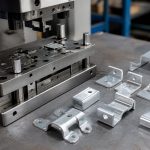
Three processes dominate custom electronic contact pin production: Swiss turning, progressive-die stamping, and cold-heading (crimp forming). No single process wins on tolerance, volume, cost, and strength at once — that is why all three coexist.
| Process | Tolerance | Volume sweet spot | Unit cost | Strength |
|---|---|---|---|---|
| Swiss turned (machined) | ±0.01 mm | 100 – 500,000 pcs | Highest per piece | Best — no grain disruption |
| Stamped & formed | ±0.02 mm | 10,000 – 5M pcs | Lowest at high volume | Good — grain flow follows the bend |
| Cold-headed | ±0.03 mm | 100,000+ pcs | Lowest per piece | Excellent — work-hardened |
The right choice is driven by annual volume first, then tolerance, then geometry. Machined pins win below 500,000 pieces per year and on features tighter than ±0.02 mm. Stamped pins win above 1 million pieces on roll-formable geometry. Cold-headed pins win on simple solid shapes above 100,000 pieces per year because the cold-working hardens the material.
Common Applications
- EV charging pins (Type 2, CCS, NACS). Machined C18150 (CuCrZr) and C11000 (OFHC) copper pins with silver or tin plating, machined to IEC 62196-2 / IEC 62196-3 and SAE J3400 interface dimensions. Custom pin profiles for OEM-specific contact geometries. Plated and assembled with cable-end crimps in-house.
- Drive enclosures and high-current contact pins. Machined copper and brass pins used inside industrial drive enclosures and servo controller housings, typically M5 to M12 thread sizes, with tin or nickel plating for low contact resistance.
- Automotive and EV connector pins. Stamped and machined pins for automotive harness connectors, ECU headers, and HVIL signal pins. Brass C36000, C26000, and bronze C51000 are common; tin, silver, and gold plating depending on signal vs power requirements.
- Telecom and data center connector contacts. Stamped phosphor bronze C51000 and beryllium copper C17200 contacts for high-density backplane and I/O connectors. Gold-over-nickel plating for low and stable contact resistance over many mating cycles.
Manufacturing Support from VOLCRIX
- Material options across copper, brass, bronze, and aluminum. C11000 (OFHC copper), C18150 (CuCrZr), C36000 (free-machining brass), C26000 (cartridge brass), C51000 (phosphor bronze), C17200 (beryllium copper), and 6061-T6 aluminum for special applications. Each lot ships with mill cert and incoming spectrometer verification.
- Plating options — tin, silver, gold, nickel. In-house plating coordination through Wenzhou-qualified partners: matte tin (per ASTM B545), bright tin, silver (per ASTM B700), gold (per ASTM B488 Type I / II / III), and electroless nickel (per ASTM B733). Thickness from 0.5 µm gold up to 5 µm silver, controlled on an XRF thickness gauge per batch.
- Star Swiss turning for precision machined pins. 60 Star Swiss machines (SB-16R, SR-20R, SR-32JII) running Ø1.0 to Ø32 mm bar stock to ±0.01 mm OD. We hold ±0.005 mm on EV charging contact OD with serialized SPC.
- Progressive die stamping for high-volume pin production. 40-ton to 400-ton Bruderer, Bliss, and Yangli presses with multi-station progressive dies for stamped pins. Strip width up to 200 mm, pitch accuracy ±0.02 mm.
- Cold-heading cells for solid pin and rivet contacts. Dedicated cold-heading machines for cylindrical and headed pins in copper, brass, and aluminum. Multi-die progressive cold headers handle 100,000+ piece runs with work-hardened strength suitable for high-current contact applications.
Need Help Choosing the Right Pin Process?
Send your drawing or sample. Our engineers recommend process, material, and plating based on your annual volume and electrical spec.
Custom Electronic Contact Pin Buyer Checklist
- Mark plating type, thickness, and plating area in the drawing. Tin, silver, and gold plating each have different conductivity and wear characteristics. Selective plating (only on the mating area) reduces cost; full plating simplifies masking. Specify both.
- Specify the mating cycle target. Gold plating is rated to 1,000+ mating cycles for low-voltage signal. Tin plating wears faster. Silver plating sits in between but tarnishes over time. The mating cycle target drives plating choice more than current rating.
- Confirm whether the pin is signal or power. Power pins need low contact resistance and high current capacity (CuCrZr or OFHC copper, larger cross-section). Signal pins can use brass or phosphor bronze with smaller cross-section.
- For machined pins, confirm bar stock diameter availability. Drawing callouts for Ø0.8 mm pin stock require fine-bar sourcing. We hold stock from Ø1.0 mm to Ø32 mm standard; below Ø1.0 mm adds 1–2 weeks to lead time and may require Swiss-type micro turning.
Authority Summary
VOLCRIX has produced custom electronic contact pins in Wenzhou since 1991 — 35 years on connector programs spanning automotive, EV, industrial, telecom, and consumer electronics. The shop runs 60 Star Swiss turning machines, 40-ton to 400-ton stamping presses, and dedicated cold-heading cells. Plating coordination covers tin, silver, gold, and electroless nickel with XRF thickness control per batch. Inspection is built around Zeiss Contura CMM, Olympus XRF, and a Bruker Q4 Tasman spectrometer for incoming material verification. The facility operates under ISO 9001:2015 and IATF 16949:2016; full material certs, plating certs, and FAI reports ship with every production lot. EV charging pins ship to IEC 62196-2 / IEC 62196-3 and SAE J3400 interface dimensions, with full dimensional and plating certs.
Related Custom Manufacturing Services
- Custom EV Charging Pins — Type 2, CCS, NACS charging pin manufacturing
- Custom Connector Components — connector housings, contacts, and headers
- Custom CNC Machining Parts — full CNC machining for connector components and pins
Frequently Asked Questions
Which contact pin manufacturing process should I choose — machined, stamped, or cold-headed?
Below 500,000 pieces per year and on features tighter than ±0.02 mm, machined (Swiss turned) wins. Above 1 million pieces per year on roll-formable geometry, stamped wins. Cold-heading wins on solid cylindrical or headed pins above 100,000 pieces per year. We help you pick the right one at the RFQ stage based on your annual volume, tolerance, and strength requirements.
What materials are most common for custom electronic contact pins?
C11000 (OFHC copper) and C18150 (CuCrZr) for high-current power pins; C36000 (free-machining brass) and C26000 (cartridge brass) for general-purpose signal and power pins; C51000 (phosphor bronze) and C17200 (beryllium copper) for high-cycle signal contacts. Each lot ships with mill cert and incoming spectrometer verification.
What plating options does VOLCRIX offer on contact pins?
Matte tin (ASTM B545), bright tin, silver (ASTM B700), gold (ASTM B488 Type I / II / III), and electroless nickel (ASTM B733). Thickness from 0.5 µm gold to 5 µm silver, controlled on an XRF thickness gauge per batch. Selective plating on the mating area reduces cost on signal pins.
Can VOLCRIX produce custom cnc machined drive enclosures and contact pins from the same material?
Yes. We routinely machine custom cnc machined drive enclosures from 6061-T6 aluminum and produce the contact pins that mount inside them from C11000 copper or C36000 brass. The two parts ship as a coordinated set with matching FAI reports and material certs. This is a common configuration for industrial drive enclosures and servo controller housings.
What tolerances can VOLCRIX hold on machined contact pins?
Standard machined pin tolerances are ±0.01 mm on OD and ID, ±0.02 mm on length, and ±0.005 mm on critical-to-function features like EV charging contact diameter when the drawing allows. We hold these on production runs, not just on a single golden sample — process capability data is available on request for established programs.
What is the typical lead time for custom electronic contact pins?
Samples: 7–15 working days from PO, depending on material, plating, and tolerance scope. Production: 3–4 weeks after sample approval for machined pins, 2–4 weeks for stamped pins, 2–3 weeks for cold-headed pins. Plating adds 3–5 working days on top of the machining cycle.
Send Your Pin Drawing for a Process Recommendation
Free DFM review and process advice. Quote within 3 working days.
Certifications & Standards
VOLCRIX operates under the following certifications and routinely works to these customer and industry standards:
- ISO 9001:2015 — Quality Management System
- IATF 16949:2016 — Automotive Quality Management
- RoHS and REACH compliance for restricted substances
- Material traceability per EN 10204 3.1 mill certificates
- EV charging pin compliance per IEC 62196-2 / IEC 62196-3 and SAE J3400
- Plating per ASTM B545 (tin), ASTM B700 (silver), ASTM B488 (gold), ASTM B733 (electroless nickel)
- FAI reporting per AS9102 or customer-specific control plan
- PPAP and IMDS support for automotive and EV programs
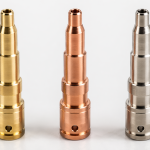
[…] Custom Electronic Contact Pins — signal-level and power contact pins for industrial connectors […]