
Precision Shaft Materials Guide: Selecting Steel, Stainless, and Specialty Alloys
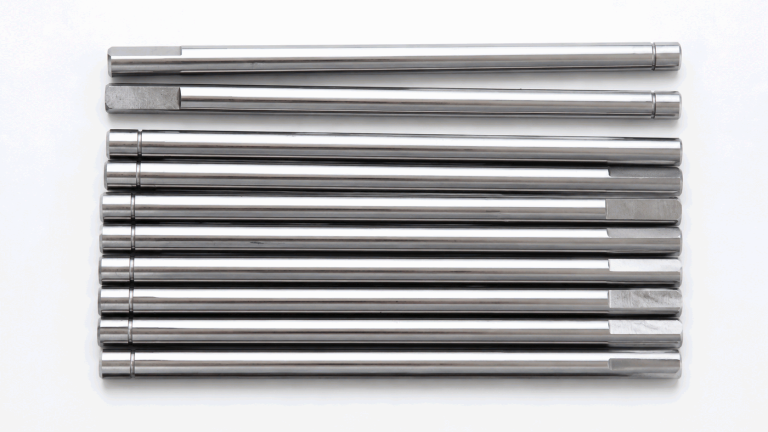
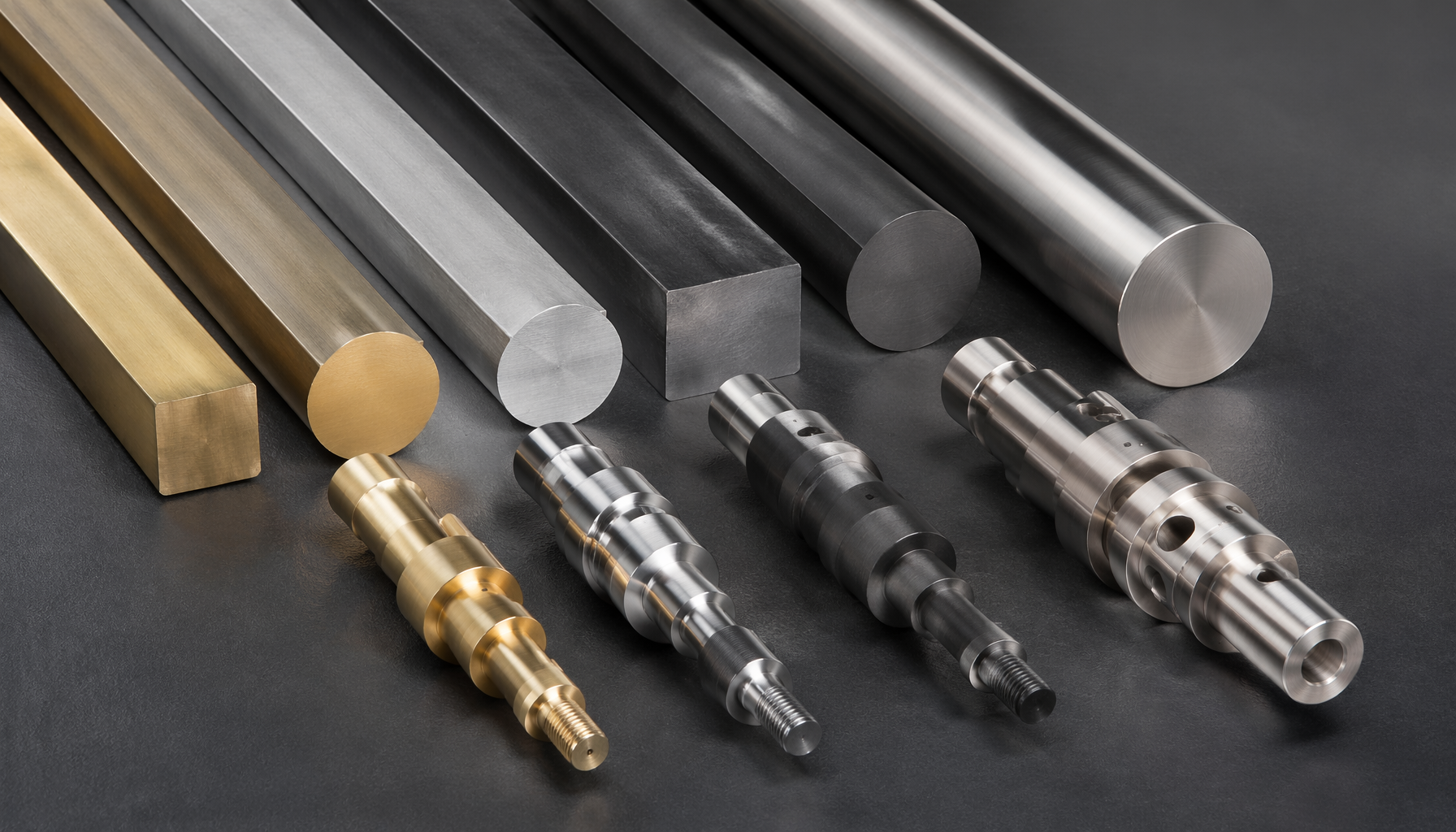
Short answer: Precision shaft material selection depends on torque, speed, corrosion environment, fatigue life, and cost. Standard shaft materials include 303 and 304 stainless for general purpose, 316 stainless for marine and medical, 17-4PH for high-strength applications, and carbon steel 1045 and 4140 for high-torque industrial shafts. Material choice drives machining parameters, surface finish requirements, and tolerance capability. VOLCRIX has machined precision shafts from all major material grades since 1991 on 60+ Japanese Star Swiss turning machines with ±0.01 mm tolerances.
Need Precision Shaft Material Selection?
Free DFM review · Quote within 24 hours · Prototype in 7–15 days
Common Applications
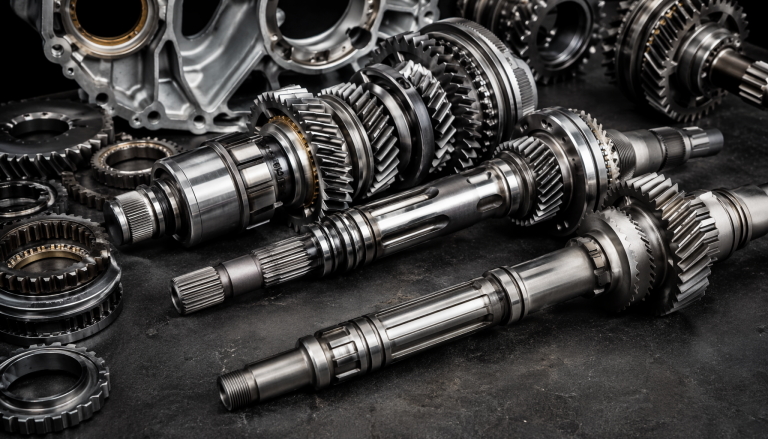
- Drive shafts and motor shafts — for electric motors, gearboxes, pumps, and industrial machinery requiring high torque transmission with tight concentricity
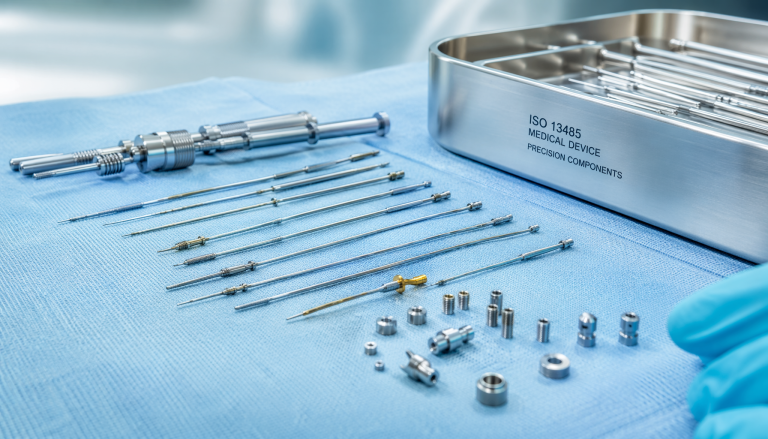
- Medical device shafts — for surgical instruments, diagnostic equipment, dental handpieces, and implant delivery systems requiring 316L stainless
- Aerospace shafts and pins — for aircraft instrumentation, sensor assemblies, landing gear components requiring 17-4PH or 15-5PH stainless
- Hydraulic and pneumatic valve shafts — for control valves, flow regulators, and actuation systems requiring 17-4PH heat-treated to H900 condition
Manufacturing Support from VOLCRIX
- 60+ Japanese Star Swiss turning machines — for precision shaft machining 0.5 mm to 25 mm diameter range with ±0.01 mm tolerance capability
- Multi-material expertise — 303/304/316/316L stainless steel, 17-4PH/15-5PH precipitation hardening, carbon steel 1045/4140, aluminum 6061/7075, titanium grade 5
- In-house heat treatment — for 17-4PH aging to H900, H1025, H1075, H1150 conditions per ASTM A564 for specified tensile strength
- PPAP and First Article Inspection — with full dimensional inspection on Zeiss CMM and material certification per heat lot
Buyer Checklist
- Specify material grade using UNS designation — UNS S30300 for free-machining stainless, UNS S17400 for 17-4PH, UNS S31600 for marine/medical
- Define mechanical property requirements — tensile strength, yield strength, hardness, fatigue life, and any heat treatment condition
- Indicate operating environment — temperature range, corrosion exposure, vibration, and sterilization requirements for medical applications
- Specify dimensional tolerances — typically ±0.01 mm on critical diameters, ±0.05 mm on length features, ±0.005 mm on premium applications
Related Custom Manufacturing Services
- Custom Precision Shafts — Swiss turned shafts
- Stainless Steel Turned Parts Guide — stainless steel grades
- How to Choose Build-to-Print Partner — build-to-print selection
- Aerospace Component Manufacturing — AS9100 precision components
FAQ
What is the best material for precision shafts?
Best material for precision shafts depends on application requirements. 303 stainless is preferred for general-purpose CNC Swiss turning due to 100 percent machinability rating. 304 stainless offers higher corrosion resistance but lower machinability. 316 stainless is used for marine and medical applications requiring maximum corrosion resistance. 17-4PH is used for high-strength applications requiring heat treatment to 1,100-1,300 MPa tensile strength. Carbon steel 1045 and 4140 are used for high-torque industrial shafts requiring maximum strength.
What is the difference between 303 and 304 stainless steel for shafts?
303 stainless contains added sulfur or selenium 0.15 percent minimum for improved machinability achieving 100 percent rating versus 25 percent for 304. 303 is preferred for high-volume CNC Swiss turning where machining speed is critical. 304 has slightly better corrosion resistance than 303 due to absence of sulfur. 304 stainless contains 18 percent chromium and 8 percent nickel providing good general corrosion resistance. For shafts in indoor or controlled environments, 303 is preferred. For shafts in corrosive outdoor environments, 304 or 316 is preferred.
What is 17-4PH stainless steel used for in shaft applications?
17-4PH precipitation hardening stainless steel is used for high-strength shaft applications requiring 1,100 to 1,300 MPa tensile strength after heat treatment. 17-4PH combines high strength with corrosion resistance similar to 304 stainless. Common shaft applications include hydraulic valve stems, aerospace actuator shafts, medical device shafts requiring MRI compatibility, and high-performance drive shafts. Heat treatment conditions include H900, H1025, H1075, H1150 each providing different strength-toughness balance.
What surface finish is required for precision shafts?
Surface finish for precision shafts depends on application. Bearing surfaces typically require Ra 0.4 to 0.8 micrometers for proper bearing fit. Sealing surfaces require Ra 0.2 to 0.4 micrometers for proper seal contact. General machined surfaces typically Ra 1.6 micrometers. Medical device shafts often require electropolishing to Ra 0.1 to 0.2 micrometers for sanitary applications and to remove surface contamination. Surface finish verified with surface roughness profilometers per ISO 4287 and ISO 4288.
Need Precision Shaft Material Selection?
Free DFM review · Quote within 24 hours · Prototype in 7–15 days
Certifications, Standards & Compliance
- ISO 9001:2015 — Quality management system
- IATF 16949 — Automotive quality management
- ASTM A484 — Stainless steel general requirements
- ASTM A564 — Age-hardening stainless steel specification
- ASTM A276 — Stainless steel bars and shapes
- EN 10088 — European stainless steel standard
- DIN 17440 — German stainless steel standard
- RoHS 3 (EU 2015/863) — Restriction of Hazardous Substances
For specific compliance questions contact our sales team.