
Precision shafts for medical devices: ISO 13485 certified manufacturing for surgical tools and diagnostic equipment. Learn about material selection, surface finish, and tolerance requirements for medical shaft components.
At VOLCRIX, we manufacture Swiss turned precision components for medical device OEMs. Our ISO-compliant processes and experienced machinists allow us to produce medical shafts that meet the strictest industry requirements.

Surgical Instrument Shafts
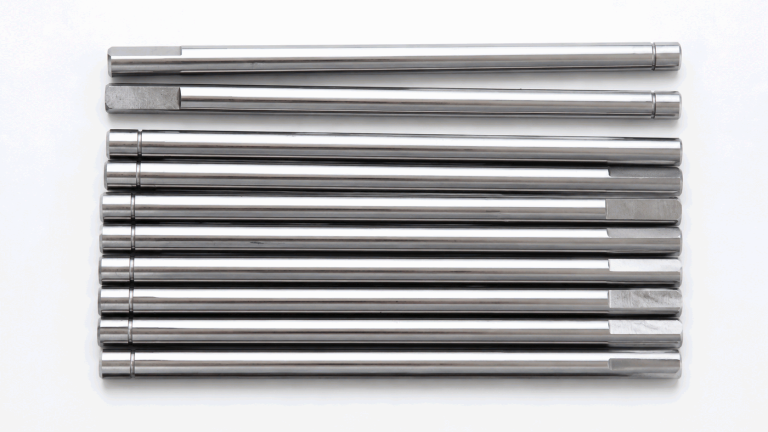
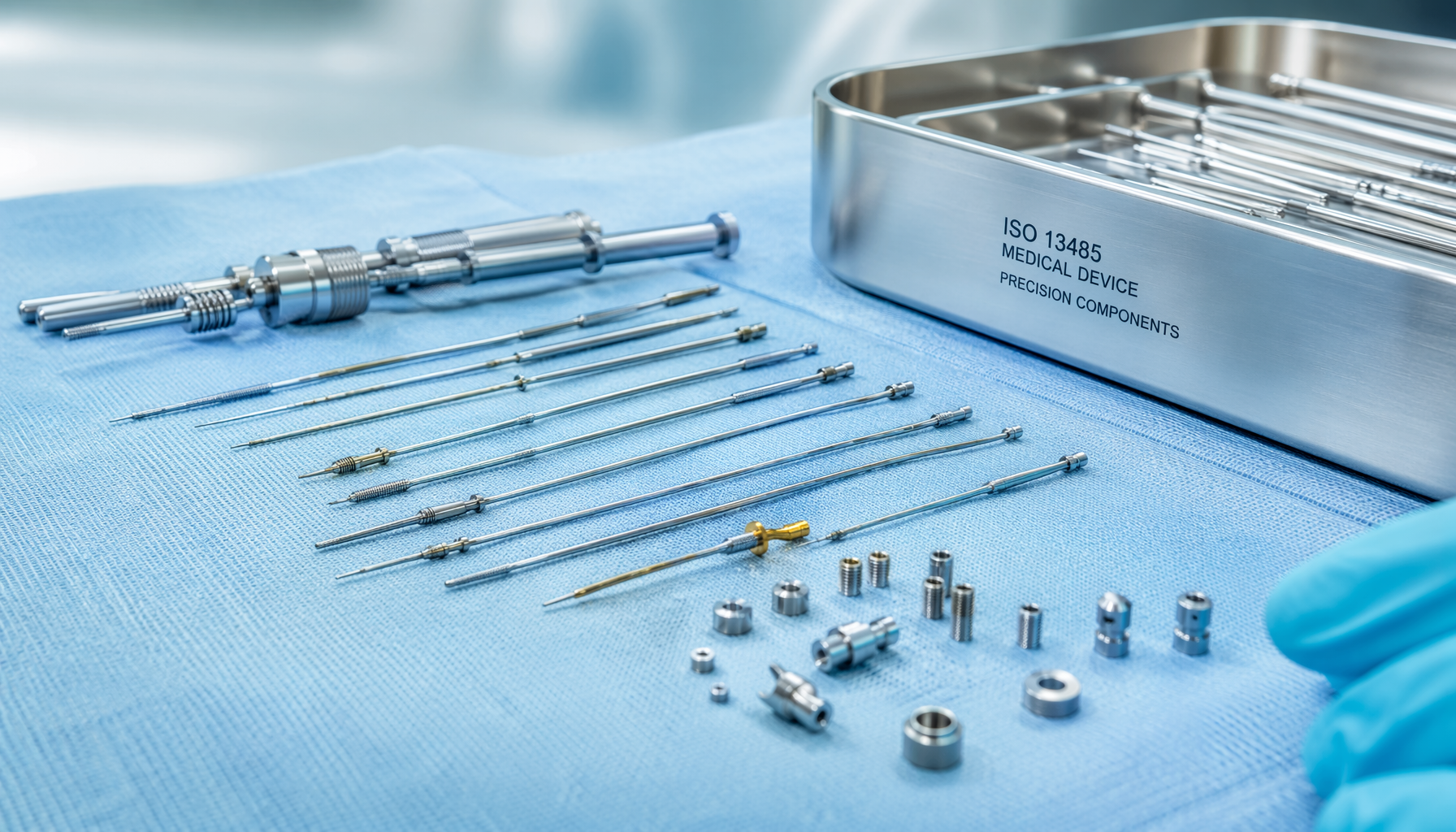
Surgical instruments — endoscopic tools, laparoscopic graspers, scissors, and drill guides — all use precision shafts that must meet stringent requirements. These shafts are typically 2-10mm in diameter, 100-400mm long, and must be perfectly straight to function inside a surgical access port.
Key requirements for surgical shafts:
- Surface finish: Ra 0.2-0.4 µm — surgical instruments must be smooth to prevent tissue adhesion and enable easy cleaning and sterilization
- Straightness: 0.01mm per 100mm — a bent shaft inside a trocar will bind or cause tissue damage
- Material: 304 or 316L stainless steel — must resist corrosion from repeated autoclave sterilization cycles
Surgical shaft production is about managing the length-to-diameter ratio. A 3mm shaft that is 300mm long has a 100:1 L/D ratio — Swiss turning can handle this, but it requires specialized guide bushing support and sometimes a secondary straightening operation.
Implantable Component Shafts
Some precision shafts become permanent implants — bone screws with integrated shaft features, dental implant abutments, spinal rod components, and orthopedic fixation pins. These require the highest level of process control because there is no QC step after implantation — the part must be right the first time.
Materials for implantable shafts:
- 316LVM (vacuum melt) stainless — the standard for temporary implants and surgical instruments
- Ti-6Al-4V ELI — titanium alloy for permanent implants, requires specialized tooling and slower speeds
- 17-4 PH stainless — used where high strength and corrosion resistance are needed
For a full comparison, see our precision shaft materials guide covering medical-grade materials in detail.

Dental Tool Shafts
Dental handpieces, surgical drills, and implant drivers contain tiny precision shafts that spin at 300,000-400,000 RPM. At that speed, any imbalance generates heat and vibration that the patient can feel. These shafts are typically 1.6mm (1/16 inch) or smaller in diameter, made from corrosion-resistant stainless or hardened steel.
The tolerance requirements for dental shafts are among the tightest in medical manufacturing — concentricity of 0.005mm is common. Swiss turning is the only practical process for these dimensions.
Diagnostic and Laboratory Equipment Shafts
Beyond surgical and implantable devices, medical diagnostic equipment — CT scanners, MRI machines, blood analyzers, and ventilators — contains hundreds of precision shafts that drive pumps, valves, positioning stages, and cooling fans.
These shafts typically have less stringent cosmetic requirements than surgical instruments, but they must still meet medical-grade quality standards with full documentation. Many diagnostic equipment manufacturers require suppliers to maintain ISO 13485 certification.
Surface Finishing for Medical Shafts
Medical shafts often require specialized surface finishing treatments beyond standard machining:
- Electropolishing — removes a microscopic layer of material to create a smooth, passivated surface (standard for surgical stainless)
- Passivation — chemical treatment that removes free iron from the surface and enhances the natural chromium oxide layer
- Mechanical polishing — for shafts that need a mirror finish for aesthetic or functional reasons
For surgical instruments, electropolishing is almost always specified. For implantable devices, passivation per ASTM A967 is standard.
Frequently Asked Questions
What is the difference between medical and standard precision shaft manufacturing?
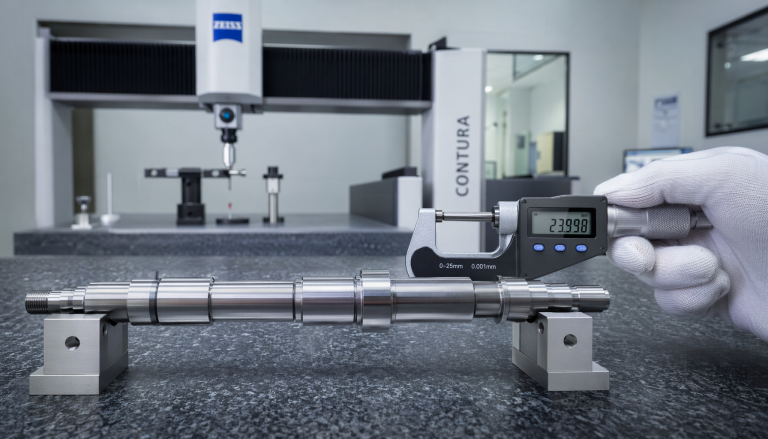
The biggest difference is documentation and traceability. Medical shafts require full material certifications, process validation records, and batch-level inspection reports. The machining itself is similar — Swiss turning holds the same ±0.01mm tolerances — but the QA overhead is significantly higher.
Can you manufacture medical shafts without ISO 13485 certification?
We maintain ISO-compliant processes. For medical device OEMs requiring formal ISO 13485 certification, we recommend discussing your specific compliance needs with our team to determine how we can support your regulatory requirements.
What materials are compatible with medical shaft manufacturing?
Common medical shaft materials include 303, 304, and 316L stainless steel, 17-4 PH, titanium (Ti-6Al-4V), and specialty alloys like Nitinol for specific applications. See our materials guide for the full breakdown.
Do you provide validation samples for medical shaft production?
Yes. Yes. During the prototyping phase, we provide first article inspection reports (FAI) with full dimensional data for every medical shaft design. Production batches include SPC data and material certifications as standard.
What is the typical lead time for medical precision shafts?
Prototype quantities: 2-4 weeks including first article inspection. Production quantities: 4-8 weeks depending on material availability and order volume. Expedited options are available for critical projects.
For more information on our medical manufacturing capabilities, visit our medical industry page or precision shaft buyer’s guide.
Have more questions? Check our comprehensive FAQ page for quick answers about VOLCRIX capabilities, materials, tolerances, certifications, and global shipping.
Need custom EV charging pins for your project? View our EV charging pins manufacturing capabilities →