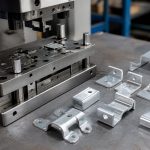

Stamping prototype services exist for one reason: production tooling is expensive and should never be built blind. A hardened progressive die for a mid-complexity stamped part costs $8,000–$30,000 and takes 4–8 weeks to build. A rapid metal stamping prototype costs a fraction of that and takes days — and it tells you whether the part will actually form, hold tolerance, and survive assembly before you commit the tooling budget. Here is how a part moves from drawing to production-ready at VOLCRIX, and what prototyping validates along the way.
Why Prototype Stamped Parts First
Once a production die is hardened and tried out, a design change means re-cutting or scrapping it — typically $3,000–$15,000 in rework and 2–4 extra weeks. A prototype run catches those problems while they still cost hundreds, not thousands. Three things can only be verified with physical parts:
- Geometry and fit: does the part seat against mating components and match the GD&T callouts?
- Material formability: will the grade bend and draw without cracking? High-tensile and spring steels spring back 2–5° per bend; a prototype confirms bend radii and springback compensation before the die is cut.
- Surface finish: edge quality and plating or passivation acceptance depend on tool condition and clearance — parameters you only see on real parts.
The stamping die design review that precedes prototyping flags minimum bend radii (typically 1× sheet thickness for mild steel, 2× for high-strength grades) and hole-to-edge distances before any steel is cut. For what production stamping can hold, see our precision stamping tolerances guide.
Prototype Methods: Single-Stage Tooling vs CNC Forming vs 3D-Printed Dies
There is no single right method — the choice depends on how close the prototype must be to the production process.
| Method | Cost | Lead time | Typical accuracy | Best for |
|---|---|---|---|---|
| Single-stage tooling (soft die) | $1,500–$5,000 | 7–15 days | ±0.05–0.1 mm | Production-representative parts; same material behavior |
| CNC forming (machined punches + press brake) | $200–$1,500 | 2–7 days | ±0.1–0.2 mm | Simple brackets, early iterations, low quantities |
| 3D-printed die inserts | $300–$2,000 | 3–7 days | ±0.2–0.5 mm | Geometry checks, thin sheet, low tonnage only |
Single-stage tooling is the closest to production: same material, same press, same forming mechanics, so springback and work-hardening data transfer directly to precision metal stamping dies. CNC forming and printed dies are faster and cheaper but cannot replicate die wear, material thinning, or exact springback. If you are choosing between process families, our progressive vs deep draw vs single-station comparison covers the production options.
The Prototype-to-Production Path at VOLCRIX
Every project follows five steps with a decision gate at each one:
- Drawing review (24 hours): 2D drawing (PDF/DWG) with GD&T or 3D STEP file, material, thickness, and volume are checked for feasibility.
- DFM report (1–2 days): free design-for-manufacturability feedback — bend radii, springback risk, hole edge distances, strip layout, and a firm quote.
- Prototype (7–15 days): single-stage tooling or CNC forming, with a CMM inspection report against the drawing.
- Approval: you sign off on form, fit, and function on physical parts — changes here cost hundreds, not die rework.
- Production tooling (3–4 weeks): hardened progressive die, tryout, and PPAP-level documentation under IATF 16949.
Because VOLCRIX builds both prototypes and production dies in-house, you deal with one stamping die manufacturer from first article to full production — the transition is a scale-up, not a redesign. For what happens after tooling approval, our high-volume metal stamping guide covers the path from pilot to 50,000+ parts per year.
What Data You Need to Send
A complete RFQ package is five items:
- Drawing: 2D PDF/DWG with GD&T callouts, or a 3D STEP/IGES model
- Material: grade and temper (SPCC, DC01, 304 stainless, C2680 brass, etc.)
- Thickness: sheet gauge, e.g. 0.5 mm, 1.2 mm, 2.0 mm
- Tolerances: critical dimensions and whether ±0.01 mm applies
- Volume: prototype quantity and projected annual volume — this decides single-stage vs progressive tooling
Missing material or thickness is the most common delay: formability, bend allowance, and die clearance (typically 5–10% of material thickness) all depend on them. If any item is unknown, a VOLCRIX engineer will specify it with you before quoting.
Typical Prototype Lead Times and Costs
| Service | Lead time | Cost range |
|---|---|---|
| CNC-formed prototype | 2–7 days | $200–$1,500 |
| 3D-printed die prototype | 3–7 days | $300–$2,000 |
| Single-stage tooling prototype | 7–15 days | $1,500–$5,000 |
| Production progressive die | 3–4 weeks | $8,000–$30,000+ |
These ranges assume a mid-complexity part: 10–50 mm envelope, 0.5–3.0 mm sheet, a handful of bends or forms. Single-stage tooling is usually the right choice when you need production-representative parts before committing to the full die — and the DFM review is free either way.
For low-risk first articles, our stamped parts prototyping services cover single-stage tooling, CNC-formed prototypes, and 3D-printed soft tooling — every order includes free DFM feedback so you see formability and tolerance issues before committing to production dies.
Frequently Asked Questions
How fast can I get a metal stamping prototype?
CNC-formed prototypes ship in 2–7 days. Single-stage tooling prototypes — parts made on real stamping tooling with production-representative material behavior — take 7–15 days including tool build, tryout, and CMM inspection. DFM review and quoting take 1–2 days before either starts.
What is the difference between prototype tooling and production tooling?
Prototype single-stage dies are simpler and often built in non-heat-treated steel to save cost and time, running one operation per stroke. Production progressive dies are hardened tool steel (D2, M2, ASP23) with multiple stations that blank, form, and finish in one pass, holding ±0.01 mm on critical features at high speed. Prototype parts typically run ±0.05–0.1 mm.
How much does a stamping prototype cost?
CNC-formed prototypes run $200–$1,500; 3D-printed die prototypes $300–$2,000; single-stage tooling prototypes $1,500–$5,000 depending on complexity and material. The DFM review and quotation are free, and prototype results inform the production tooling investment.
Can prototype parts match production tolerances?
Not exactly — and you should not expect them to. Prototype runs hold ±0.05–0.1 mm on most features; production progressive dies hold ±0.01 mm on critical dimensions. The prototype guarantees geometry, formability, and finish are correct, so tolerance upgrades in production come from tooling precision, not design changes.
Need stamped parts in days, not months? Send your drawing for a free DFM review and prototype quote at the VOLCRIX stamping parts page — prototypes in 7–15 days, production tooling in 3–4 weeks, with CMM inspection and IATF 16949 quality systems throughout.
Need aluminum prototype metal stamping? We can run CNC-formed samples first, then build simplified tooling when the design locks.