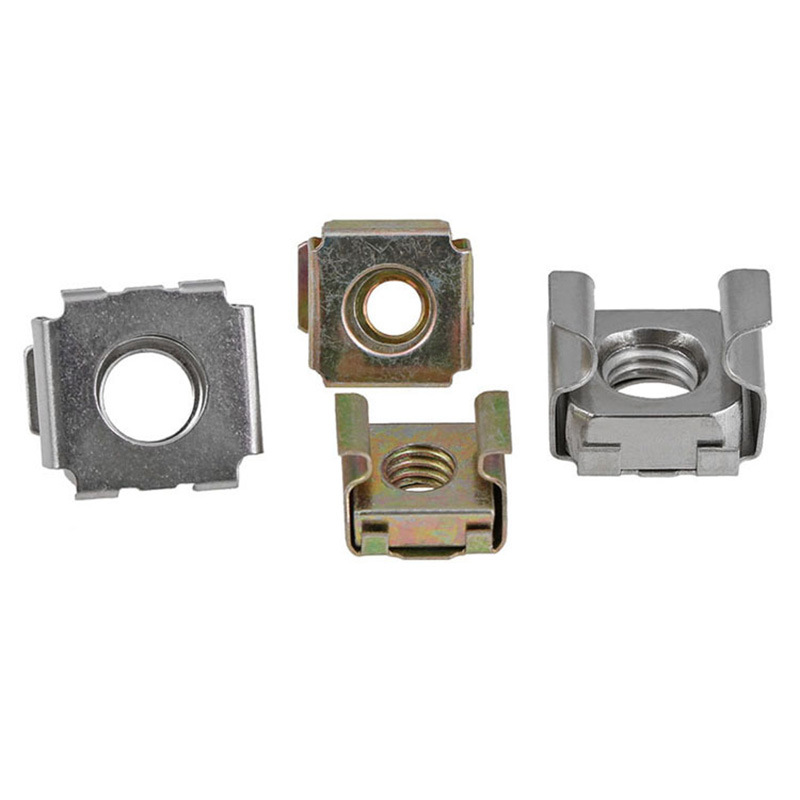

When designing server racks, telecom enclosures, or industrial equipment, cage nuts with brass inserts are a standard solution for creating reliable threaded mounting points in thin sheet metal. Unlike weld nuts or rivet nuts, cage nuts install without special tooling and allow field replacement if threads strip.
This guide covers the key specifications OEM buyers need to specify custom cage nuts with brass inserts — from dimensions and thread types to material options and plating.
Custom Made Special Fasteners Beyond Standard Cage Nuts
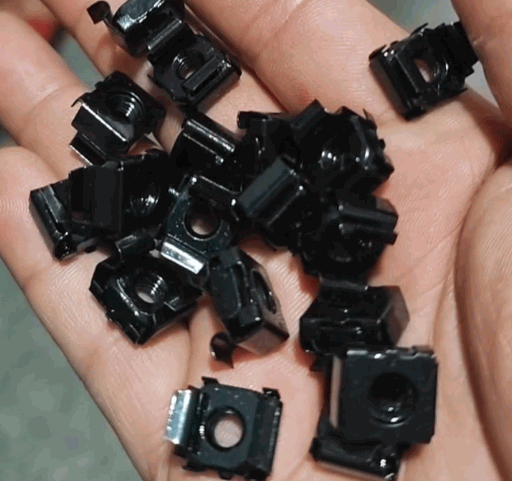
Cage nuts are just one category of engineered fasteners. As a precision manufacturer, VOLCRIX also produces custom made special fasteners — threaded inserts, PEM-style hardware, panel fasteners, and captive screws with custom materials, plating, and tolerances. For buyers managing fastener consolidation, working with one custom made special fasteners manufacturer that combines Swiss turning, stamping, and thread rolling means tighter control over quality, plating consistency, and delivery. Every fastener lot ships with dimensional reports and material traceability.
What Is a Cage Nut with Brass Insert?
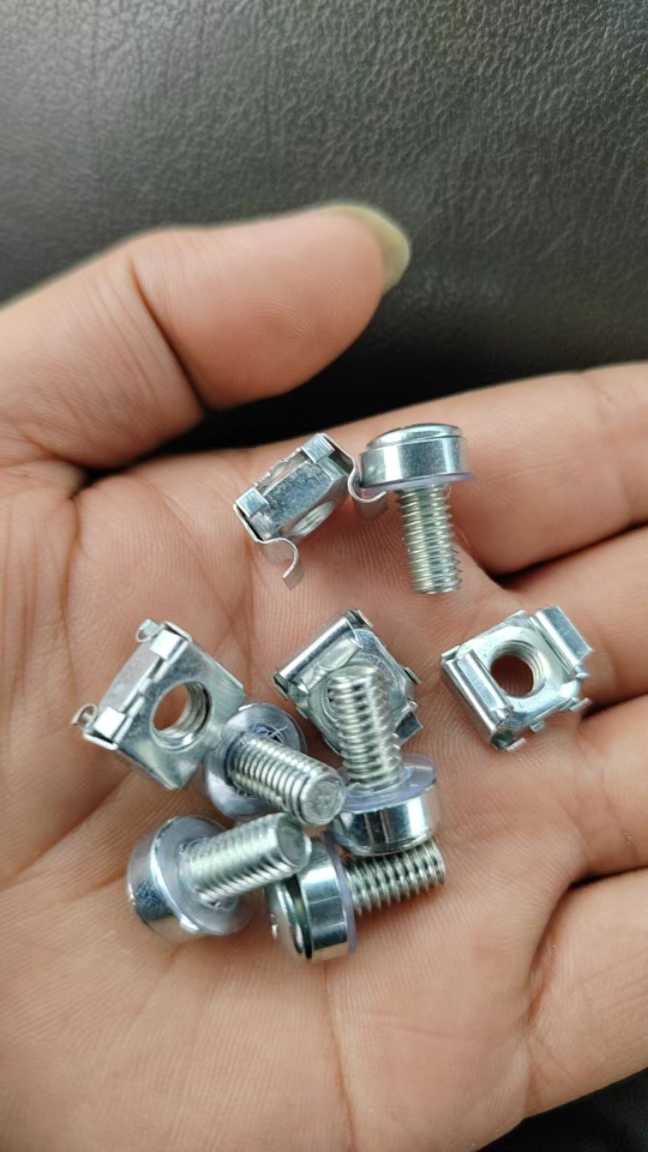
A cage nut (also called a clip nut or caged nut) consists of two components:
- A spring steel cage that clips into a square hole in sheet metal
- A brass threaded insert that floats inside the cage, allowing slight misalignment during bolt installation
The brass insert provides durable threads (brass is gall-resistant and self-lubricating against steel bolts), while the spring steel cage holds it securely in the panel.
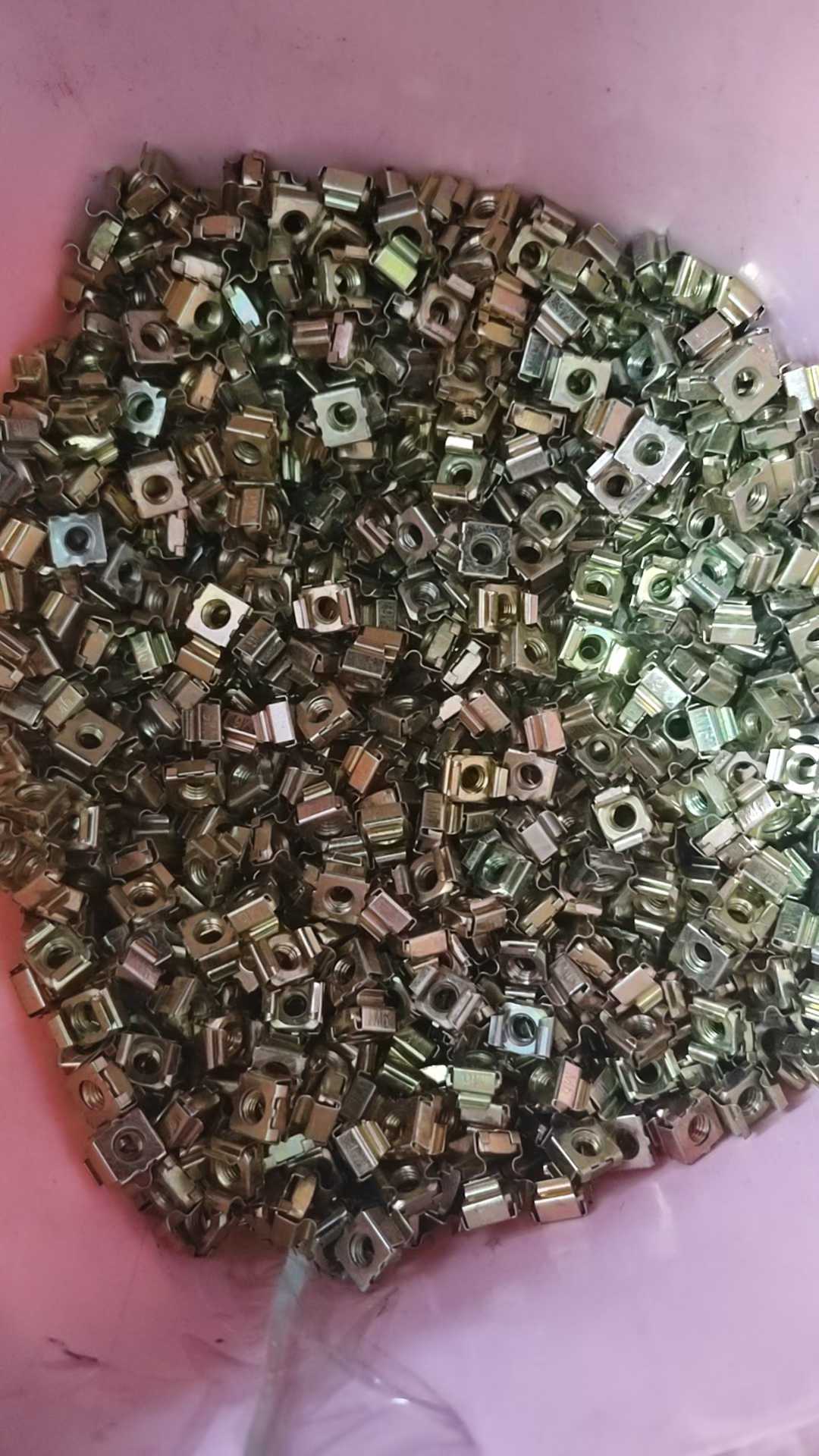
10 Key Parameters for Specifying Cage Nuts with Brass Insert
1. Panel Thickness
The cage nut must match the sheet metal thickness it clips into. Standard ranges:
- 0.8–1.2 mm (light gauge, common in telecom)
- 1.2–2.0 mm (standard server rack enclosures)
- 2.0–3.0 mm (heavy-duty industrial panels)
2. Square Hole Size
The cage prongs grip the edges of a square hole in the panel. Common sizes:
- 9.5 × 9.5 mm (M4–M5 threads)
- 10.6 × 10.6 mm (M5–M6 threads)
- 12.7 × 12.7 mm (M6–M8 threads)
3. Thread Size
Brass insert threads follow standard ISO metric sizes:
- M4 × 0.7
- M5 × 0.8
- M6 × 1.0
- M8 × 1.25
- M10 × 1.5
- M12 × 1.75
UNC and UNF inch threads are also available for North American applications.
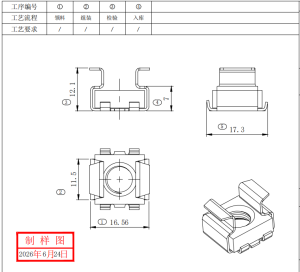
4. Overall Dimensions
Typical cage nut footprint dimensions (varies by thread size):
- Length: 14–22 mm
- Width: 11–16 mm
- Height (from panel surface): 8–14 mm
A recent sample drawing we produced measures approximately 16.6 × 11.5 mm footprint with a 17.3 mm overall height — suitable for M6–M8 threads in 1.2–2.0 mm panels.
5. Brass Insert Material
The threaded insert is typically machined from free-cutting brass (C36000 or equivalent). Key properties:
- Tensile strength: 340–470 MPa
- Yield strength: 125–250 MPa
- Hardness: HRB 60–80
- Excellent corrosion resistance in indoor environments
For applications requiring higher strength or extreme environments, zinc alloy or stainless steel inserts are available.
6. Cage Material
The spring cage is formed from:
- Spring steel (C75S / 75Cr1): standard choice, good elasticity
- Stainless steel (301 / 304): for outdoor or corrosive environments
- Heat-treated after forming for consistent spring force
Typical cage thickness: 0.4–0.8 mm
7. Plating and Finish
Standard finishes for cage nut components:
- Brass insert: bare (bright finish) or nickel-plated
- Steel cage: zinc-plated (blue or yellow passivation) for basic corrosion protection
- Stainless cage: no plating required
- Optional: salt spray resistance up to 72 hours (zinc-nickel plating)
8. Insert Retention Force
The brass insert sits captive in the cage with a retaining ring or dimples. Minimum push-out force:
- M4–M5: ≥ 200 N
- M6–M8: ≥ 350 N
- M10–M12: ≥ 500 N
This ensures the insert stays in place during bolt installation and removal.
9. Pull-Out Strength
Once installed in a panel, the cage nut must resist pull-out under load:
- 1.0 mm panel: ≥ 1.5 kN (M6)
- 1.5 mm panel: ≥ 2.5 kN (M6)
- 2.0 mm panel: ≥ 3.5 kN (M6)
Values scale with thread size and panel thickness.
10. Tolerance and Quality Control
Cage nuts are low-cost high-volume parts, but critical dimensions still require control:
- Square hole fit: ±0.1 mm on cage prongs
- Thread pitch diameter: 6H tolerance (ISO metric)
- Panel thickness range: ±0.1 mm
- Cage squareness: within 0.3 mm over 20 mm
Standard QC includes go/no-go thread gauging, visual inspection of cage prongs, and batch pull-out testing by sampling.

Applications
Cage nuts with brass inserts are used across multiple industries:
- Server and networking racks: mounting servers, switches, patch panels in 19″ and 23″ cabinets
- Telecom enclosures: securing modules and backplanes in base stations
- Industrial control panels: installing DIN rail components and breakers
- Automotive EV charging stations: mounting power modules and cable management
Why Brass Insert?
Brass offers distinct advantages over all-steel cage nuts:
- Self-lubricating: prevents thread galling with steel bolts
- Corrosion resistant: no risk of rust in the threaded area
- Reusable: brass threads withstand multiple installation cycles without wear
- Consistent torque: reliable clamp force across repeated assemblies
Manufacturing Process
Custom cage nuts are typically produced in four steps:
- Material requisition: brass rod (for inserts) and steel coil (for cages)
- Cage forming: progressive die stamping and forming the spring steel cage
- Assembly: pressing brass insert into cage with retention feature
- Inspection: dimensional check, thread gauge, pull-out test
Sourcing Custom Cage Nuts from VOLCRIX
We manufacture custom cage nuts with brass inserts to your exact specifications. Our capabilities include:
- Swiss turning of brass inserts to ±0.01 mm tolerance
- Progressive die stamping of spring steel cages
- In-house Zeiss CMM inspection
- ISO 9001 quality management
Minimum order quantities are flexible, from prototypes for qualification to production volumes of 50,000+ pieces.
Frequently Asked Questions
What is the difference between a cage nut and a clip nut?
The terms are interchangeable. Cage nut, clip nut, and caged nut all refer to a spring steel cage holding a threaded insert that clips into a square panel hole.
Can cage nuts be used in panels thicker than 3 mm?
Standard cage nuts are designed for 0.8-3.0 mm panels. For thicker panels, weld nuts or clinch nuts are more suitable.
Do cage nuts require special installation tools?
No. Cage nuts snap into the square hole by hand. A bolt is then inserted and tightened to seat the nut against the panel.
Are cage nuts reusable?
Yes. The brass insert allows multiple installation cycles. The steel cage maintains its spring force over many insertions, provided the panel thickness remains within spec.
Can you make cage nuts with UNC threads?
Yes. We produce cage nuts with both metric (M4-M12) and UNC/UNF inch threads (#6-32 to 1/2-13).
What is the lead time for custom cage nuts?
Prototype samples: 10-15 working days. Production orders: 3-4 weeks depending on quantity.
Need custom cage nuts for your project? View our precision turned parts manufacturing capabilities →