
10 Key Parameters for EV Charging Connector Pins: A Complete Specification Guide
Short answer: EV charging connector pins are specified by 10 key parameters: connector standard (IEC 62196-2/3, SAE J3400), wire diameter (0.5 mm to 8 mm), current rating (0.5A signal to 500A power), voltage rating (250V AC to 1000V DC), material grade (C11000, C18150, C36000), plating specification (silver, gold, tin, nickel per ASTM standards), tolerance (typically ±0.01 mm on critical diameters), operating temperature, mating cycle life, and certification requirements. VOLCRIX has manufactured EV charging connector pins per these specifications since 1991 on 60+ Japanese Star Swiss turning machines.
Need EV Charging Connector Pin Specifications?
Free DFM review · Quote within 24 hours · Prototype in 7–15 days
Common Applications
- Type 2 IEC 62196-2 AC charging pins — for European and Asian OEM vehicles with 7 kW to 22 kW AC charging at 230V to 480V, 16A to 32A single or three-phase
- CCS IEC 62196-3 DC fast charging pins — for European and North American DC fast charging up to 350 kW at 200V to 1000V DC, 200A to 500A continuous
- NACS SAE J3400 charging pins — for North American OEM vehicles and Tesla Supercharger network supporting both AC and DC charging at 1000V DC maximum
- GB/T 20234 Chinese standard pins — for Chinese domestic EV market including BYD, NIO, XPeng, and Li Auto vehicles with mandatory CCC certification
Manufacturing Support from VOLCRIX
- 60+ Japanese Star Swiss turning machines — for precision EV charging pin production with material-specific tooling and ±0.01 mm tolerance machining
- Multi-standard compliance — to IEC 62196-2 Type 2, IEC 62196-3 CCS, SAE J3400 NACS, GB/T 20234, UL 2251 with material and plating certification per each standard
- In-house silver plating coordination — with 3-5 micrometers for AC indoor, 5-8 micrometers for DC outdoor applications, XRF verification per ASTM B568
- PPAP submission capability — for OEM automotive programs with full AIAG PPAP level 3 documentation including FAI, material certificates, control plan
Buyer Checklist
- Specify connector standard — IEC 62196-2 Type 2, IEC 62196-3 CCS Combo 1/2, SAE J3400 NACS, GB/T 20234, UL 2251 for North American safety
- Define current and voltage rating — 0.5A signal at 5V DC to 500A power at 1000V DC, with continuous and peak current specifications
- Specify material grade using UNS designation — C11000 ETP copper for AC under 80A, C18150 Cr-Zr copper for DC fast charging above 150A
- Define plating specification — silver 3-5 micrometers indoor, silver 5-8 micrometers outdoor per ASTM B700 with nickel underplate
Related Custom Manufacturing Services
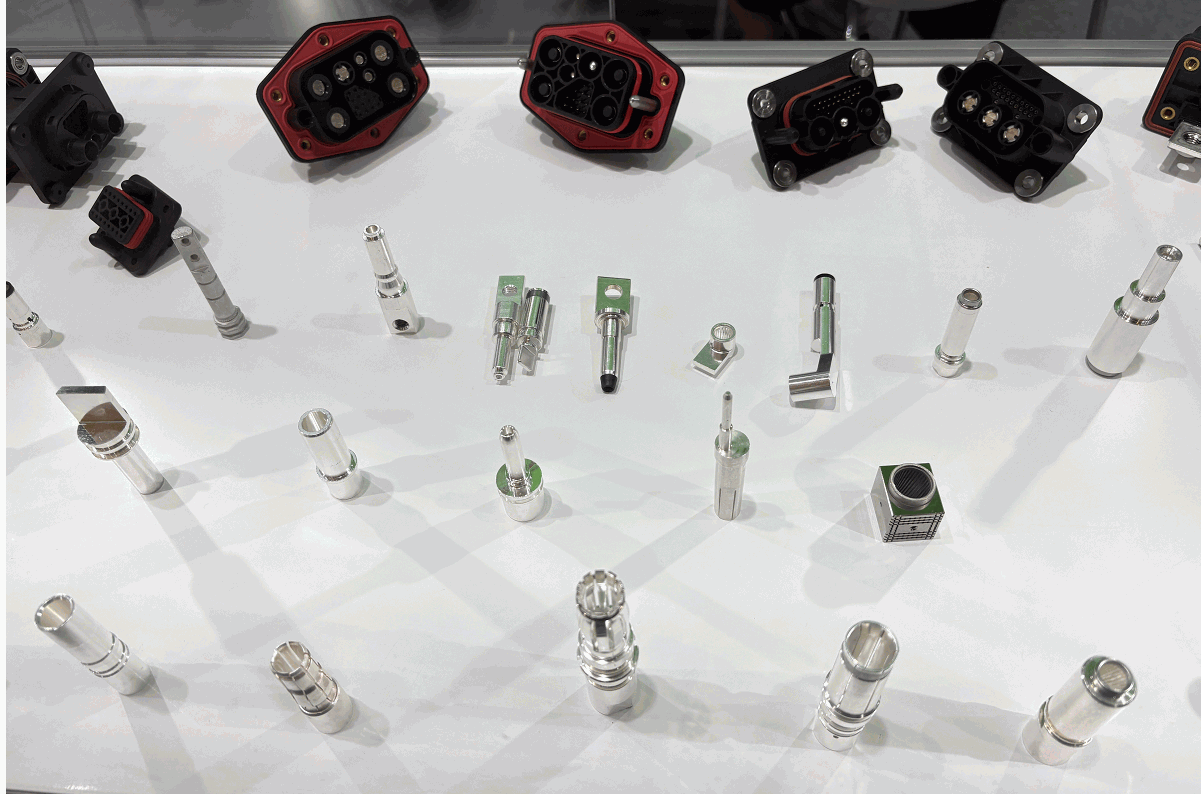
- EV Charging Pin Manufacturing — Type 2, CCS, NACS contact pins
- NACS Tesla Charging Pin Manufacturing — NACS-specific requirements
- EV Charging Pin Materials Guide — copper alloy selection
- Connector Pin Manufacturer Guide — complete OEM buyer guide
FAQ
What are the 10 key parameters for EV charging connector pins?
The 10 key parameters for EV charging connector pins are: 1. Connector standard reference IEC 62196-2 Type 2, IEC 62196-3 CCS, SAE J3400 NACS, GB/T 20234. 2. Wire diameter range from 0.5 mm signal to 8 mm power. 3. Current rating from 0.5A signal to 500A power continuous. 4. Voltage rating from 250V AC to 1000V DC. 5. Material grade using UNS designation per ASTM E527. 6. Plating specification per ASTM B700 silver, B488 gold, B545 tin. 7. Dimensional tolerance typically ±0.01 mm on critical diameters. 8. Operating temperature range -40 to 125 degrees C. 9. Mating cycle life typically 10,000 cycles. 10. Certification requirements including UL 2251, CE, CCC, IEC type test.
What is the difference between C11000 and C18150 copper for EV charging pins?
C11000 ETP copper is the standard high-conductivity copper at 100 percent IACS with 220 MPa tensile strength. C11000 is suitable for AC charging pins under 80A continuous at operating temperatures below 80 degrees C. C18150 chromium-zirconium copper is a precipitation-hardened alloy with 480 MPa tensile strength and 92 percent IACS minimum conductivity. C18150 maintains its strength up to 425 degrees C and is preferred for DC fast charging pins above 150A continuous or applications with operating temperatures above 80 degrees C.
What is the typical mating cycle life of EV charging connector pins?
Typical mating cycle life for EV charging connector pins is 10,000 to 30,000 cycles depending on the application. Consumer vehicle applications typically specify 10,000 cycles. Commercial fleet and DC fast charging applications typically specify 30,000 cycles. Mating cycle life is determined by spring material gold over nickel for signal, silver for power, contact force design, and plating quality. VOLCRIX builds to customer-specified cycle life with FAI cycle testing available on request.
What is ASTM B700 silver plating specification?
ASTM B700 is the standard specification for electrodeposited coatings of silver for engineering use. Type 1 is matte silver, Type 2 is bright silver, Type 3 is semi-bright. Grade A is with anti-tarnish treatment, Grade B is without. Class N is for general engineering, Class S is for special applications. For EV charging pins, typical specification is ASTM B700 Type 1 Grade A Class N with 3-5 micrometers thickness for indoor applications and 5-8 micrometers for outdoor applications.
Need EV Charging Connector Pin Specifications?
Free DFM review · Quote within 24 hours · Prototype in 7–15 days
Certifications, Standards & Compliance
- ISO 9001:2015 — Quality management system
- IATF 16949 — Automotive quality management
- IEC 62196-2 — Type 2 EV charging connector standard
- IEC 62196-3 — CCS Combined Charging System standard
- SAE J3400 — NACS North American Charging Standard
- UL 2251 — EV charging plug/receptacle safety
- ASTM B700 — Silver plating specification
- ASTM B568 — X-ray thickness measurement
For specific compliance questions contact our sales team.