
Custom Coil Spring Manufacturer: Compression, Torsion, and Extension Springs
Short answer: Custom coil spring manufacturing requires precision CNC spring coiling machinery, wire diameter selection based on load-deflection requirements, material certification per ASTM standards, stress relief heat treatment, and shot peening for fatigue life improvement. Compression, torsion, and extension springs each have unique tooling and process requirements. VOLCRIX has manufactured custom coil springs since 1991 on 60 spring coiling machines covering wire diameters from 0.1 mm to 12 mm with IATF 16949 quality system.
Need Custom Coil Spring Manufacturing?
Free DFM review · Quote within 24 hours · Prototype in 7–15 days
Common Applications
- Compression springs — for automotive suspension, industrial machinery, valves, switches, and consumer products requiring axial force
- Torsion springs — for clothespins, mouse traps, garage door mechanisms, and automotive applications requiring rotational force
- Extension springs — for trampolines, garage door openers, screen door mechanisms, and industrial counterbalance applications
- Specialty springs — for battery contacts, electrical switches, medical devices, and aerospace applications requiring specific force-deflection characteristics
Manufacturing Support from VOLCRIX
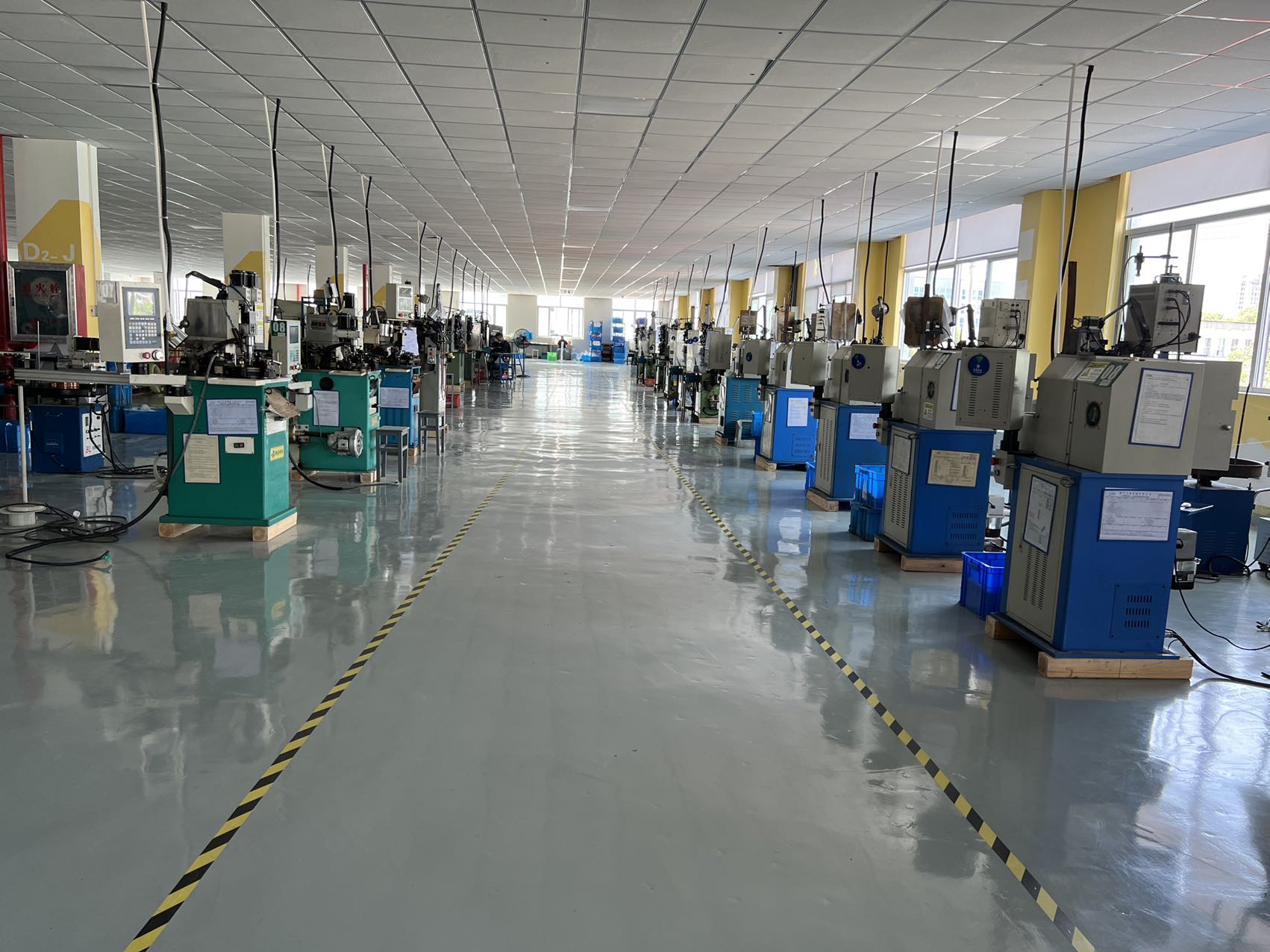
- 60 spring coiling machines — covering wire diameter range from 0.1 mm to 12 mm with CNC control for precision and repeatability
- Multi-material capability — music wire ASTM A228, stainless steel 302 ASTM A313, stainless steel 316, chrome-silicon ASTM A401, phosphor bronze ASTM B159, beryllium copper
- In-house heat treatment — stress relief at 400 degrees C for 30-60 minutes, shot peening for fatigue life improvement
- PPAP submission capability — for OEM automotive programs with full AIAG PPAP level 3 documentation including force-deflection charts
Buyer Checklist
- Define load and deflection requirements — load at specific deflection, free length, spring rate, maximum working deflection per spring design
- Specify material grade and wire diameter — music wire, stainless 302, stainless 316, chrome-silicon, phosphor bronze per ASTM standards
- Indicate cycle life requirement — 10,000 cycles for consumer goods, 1 million cycles for industrial, 10 million cycles for safety-critical applications
- Specify end type and direction — closed and ground, closed not ground, open, hook, loop, or specialty ends for compression springs; leg angle for torsion springs
Related Custom Manufacturing Services
- Custom Precision Springs — compression, torsion, extension springs
- Wire Diameter Impact on Heavy-Duty Coil Springs — wire diameter selection guide
- How to Specify a Custom Spring — 10 key parameters for spring selection
- Surface Finishing for Component Durability — surface finishing options
FAQ
What is the difference between compression, torsion, and extension springs?
Compression springs resist compressive forces along their axis and store energy when compressed. They are the most common spring type, with applications in automotive suspension, industrial machinery, and consumer products. Torsion springs resist rotational forces and store energy when twisted. They have legs extending from the coil ends for mounting. Extension springs resist tensile forces along their axis and have loops or hooks at the ends for attachment. Each type has unique tooling and process requirements.
What materials are used for custom coil springs?
Common materials for custom coil springs include music wire ASTM A228 for high-strength general purpose applications, stainless steel 302 ASTM A313 for general purpose corrosion resistance, stainless steel 316 for marine and medical applications, chrome-silicon ASTM A401 for high-temperature applications above 200 degrees C, phosphor bronze ASTM B159 for electrical conductivity applications, and beryllium copper for high cycle life springs. Material choice depends on operating environment, temperature, and required fatigue life.
What is the typical lead time for custom coil springs?
Prototype lead time for custom coil springs is 7-15 working days after drawing approval and PO. Production lead time for repeat orders with existing tooling is 15-25 working days. New tooling development for new spring geometries requires 4-6 weeks for CNC spring coiling setup. VOLCRIX provides free DFM review with every RFQ to optimize spring design for manufacturability and reduce lead time.
What is shot peening and why is it required for springs?
Shot peening is a cold working process that bombards the spring surface with small spherical media called shot. The impact creates compressive stress on the spring surface which counteracts the tensile stress that drives fatigue crack initiation. Shot peening typically doubles or triples the fatigue life of springs under cyclic loading. Shot peening is mandatory for automotive valve springs, suspension springs, and any spring above 100,000 cycle life requirement. VOLCRIX performs shot peening per customer specification.
Need Custom Coil Spring Manufacturing?
Free DFM review · Quote within 24 hours · Prototype in 7–15 days
Certifications, Standards & Compliance
- ISO 9001:2015 — Quality management system
- IATF 16949 — Automotive quality management
- ASTM A228 — Music steel wire specification
- ASTM A313 — Stainless steel spring wire specification
- ASTM A401 — Chrome-silicon spring wire specification
- EN 10270-1 — European patented cold-drawn spring steel wire
- JIS G3521 — Japanese hard-drawn steel wire standard
- RoHS 3 (EU 2015/863) — Restriction of Hazardous Substances
For specific compliance questions contact our sales team.