
Swiss Turning: The Key to High-Precision Connector Components
Direct answer: Swiss turning produces high-precision connector components with tight tolerances plus or minus 0.01 mm on diameters and concentricity, achieved through sliding headstock design that supports long length-to-diameter ratios up to 30:1. This precision enables connector components with consistent contact resistance, reliable mating cycles, and superior electrical performance. VOLCRIX has machined high-precision connector components since 1991 on 60+ Japanese Star Swiss turning machines.
Ready to Start Your Swiss Turned Connector Components Project?
Free DFM review · Quote within 24 hours · Prototype in 7–15 days
Common Applications
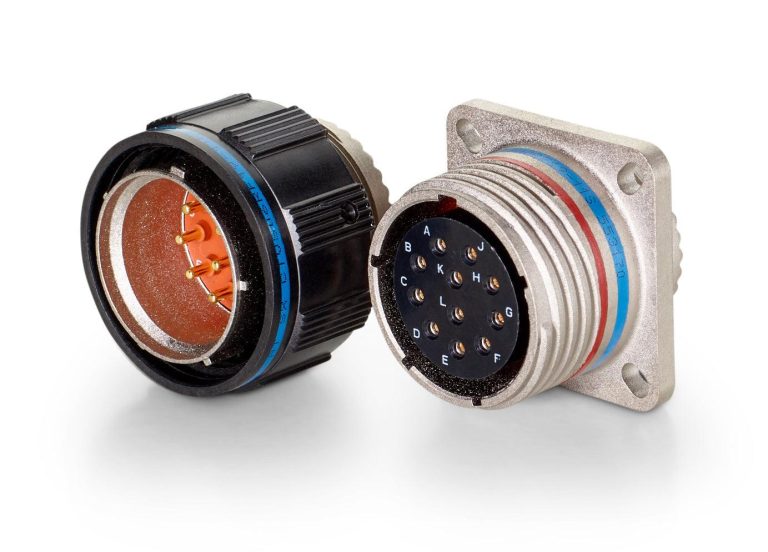
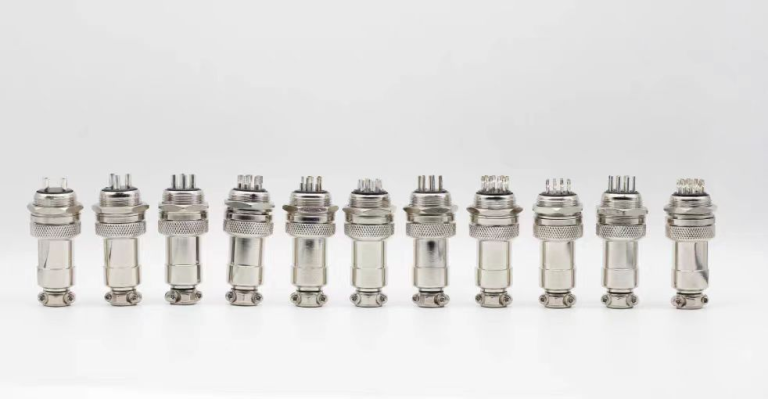
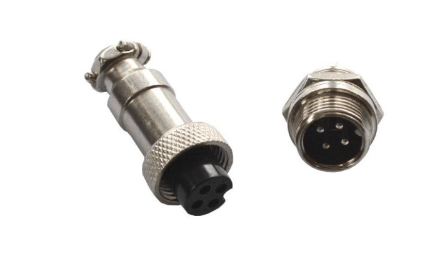
- Electronic connector pins and contacts — for D-sub connectors, circular connectors, RF connectors, and modular connector contacts requiring precise tolerances
- PCB header pins and receptacles — for through-hole and press-fit connector components compliant with IEC 60352-5 for PCB backplane connections
- EV charging connector pins — for Type 2 IEC 62196-2, CCS IEC 62196-3, NACS SAE J3400 charging pin contacts with silver plating
- Industrial circular connector contacts — for M12, M8, M23 industrial connectors and heavy-duty rectangular connectors per IEC 61076
Manufacturing Support from VOLCRIX
- 60+ Japanese Star Swiss turning machines — with sliding headstock design supporting parts under 25 mm diameter with high length-to-diameter ratios
- Tight tolerance machining — plus or minus 0.01 mm on critical diameters, plus or minus 0.005 mm on premium applications verified on Zeiss CMM
- Multi-material capability — — copper alloys C11000, C18150, C36000, beryllium copper, stainless steel 303/304/316, and specialty alloys
- In-house plating coordination — — silver 3-5 micrometers, gold 0.5-1 micrometer over nickel, tin 3-8 micrometers per ASTM B700 and ASTM B488
Buyer Checklist
- Specify connector standard reference — IEC 62196-2, IEC 62196-3, SAE J3400, MIL-DTL-38999, IEC 60352-5, etc.
- Define tolerance requirements — plus or minus 0.01 mm for high-precision, plus or minus 0.05 mm for standard precision
- Indicate material and conductivity requirements — copper alloy grade, electrical conductivity percentage IACS, mechanical properties
- Specify plating and surface finish — plating type, plating thickness per ASTM standards, surface roughness Ra value
Related Custom Manufacturing Services
- Custom Precision Pins — connector pins, contact pins, spring pins
- Custom EV Charging Pins — Type 2, CCS, NACS contact pins
- Swiss Turning Parts — Star Swiss turning precision parts
- Connector Pin Manufacturer Guide — complete OEM buyer guide
FAQ
Why is Swiss turning preferred for connector components?
Swiss turning is preferred for connector components because the sliding headstock design minimizes vibration and tool deflection, enabling tight tolerances plus or minus 0.01 mm on small diameter parts. The simultaneous multi-axis machining reduces cycle time for small cylindrical parts. Material utilization is improved through bar stock feeding versus billet loading. Surface finish is superior to conventional CNC turning due to reduced vibration. These advantages make Swiss turning ideal for connector pins under 25 mm diameter with high length-to-diameter ratios.
What connector components can Swiss turning produce?
Swiss turning produces a wide range of connector components: power charging pins, signal contacts, PCB header pins, receptacles, circular connector contacts, D-sub connector pins, RF connector contacts, modular connector contacts, press-fit pins per IEC 60352-5, and specialty contacts. All connector components requiring tight tolerances and small diameter can be efficiently produced on Swiss turning machines.
What is the typical tolerance for Swiss turned connector components?
VOLCRIX holds plus or minus 0.01 mm on critical connector pin diameters, plus or minus 0.005 mm on premium applications. Concentricity is held to plus or minus 0.01 mm TIR. Surface roughness Ra 0.4-1.6 micrometers standard, Ra 0.1-0.4 micrometers on premium applications. All tolerances verified on Zeiss CMM inspection with FAI documentation per shipment.
What is the difference between Swiss turning and conventional CNC turning for connector pins?
Swiss turning uses a sliding headstock that moves the bar stock past a fixed tool cluster, while conventional CNC turning uses a stationary ch and moving cutting tools. Swiss turning advantages for connector pins: tight tolerances plus or minus 0.01 mm, faster cycle times for small parts, superior surface finish, better material utilization. Conventional CNC turning advantages: flexibility for prototype and complex geometries, lower tooling cost for low-volume production, larger part capability.
Ready to Start Your Swiss Turned Connector Components Project?
Free DFM review · Quote within 24 hours · Prototype in 7–15 days
Certifications, Standards & Compliance
VOLCRIX products are built to international standards and customer specifications:
- ISO 9001:2015 — Quality management system
- IATF 16949 — Automotive quality management
- IEC 62196-2 — Type 2 EV charging connector standard
- IEC 60352-5 — Press-fit terminations for PCB
- MIL-DTL-38999 — Military circular connectors
- ASTM B700 — Silver plating specification
- ASTM B488 — Gold plating specification
- RoHS 3 (EU 2015/863) — Restriction of Hazardous Substances
For specific compliance questions contact our sales team.