
Automotive Armrest Hinge: Precision Stay Hinge for Center Console Manufacturing
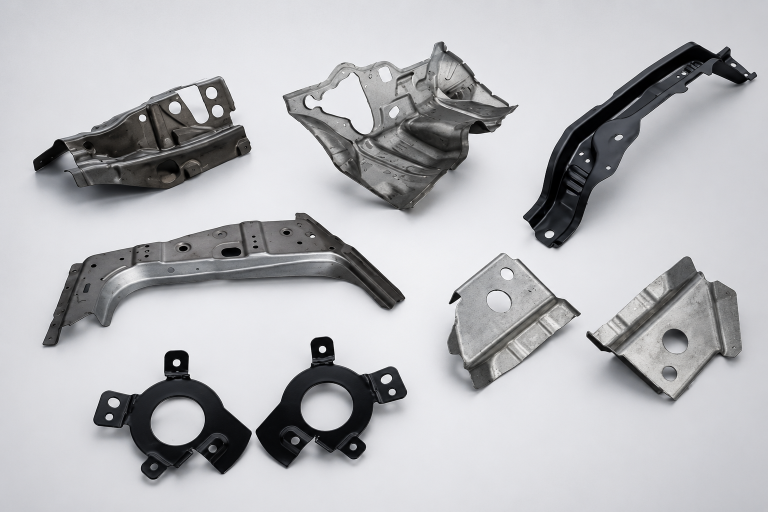
Short answer: Automotive armrest hinges are precision-stamped components that hold the center console armrest at adjustable positions during vehicle use. They are typically made from stainless steel 301 or 304 spring temper strip, 0.5 mm to 1.5 mm thickness, with progressive die stamping and precision-formed teeth that provide detent positions. Each armrest hinge requires 10,000 to 50,000 cycle life under load without permanent deformation. VOLCRIX has manufactured automotive armrest hinges since 1991 for OEM and Tier 1 customers including BYD, Geely, and other Chinese automotive brands.
Need Automotive Armrest Hinge Components?
Free DFM review · Quote within 24 hours · Prototype in 7–15 days
Common Applications
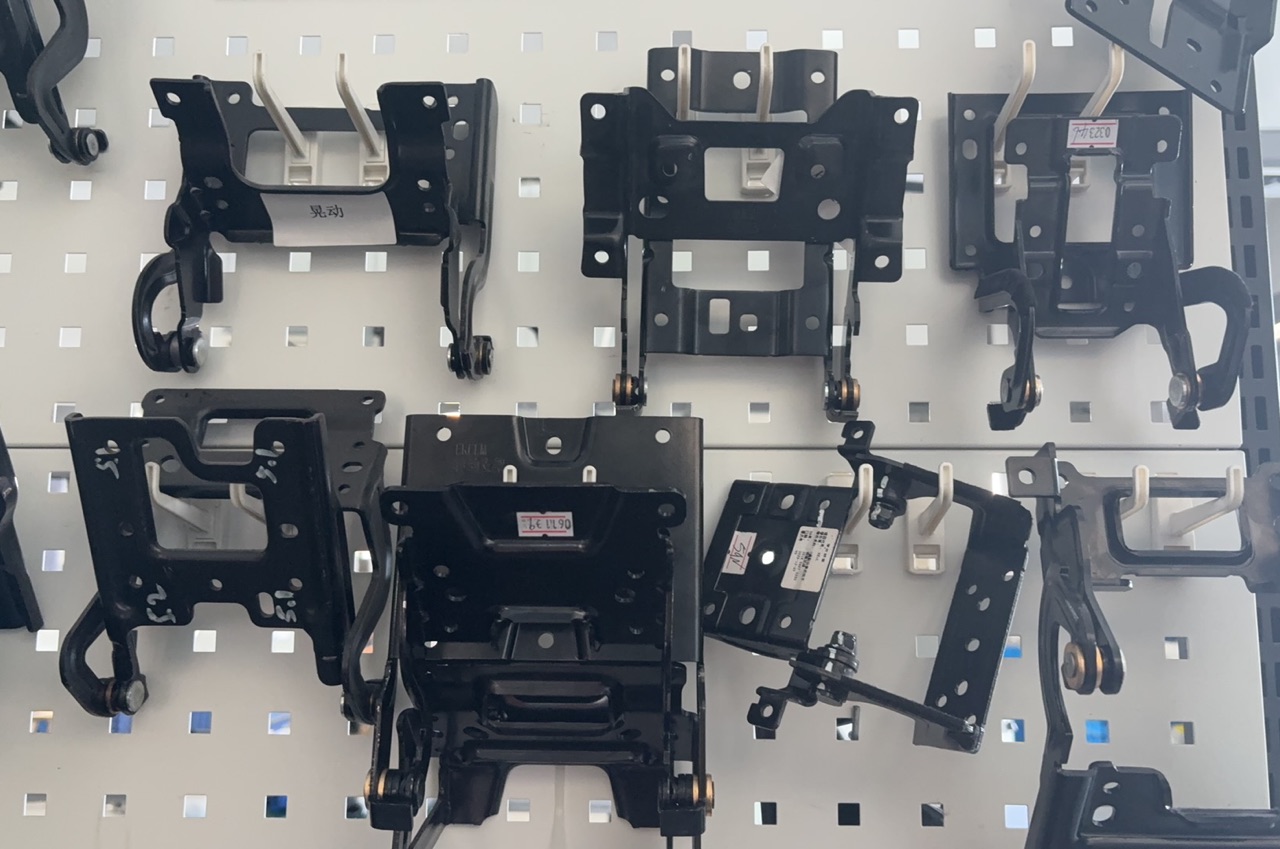
- Center console armrest hinges — for front and rear console armrests in passenger vehicles, SUVs, and trucks supporting armrest adjustment and locking
- Glove box lid hinges — for instrument panel glove box doors with damping and detent positions for opening and closing
- Seat back recliner hinge components — for second-row seat reclining mechanisms in SUVs and MPVs with multiple detent positions
- Cup holder and storage tray hinges — for hidden compartments, cup holders, and storage trays in center consoles with push-to-open functionality
Manufacturing Support from VOLCRIX
- 40 stamping presses from 5 tons to 200 tons — for high-volume armrest hinge production with progressive die capability
- Stainless steel 301/304 spring temper strip — with material certification per ASTM A240 and spring temper per ASTM A666
- Progressive die stamping — with precision-formed teeth for detent positions and spring-loaded locking features
- PPAP submission capability — for OEM automotive programs with full AIAG PPAP level 3 documentation
Buyer Checklist
- Specify material grade and temper — stainless steel 301 1/2 hard, 3/4 hard, or full hard per ASTM A666 for spring properties
- Define cycle life requirement — 10,000 cycles for economy vehicles, 50,000 cycles for premium vehicles with warranty considerations
- Indicate load rating — typical armrest load 50N to 200N depending on vehicle segment and armrest design
- Specify detent position count — typically 3 to 5 positions for armrest height adjustment, plus fully closed and fully open positions
Related Custom Manufacturing Services
- Custom Precision Hinges — stamped and formed hinges
- Sheet Metal Parts Manufacturing — precision stamping
- Stamping Tolerances Guide — precision stamping tolerances
- Metal Stamping Surface Finishing — surface finishing options
FAQ
What is the typical cycle life of an automotive armrest hinge?
Typical cycle life for automotive armrest hinges ranges from 10,000 to 50,000 cycles depending on vehicle segment and warranty requirements. Economy vehicles typically specify 10,000 to 20,000 cycles. Mid-segment vehicles specify 30,000 to 40,000 cycles. Premium vehicles specify 50,000+ cycles with lifetime warranty considerations. Cycle testing is performed per customer specifications including load testing, vibration testing per IEC 60068, and salt spray per ASTM B117 for corrosion resistance.
What materials are used for automotive armrest hinges?
Automotive armrest hinges are typically made from stainless steel 301 or 304 in spring temper condition per ASTM A666. Stainless steel provides corrosion resistance for the vehicle interior environment and spring temper provides the elastic properties needed for detent and locking functions. Some economy vehicles use high-strength carbon steel with zinc plating or nickel plating for cost reasons. Premium vehicles may use stainless steel 316 for higher corrosion resistance.
What is the typical load rating of an automotive armrest hinge?
Typical load rating for automotive armrest hinges ranges from 50N to 200N depending on vehicle segment. Economy vehicles typically specify 50N to 100N. Mid-segment vehicles specify 100N to 150N. Premium vehicles specify 150N to 200N with additional safety margins. Load rating is determined by armrest design, vehicle segment, and expected user load including arm weight, incidental loading, and crash safety considerations.
What is the difference between progressive die and transfer die stamping for armrest hinges?
Progressive die stamping processes the strip through multiple stations in a single die, with each station performing one operation. Transfer die stamping moves the part between separate dies for each operation. Progressive die is preferred for high-volume production above 100,000 pieces monthly due to lower per-piece cost. Transfer die is preferred for larger parts or lower volume production. Armrest hinges are typically produced via progressive die due to small size and high volume requirements.
Need Automotive Armrest Hinge Components?
Free DFM review · Quote within 24 hours · Prototype in 7–15 days
Certifications, Standards & Compliance
- ISO 9001:2015 — Quality management system
- IATF 16949 — Automotive quality management
- ASTM A240 — Stainless steel plate specification
- ASTM A666 — Stainless steel sheet and strip temper specifications
- AIAG PPAP — Production Part Approval Process
- VDA 6.3 — German automotive process audit
- ASTM B117 — Salt spray testing
- RoHS 3 (EU 2015/863) — Restriction of Hazardous Substances
For specific compliance questions contact our sales team.