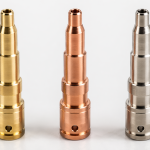

Custom Precision Shafts: A Buyer’s Guide for OEMs
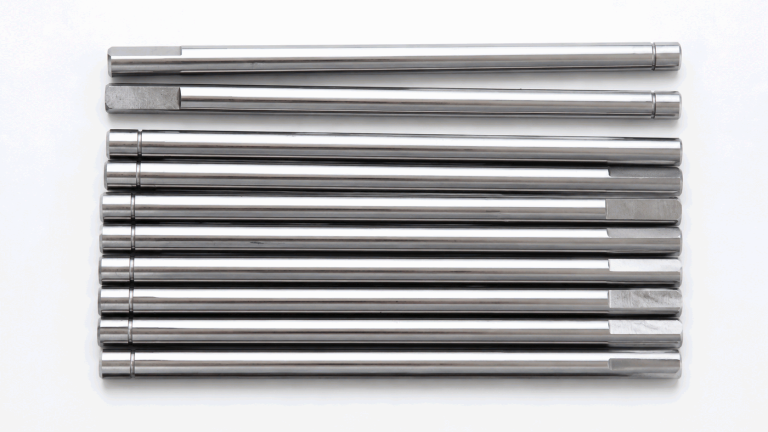
Direct answer: Custom precision shafts are CNC-turned or Swiss-turned cylindrical components machined to tight tolerances on diameter, concentricity, and surface finish for use in motors, pumps, valves, encoders, medical devices, and aerospace actuators. VOLCRIX produces them in stainless steel (303, 304, 316), brass (C3604, C11000), carbon steel (12L14, 1215), titanium, and engineering plastics, with standard tolerance of plus or minus 0.01 mm on OD and surface finishes down to Ra 0.4 micrometers.
This guide covers how precision shafts are specified, which materials and tolerances suit which applications, and the design rules that determine whether a shaft belongs on a Swiss lathe or a fixed-headstock CNC turning center.
Common Applications
- Electric motor shafts — rotor shafts for BLDC and stepper motors in robotics, drones, e-bikes, and HVAC blowers, often in 303 stainless or carbon steel with critical journal and shoulder tolerances for bearing fit.
- Pump and valve shafts — impeller shafts, valve stems, and packing gland shafts in 304 / 316 stainless for chemical and pharmaceutical service, with polished surfaces for sanitary applications.
- Encoder and resolver shafts — small-diameter shafts below 10 mm with tight runout below 0.005 mm for optical or magnetic encoder accuracy, Swiss-turned from 303 stainless or brass.
- Aerospace actuator and flight-control shafts — landing gear actuators, flight control linkages, and hydraulic servo shafts in 15-5 PH or 17-4 PH with controlled surface finish for fatigue performance.
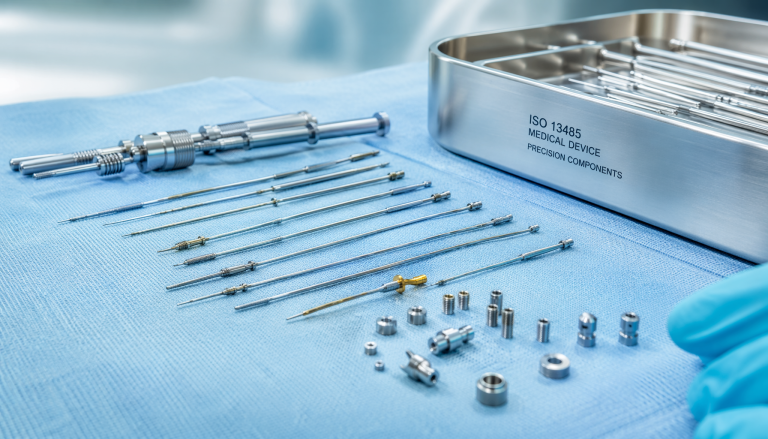
- Medical device shafts — guide wires, hypotubes, endoscopic shafts, and surgical instrument shafts in 304 / 316 stainless or titanium, with electropolishing for biocompatibility.
- Robotics and automation pivot shafts — articulated robot joints, AGV drive shafts, and linear actuator shafts in hardened 440C for high-cycle wear resistance.
Manufacturing Support from VOLCRIX
- 60+ Japanese Star Swiss turning machines — Star SR-20R, SR-32J, SV-20R for small-diameter shafts (typically under 10 mm and above 10:1 L/D), with sub-spindle pickoff for complete shaft features in one cycle.
- 40 CNC turning and milling centers — for larger-diameter shafts (typically 20-150 mm), eccentric features, cross-drilled lubrication holes, and keyway features that exceed Swiss capacity.
- Grinding capacity for tight-tolerance shafts — centerless and cylindrical grinding for OD tolerances below plus or minus 0.005 mm and surface finishes below Ra 0.2 micrometers on critical journal features.
- Heat treatment and finishing coordination — through-hardening, case-hardening, nitriding, and induction hardening through audited sub-suppliers, plus polishing, electropolishing, passivation, and plating (tin, nickel, chrome, black oxide).
- Zeiss CMM and optical comparator inspection — full dimensional and geometric tolerance verification against drawing datums, with Cpk reporting on critical features across the lot.
Precision Shaft — Buyer Checklist
- Specify every critical journal with a datum and tolerance — bearing seats, seal surfaces, and thread engagements each need a tolerance callout and datum letter; a single OD tolerance does not protect the critical feature.
- Mark concentricity, runout, and total indicated reading (TIR) per feature — these determine whether the shaft runs true in the assembly; they are not implied by an OD callout.
- Call out the required surface finish per feature — bearing seats need Ra 0.4 micrometers or better; seal surfaces need Ra 0.2-0.4. Mark each feature separately to avoid unnecessary grinding cost.
- Specify material grade and heat-treat condition — 303 vs 304 vs 316 stainless, or 12L14 vs 1215 carbon steel, changes machinability, corrosion resistance, and post-process options. Mark post-heat-treat hardness if grinding depends on it.
- Review lot size against process economics — under 50 pieces pays a setup premium; 500+ delivers the right balance; above 10,000 pieces on small shafts, multi-spindle or rotary-transfer can pull cycle time under 10 seconds.
Process Selection by Shaft Geometry
| Geometry | Best process at VOLCRIX | Tolerance | Lot range |
|---|---|---|---|
| Small-diameter (under 10 mm), long L/D (above 10:1) | Swiss turning with sub-spindle | plus or minus 0.01 mm standard, plus or minus 0.005 mm with grinding | 100 to 100,000+ |
| Medium-diameter (10-50 mm), short L/D (below 5:1) | Fixed-headstock CNC turning | plus or minus 0.01 mm standard, plus or minus 0.005 mm with grinding | 50 to 50,000 |
| Large-diameter (50-150 mm) or prismatic features | CNC turning plus 4-axis milling | plus or minus 0.02 mm standard, tighter with grinding | 20 to 10,000 |
| Tight-tolerance features (under plus or minus 0.005 mm) | Turning plus cylindrical or centerless grinding | plus or minus 0.002 mm achievable | All ranges, with grinding setup cost |
| High-volume small shafts (above 50,000 pieces) | Multi-spindle or rotary transfer | plus or minus 0.01-0.02 mm | 50,000 to 1,000,000+ |
| Cross-drilled lubrication or cross-pin features | Swiss with live tooling, or CNC mill-turn | plus or minus 0.02 mm typical | All ranges |
Material Selection Guide
Material choice is driven by mechanical strength, corrosion resistance, machinability, and post-process compatibility.
303 stainless is the default small-shaft material. It machines cleanly, holds tight tolerances, and has enough corrosion resistance for most indoor and mildly corrosive environments. It is not as corrosion-resistant as 304 or 316, but it machines 30-40% faster — a meaningful difference on long production runs.
304 and 316 stainless are specified for medical, food-and-beverage, marine, and chemical service. 316 adds molybdenum for chloride resistance and is the standard for salt-exposed environments. Both work-harden during cutting, so toolpath, coolant, and chip-break strategy must be controlled to hold tolerance across the lot.
Carbon steel (12L14, 1215) is the cheapest precision shaft material and machines beautifully. It is used for indoor mechanical assemblies where corrosion is not a concern, often with a black oxide, zinc, or nickel finish for cosmetic and modest corrosion protection.
Brass (C3604, C11000) is specified for shafts that also carry current or signal (slip rings, sensor shafts, encoder shafts) or where low magnetic permeability is needed. C3604 is the free-machining grade; C11000 has higher conductivity. Both machine to very tight tolerances and take thread rolling well.
Titanium (Grade 2, Grade 5) is specified for medical implants, aerospace, and lightweight applications where strength-to-weight ratio matters. It machines at roughly half the speed of stainless and requires controlled coolant and sharp tools to avoid work hardening. Biocompatibility grades add documentation cost per lot.
Engineering plastics (PEEK, POM, Delrin) appear in low-load, lubricity-critical applications. PEEK handles continuous service above 200 degrees Celsius and is used in aerospace and medical; POM and Delrin are common in consumer and light-industrial products where the shaft runs dry against a polymer or metal bushing.
Surface Finish and Post-Process Considerations
Surface finish on a precision shaft is rarely cosmetic — it usually affects function. Bearing seats must be smooth enough to avoid brinelling and to keep lubricant in the contact zone. Seal surfaces need controlled roughness to hold oil or grease without pumping it past the seal. Medical shafts must be electropolished for biocompatibility and clean-in-place performance.
The standard as-machined finish from a Swiss or CNC lathe on steel and stainless is Ra 0.8-1.6 micrometers. Cylindrical or centerless grinding drops that to Ra 0.2-0.4 micrometers on critical features, often with a final pass to remove grind stress. Polishing, electropolishing, and passivation add cost but are non-negotiable for medical, food-grade, and certain aerospace programs.
Plating (tin, nickel, chrome, black oxide) adds a layer of corrosion protection and changes the surface chemistry. Hard chrome is the standard for hydraulic shafts running against seal glands, with thickness and hardness specified to customer requirements. Tin and nickel are used for corrosion protection in indoor environments. Black oxide is a cosmetic and mild-corrosion finish on carbon steel, often paired with oil for storage.
Industry Context Buyers Should Know
The EV shift has created new programs in traction motor rotor shafts, encoder shafts for resolver systems, and thermal management pump shafts — many in 304 or 316 stainless with tight runout below 0.01 mm on the encoder feature. Medical devices have driven demand for longer hypotubes where Swiss guide-bushing support is the only practical way to hold tolerance.
The consumer electronics industry continues to push small motor shaft volumes into the millions, with multi-spindle and rotary-transfer equipment serving the highest-volume programs.
Related Custom Manufacturing Services
Precision Shafts | Swiss Turning Parts | CNC Machined Parts | Precision Machining | Automotive Parts
Authority Summary
FAQ — Custom Precision Shafts
What tolerance can VOLCRIX hold on precision shafts?
Standard tolerance is plus or minus 0.01 mm on OD, ID, and face features, achieved directly out of Swiss or CNC turning. Critical features can be tightened to plus or minus 0.005 mm with cylindrical or centerless grinding, and to plus or minus 0.002 mm with multi-pass grinding and climate-controlled inspection. Tight-tolerance features always require a Cpk study to confirm the supplier can hold the call across production lots.
Which materials are most common for precision shafts?
303 stainless is the default small-shaft material. 304 and 316 stainless are used for medical, food-grade, marine, and chemical service. 12L14 and 1215 carbon steel are the cheapest option for indoor mechanical assemblies. Brass C3604 and C11000 are specified for current-carrying or low-permeability shafts. Titanium is used for medical implants and aerospace; engineering plastics (PEEK, POM, Delrin) appear in low-load, lubricity-critical applications.
What is the best surface finish for a bearing seat?
Bearing seats typically need Ra 0.4 micrometers or smoother to avoid brinelling and to maintain a stable lubricant film. Cylindrical grinding is the standard process for achieving this. Seal surfaces usually need Ra 0.2-0.4 micrometers. Non-critical features can be left at the as-machined finish (typically Ra 0.8-1.6 micrometers) to save grinding cost.
How do I specify concentricity and runout on a shaft drawing?
Use a geometric tolerance callout with a datum reference. Concentricity is specified at the relevant feature relative to the datum (usually the bearing seat or center hole), with a tolerance value in millimeters. Runout (circular or total) is more common in modern drawings because it is easier to inspect; it is specified similarly with a datum. A tolerance value of 0.01 mm TIR on the critical feature relative to the bearing seat is a typical callout.
Can VOLCRIX produce shafts with cross-drilled lubrication holes?
Yes. On Swiss machines, cross-drilled lubrication holes are produced in the live-tooling station with the part supported by the sub-spindle. On fixed-headstock CNC turning centers, cross holes are produced by rotating the part to the drilling position. Concentricity between the cross hole and the shaft OD is typically held within plus or minus 0.02 mm.
What is the difference between Swiss turning and CNC turning for shafts?
Swiss turning is best for small-diameter (under 10 mm) and long (above 10:1 L/D) shafts, because the guide bushing supports the bar stock close to the cutting tool. CNC turning on a fixed-headstock lathe is best for larger, shorter shafts and for parts needing tool access from many angles. Both processes at VOLCRIX achieve the same plus or minus 0.01 mm standard tolerance; the choice is geometry-driven.
Does VOLCRIX handle heat treatment and grinding?
VOLCRIX coordinates heat treatment (through-hardening, case-hardening, nitriding, induction hardening) and grinding (cylindrical, centerless) through audited sub-suppliers under signed quality agreements. The shafts are machined and inspected at our facility with full lot traceability. We hold the production part approval.
What information should I include in a precision shaft RFQ?
Send the 2D drawing with GD&T (especially concentricity and runout callouts), the 3D step file, material grade, annual volume and lot size, target piece price if known, and any critical surface finish or post-process requirements (grinding, plating, passivation). The supplier should respond with a DFM note identifying the right process (Swiss or fixed-headstock) and any features that need clarification.
Certifications & Standards
- ISO 9001 — Quality management system
- IATF 16949 — Automotive quality management
- ISO 13485 — Medical device quality management
- ISO 14001 — Environmental management
- ISO 45001 — Occupational health and safety
- AS9102 / PPAP — First article and production part approval process
- RoHS / REACH — Material compliance for electronics and EV
- ASTM A484 / A582 — Stainless steel bar stock
- ASTM A108 / A29 — Carbon steel bar stock
- GB/T 1804-m — General tolerance for turned parts