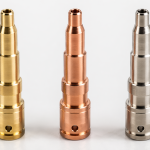
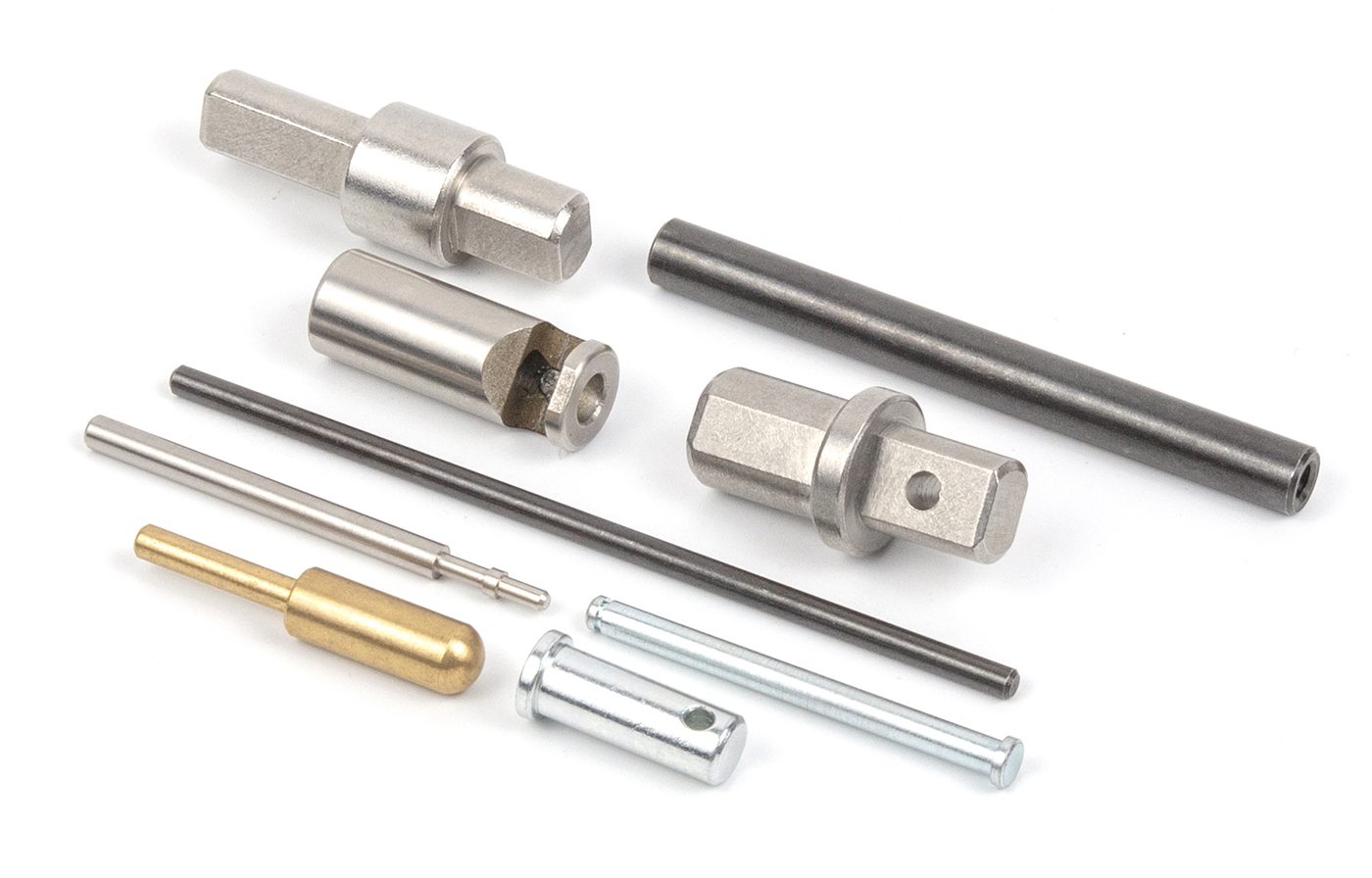

Swiss Turning Precision Parts with Tin / Nickel Plating: When Tin Saves Cost, When Nickel Saves Performance
Direct answer: Swiss turning produces small precision parts to plus minus 0.01 mm OD tolerance with sub-0.01 mm runout, and tin or nickel plating finishes the parts for solderability, corrosion resistance, or wear surface. Tin plating (3-10 microns per ASTM B545) is the cost-effective choice for signal pins, automotive sensors, and consumer electronics contacts where solderability is the priority. Nickel plating (3-8 microns electrolytic, or 5-25 microns electroless per ASTM B733) is the hard, wear-resistant choice for shafts, valve components, and parts that must survive salt spray or sliding contact. VOLCRIX runs Swiss turning and in-house tin/nickel plating on the same factory floor, with plus minus 0.5 microns plating tolerance verified by XRF and full IATF 16949 control plans.
Common Applications for Swiss Turned Tin/Nickel Plated Parts
- Automotive sensor pins and probe bodies (ABS wheel speed, oxygen sensor, MAP sensor): brass C3604 or 303 stainless Swiss-turned bodies with 5-8 microns matte tin plating for solderable lead-wire termination; IATF 16949 PPAP supported.
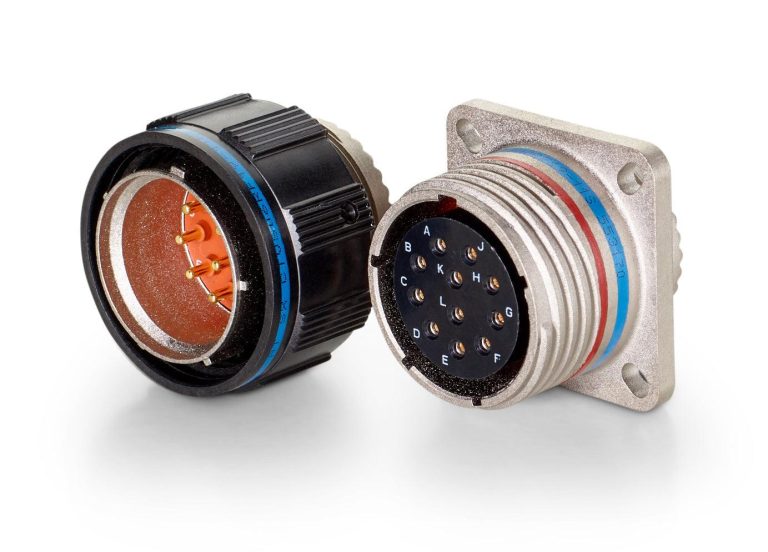
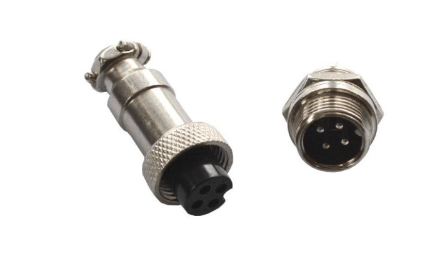
- Industrial connector contacts (M8, M12, M16 circular connectors, D-sub machined pins): brass C3604 contacts with selective gold over nickel, or full tin over nickel underplate, per IEC 60512-2-1 contact-resistance and IEC 60068-2-52 salt-spray specs.
- Hydraulic and pneumatic valve spools: 316L stainless Swiss-turned valve spools with 25-50 microns electroless nickel plating (Ni-P) for wear resistance and corrosion protection; surface Ra 0.2-0.4 after grinding.
- Medical device components (instrument shafts, surgical tool pins, dental handpiece mandrels): 316L stainless or titanium Swiss-turned parts with 5-15 microns electroless nickel or PTFE-nickel composite coating; ISO 13485 audit pack.
- Consumer electronics charging contacts (USB-C receptacle pins, magnetic charging pogo pins, spring-loaded contacts): brass C3604 or beryllium copper Swiss-turned contacts with 3-5 microns gold over 3-5 microns electrolytic nickel underplate for 10,000+ mating cycle durability.
- RF connector and microwave components (SMA, SMB, MCX precision pin bodies): brass C3604 Swiss-turned pins with 5-10 microns matte tin plating for solder termination; precision-machined for 50-ohm impedance control.
Manufacturing Support from VOLCRIX
- Material selection across brass C3604, C260 cartridge brass, beryllium copper C17200, copper C11000, stainless 303/304/316L, and aluminum 6061/2024 — all verified by in-house spectrometer before cutting.
- Swiss turning on 60+ Star SR-20R / SR-38R / SB-20R machines for diameters 1-38 mm; tolerance plus minus 0.01 mm OD standard, plus minus 0.005 mm on request; concentricity and runout under 0.005 mm.
- In-house plating line: matte tin (3-10 microns per ASTM B545), bright tin (3-10 microns), electrolytic nickel (3-8 microns per ASTM B689), electroless nickel (5-25 microns per ASTM B733 with optional PTFE co-deposit), and gold over nickel for high-reliability contacts.
- Selective plating capability with custom masking fixtures (rubber boots, tape, wax) for connector pins where the mating zone, crimp barrel, and lead-wire termination need different finishes on the same part.
- Inspection: XRF coating-thickness mapping per the supplier-agreed measurement points, ASTM B117 salt-spray chamber (96-1000 h depending on spec), cross-section metallography on first articles, and visual acceptance per ASTM B571.
Swiss Turned Tin/Nickel Plated Parts Buyer Checklist
- Choose the right plating family by function, not by cost alone: tin for solderability (signal pins, lead-wire termination), electrolytic nickel for diffusion barrier (under silver or gold), electroless nickel for wear resistance and uniform thickness on complex geometry.
- Specify plating zones separately in the drawing: mating zone (gold over nickel), termination zone (tin), retention zone (nickel only), non-functional zone (no plating or matte tin for cost). A finish name alone does not determine performance.
- State thickness in microns and acceptable XRF measurement locations: do not just say “gold plated.” Specify e.g. “gold 1.0-2.0 microns over electrolytic nickel 3.0-5.0 microns, XRF measured at three locations per pin, AQL 1.0/4.0.”
- Confirm whether dimensions apply before or after plating: tin plating adds 3-10 microns per surface, nickel 3-25 microns. The supplier typically machines 0.010-0.015 mm undersize before plating to bring the final OD in spec.
- Lock change-control terms for plating chemistry: which plating bath, supplier, or process changes require buyer notification? For automotive programs (IATF 16949), every chemistry change typically triggers PPAP revalidation. For consumer electronics, a documented change log with re-sampling is typical.
Related Custom Manufacturing Services
Custom Swiss Turning Parts | Stainless Steel Turned Parts Guide | Custom Brass Turned Parts | Connector Pin Manufacturing Guide
Tin vs Nickel Plating Decision Tree
The choice between tin and nickel plating is driven by the part’s primary function:
| Function | Recommended finish | Thickness | Standard |
|---|---|---|---|
| Solderable lead-wire termination | Matte tin (lead-free) | 3-8 microns | ASTM B545 |
| Press-fit or crimp termination | Matte tin or tin over Ni | 5-10 microns | ASTM B545 |
| Wear surface (sliding contact) | Electroless nickel (Ni-P) | 15-50 microns | ASTM B733 |
| Salt-spray durability | Electroless nickel or hard chrome | 25-50 microns | ASTM B733 |
| Diffusion barrier under precious metal | Electrolytic nickel | 3-5 microns | ASTM B689 |
| High-reliability mating contact | Gold over electrolytic nickel | 0.5-2 microns Au + 3-5 microns Ni | ASTM B689 |
Tin Whisker Mitigation Strategies
Tin whiskers are conductive filaments that grow spontaneously from matte tin surfaces, especially on parts stored above 50 C, under mechanical stress, or with pure tin above 10 microns thickness. Whiskers can cause short circuits in fine-pitch electronics. VOLCRIX offers four mitigation strategies:
- Nickel underplate (2-3 microns) under the tin: blocks tin grain growth that drives whisker formation. The most common automotive and aerospace solution.
- Reflowed (hot-dip equivalent) tin: post-plate heat treatment at 280 C for 1-2 minutes melts and resolidifies the tin with larger grain size, suppressing whisker growth.
- Lead-free tin alloys (Sn-Cu, Sn-Ag, SAC305): alloying elements inhibit whisker growth. Sn100 (Sn-Cu-Ni-Ge) is a common lead-free alternative.
- Conformal coating over the tin: acrylic or urethane coating mechanically blocks whiskers from bridging to adjacent conductors.
Standards Governing Swiss-Turned Plated Parts
The relevant standards for tin/nickel plating on Swiss-turned parts span plating-process standards (how to deposit the finish), performance standards (what the finish must do), and inspection standards (how to verify):
- ASTM B545: Electrodeposited tin — covers thickness classes (Class 1: 5 microns minimum; Class 2: 8 microns; Class 3: 12 microns; Class 4: 25 microns; Class 5: 38 microns), adhesion tests, and visual acceptance criteria.
- ASTM B733: Autocatalytic (electroless) nickel-phosphorus coatings — covers Type I (low phosphorus, 1-3% P, bright, low wear), Type II (medium phosphorus, 3-10% P, general purpose), Type III (high phosphorus, 10%+ P, most corrosion resistant), Type IV (medium phosphorus with PTFE co-deposit for lubricity).
- ASTM B689: Electrodeposited engineering nickel coatings for engineering use — covers engineering-grade nickel (200-1000 HV hardness depending on bath).
- ASTM B117: Standard practice for operating salt spray (fog) apparatus — defines the test apparatus, salt solution (5% NaCl), chamber temperature (35 C), and exposure duration. 96 h is typical for consumer electronics; 240 h for industrial; 500-1000 h for automotive.
- ASTM B571: Adhesion testing methods for metallic coatings — defines bend, burnish, file, grind-saw, heat-quench, and pull-test methods to verify plating adhesion.
- IEC 60512-2-1: Connectors for electronic equipment — basic test procedures and measuring methods — Part 2-1: contact resistance tests. Defines the millivolt-level method used to measure plating quality on connector contacts.
- IEC 60068-2-52: Environmental testing — salt mist, cyclic (sodium chloride solution). Defines the cyclic salt-mist test used for automotive and industrial connector approvals.
- ISO 1101:2017: Geometrical product specifications (GPS) — geometrical tolerancing — defines the GD&T symbol language used to control critical-to-function features on plated parts.
For automotive programs, IATF 16949 control plans typically cite the relevant ASTM standard (e.g. ASTM B545 for tin), the substrate spec (e.g. ASTM B16 for brass bar), and the inspection frequency (XRF 100% or AQL sampling). The supplier’s control plan must reference the latest revision of each cited standard.
FAQ: Swiss Turning with Tin / Nickel Plating
Should I choose tin or nickel plating for my Swiss-turned part?
Tin plating (3-8 microns matte tin) is the standard for connector contacts that need solderability. Nickel is the standard for parts that need wear resistance, salt-spray durability, or a diffusion barrier under precious metal plating. VOLCRIX plates tin or nickel on Swiss-turned parts every day; the choice depends on whether the part’s primary function is electrical contact (tin) or mechanical wear (nickel).
What thickness of tin plating do you recommend for solderable contacts?
3-8 microns matte tin per ASTM B545 is typical for wave-solder or reflow-solder applications. For press-fit or crimp terminations, 5-10 microns. For applications that risk tin whisker growth, specify a 2-3 microns nickel underplate under the tin, or use reflowed tin (hot-dip equivalent). Lead-free matte tin (Sn100 or SAC-alloy composition) is the modern default for RoHS compliance.
When is electroless nickel better than electrolytic nickel?
Electroless nickel (Ni-P, per ASTM B733) is better when the part has complex geometry (deep recesses, internal bores) where electrolytic current cannot reach uniformly. Electroless deposits are also harder (as-plated HRC 48-52, heat-treated HRC 60+) and more wear-resistant. Electrolytic nickel is cheaper and faster, and preferred when the part is simple geometry and thickness uniformity is not critical.
Does VOLCRIX offer selective tin/nickel plating on Swiss-turned parts?
Yes. We mask non-plating zones with tape, wax, or reusable rubber boots, and rack the parts so only the declared zones are submerged. Selective plating is typical for connector pins (silver on mating zone, tin on crimp barrel) and sensor bodies (tin on lead-wire termination only). DFM review of the masking strategy is included in every quote.
How does tin plating affect dimensional tolerance?
Tin plating adds 3-10 microns per surface (0.003-0.010 mm OD growth). On a Swiss-turned pin with plus minus 0.01 mm tolerance, this is significant — a 5-micron tin layer shifts the OD by 10 microns (0.010 mm), which is the entire tolerance band. The standard practice is to machine 0.010-0.015 mm undersize before plating, then plate to bring the final OD in spec. The drawing should explicitly state whether dimensions apply before or after plating.
Can Swiss-turned parts be tin/nickel plated after assembly?
Generally no. The plating bath chemistry (acid for tin, alkaline for electroless nickel) will attack most assembled components, including solder joints, plastic housings, O-rings, and electronic components. Plating must happen on individual components before assembly. For assembled parts that need surface protection, consider conformal coating (Parylene, acrylic, urethane) or selective spray application.
What is the typical salt-spray performance of tin/nickel plated Swiss parts?
Matte tin over nickel underplate: 96-240 h ASTM B117 neutral salt spray without red rust on copper substrate. Electroless nickel (25-50 microns): 500-1000 h ASTM B117 without red rust on steel, 1000+ h on copper substrate. Hard chrome over nickel: 1000+ h. The exact salt-spray rating depends on the substrate, plating thickness, and passivation. VOLCRIX runs ASTM B117 testing in-house and reports the rating on every batch.
Does VOLCRIX handle RoHS and REACH compliance for tin/nickel plating?
Yes. Standard tin plating is lead-free matte tin (Sn100 or SAC-alloy composition), which is RoHS compliant. Standard nickel plating is electrolytic or electroless nickel without cadmium or other restricted substances. REACH SVHC declarations are provided on request. For automotive programs, IMDS submissions are included.