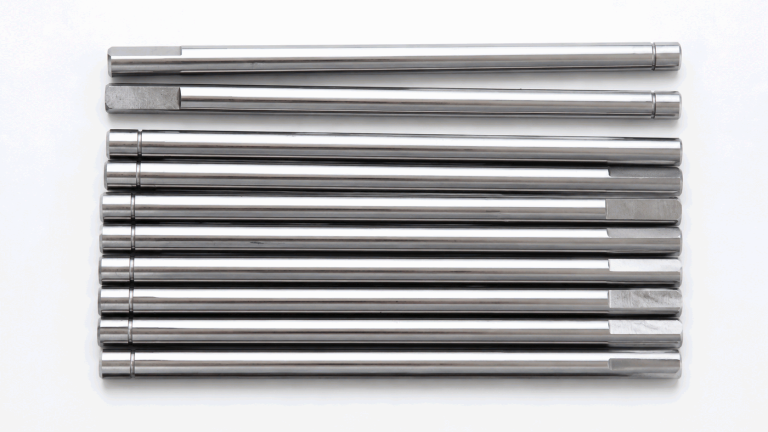
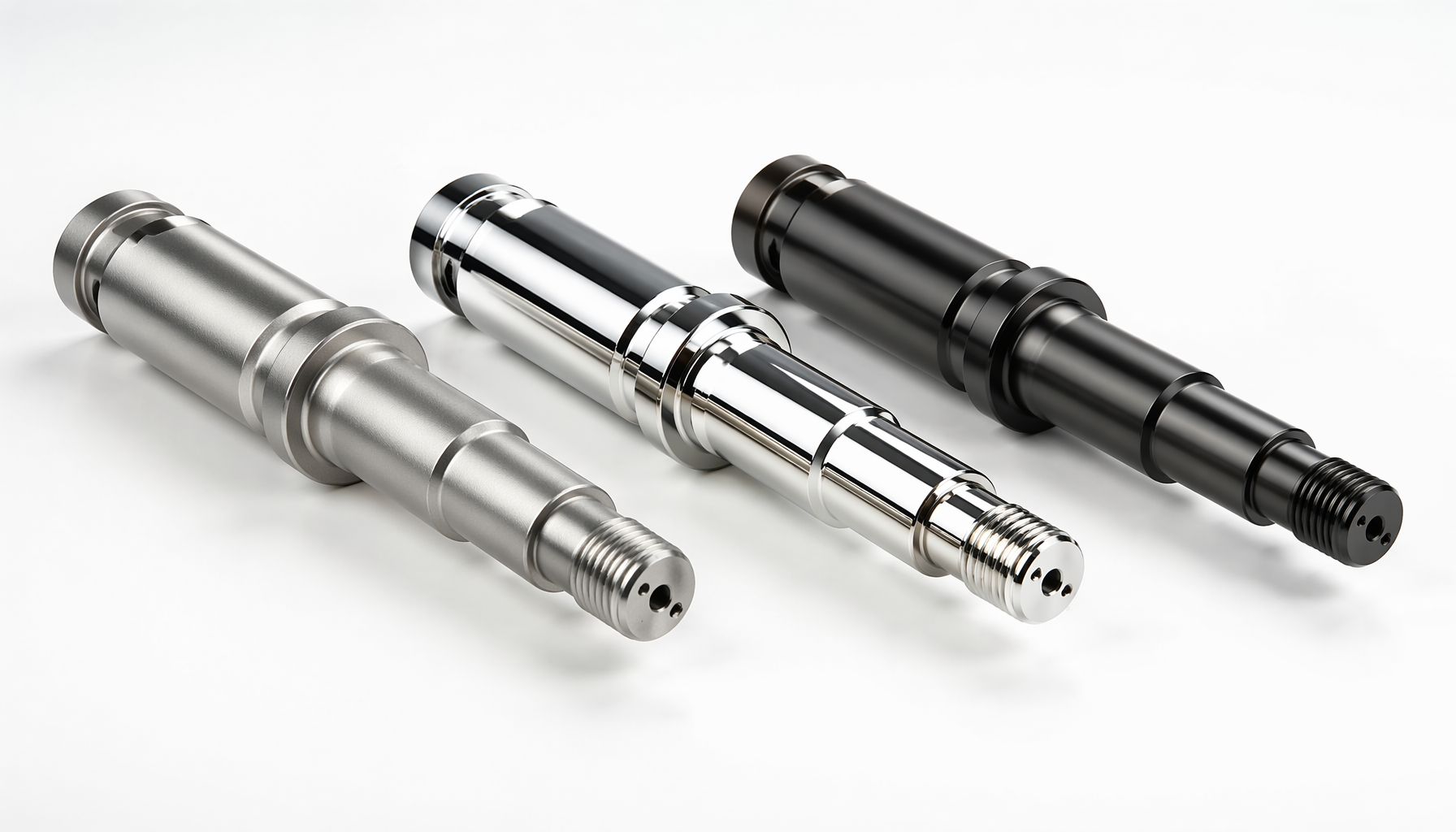


Precision shaft surface finishing guide: grinding, polishing, plating, and coating options. Learn how surface finish affects shaft performance, wear resistance, and fit tolerance in assemblies.
This guide walks through the surface finishing options we apply to precision shafts at VOLCRIX — when each is used, what it costs you in tolerance, and why one finish beats another for a given application. If you’re still choosing stock, start with our precision shaft materials guide — material sets the ceiling on what finishing can achieve.
Why Surface Finishing Matters on a Precision Shaft
A shaft’s surface roughness, typically measured as Ra (arithmetic mean roughness), directly determines how it performs in assembly. A bearing journal at Ra 0.4 runs cooler and lasts longer than the same journal at Ra 0.8. A sealing surface that’s too rough shreds the seal lip; too smooth and it can’t hold a lubricant film.
Finishing also closes the loop on tolerances. Grinding and polishing are the last operations before inspection, which means they’re where final dimensional accuracy is locked in. See how this fits the bigger picture in our tolerances and quality control guide.
Grinding: The Tolerance Closer
Grinding is the workhorse of precision shaft finishing. After turning leaves 0.1–0.2 mm of stock, cylindrical grinding brings diameters to ±0.005 mm or tighter and surface roughness down to Ra 0.4–0.8. For bearing journals and critical mating diameters, there’s no substitute.
We grind hardened steel shafts routinely. The process removes the distorted surface layer left by heat treatment and restores geometry that quenching can warp. Centerless grinding handles long, slender shafts where deflection is a risk. Between-centers grinding is reserved for parts with strict concentricity callouts.
When the print calls for Ra 0.2 or finer, grinding gets you to the starting line. Polishing takes you across it.
Polishing: When You Need Mirror Finish
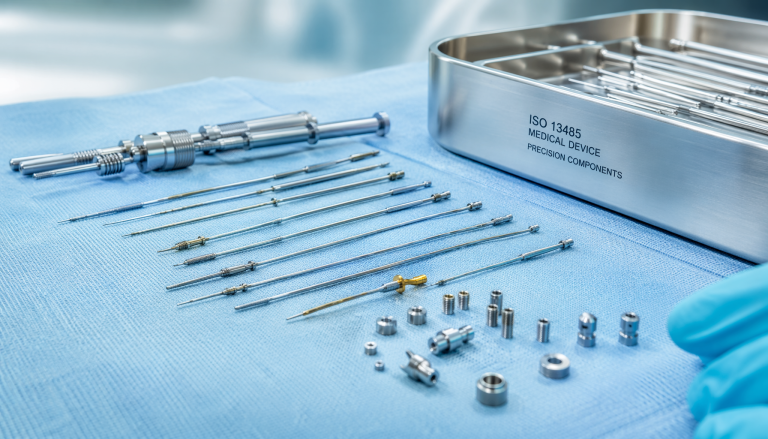
Polishing pushes surface roughness below what grinding can economically reach — Ra 0.1 and lower. We use it on seal-running surfaces, optical shafts, and medical components where a mirror finish is functional, not cosmetic.
The trade-off is dimensional control. Polishing removes material unpredictably, so we hold tight tolerances by grinding first and polishing last, removing only a few microns. Done wrong, polishing rounds edges and breaks datum surfaces. Done right, it’s the difference between a shaft that leaks and one that doesn’t.
Plating: Corrosion and Wear Defense
Plating deposits a metal layer on the shaft surface. Each plating choice solves a different problem, and the choice matters — a wrong plating can cause hydrogen embrittlement on high-strength steel or throw a tight diameter out of spec.
Zinc Plating
Zinc is the budget corrosion barrier. It sacrificially protects steel shafts used in general industrial and automotive applications. Clear zinc passivation is thin (5–12 µm) and keeps dimensions stable. Yellow zinc adds corrosion resistance at a small cost in appearance. Zinc won’t add hardness — it’s strictly a rust fighter.
Nickel Plating
Nickel brings both corrosion resistance and surface hardness. It’s our go-to for shafts exposed to mildly corrosive environments — food equipment, marine-adjacent hardware, instrumentation. Electroless nickel plates uniformly, even in blind holes, which makes it ideal for complex shaft geometries. Thickness runs 5–25 µm, and we always account for the buildup on threaded and mating diameters.
Chrome Plating
Hard chrome is the wear champion. It deposits 60–70 HRC surface hardness on shafts that face sliding contact — hydraulic piston rods, pump shafts, linear motion shafts. Chrome resists scoring, galling, and corrosion simultaneously. It’s also expensive and environmentally regulated, so we reserve it where wear performance justifies the cost. After chrome, we often grind again to restore exact dimensions.

Anodizing: For Aluminum Shafts
Aluminum shafts can’t be plated the way steel can. Anodizing is the answer. It converts the aluminum surface to a hard oxide layer — Type II for general corrosion and cosmetic color, Type III (hardcoat) for wear resistance approaching hardened steel.
Hardcoat anodizing on aluminum shafts running in polymer bearings is a common combo in aerospace and semiconductor tooling. The oxide layer is non-conductive and chemically inert, which suits cleanroom and corrosive environments. Buildup is predictable — roughly half grows into the substrate, half above — so we size the machined diameter to land on spec after anodizing.
Heat Treatment: Hardness Before Finish
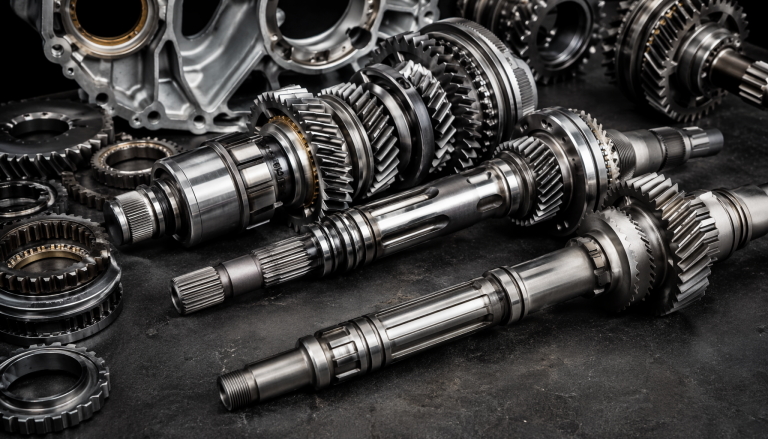
Heat treatment isn’t a coating, but it’s a surface finishing step in every practical sense. Through-hardening, induction hardening, and carburizing all change how the shaft surface behaves under load. Induction hardening is especially common on shafts that need a hard, wear-resistant surface with a tough, shock-absorbing core — think spline shafts and gear shafts.
The sequence matters. We machine, heat treat, then grind. Heat treatment distorts; grinding corrects. Skip the grind and you’re trusting a quenched shaft to hold tolerance — it rarely does. For shafts heading into fatigue-critical service, we also specify shot peening after hardening to compress the surface and extend life.
Black Oxide: The Economical Shield
Black oxide is a chemical conversion coating that adds negligible thickness — under 1 µm. It won’t change dimensions, which makes it ideal for shafts with tight fits where plating buildup is unacceptable. Corrosion resistance is modest compared to zinc or chrome, so we pair it with a rust-preventative oil for shafts stored or shipped before assembly.
It’s the default finish for internal shafts, fasteners, and components where appearance matters less than dimensional stability. Black oxide also reduces galling on sliding surfaces and provides a consistent dark appearance for assembled products.
Choosing the Right Finish
The right finish depends on the operating environment, the material, the tolerance budget, and the cost ceiling. Bearing journals demand grinding. Seal surfaces demand polishing. Outdoor and wet environments demand plating or anodizing. Internal, non-critical shafts are fine with black oxide.
If you’re weighing these decisions for a custom project, our buyer’s guide breaks down how finish choice affects lead time and cost. For specifications and capabilities, visit our precision shafts product page.
Frequently Asked Questions
What surface roughness (Ra) should a precision shaft have?
It depends on function. Bearing journals typically run Ra 0.4, sealing surfaces Ra 0.2–0.4, and general machined surfaces Ra 0.8–1.6. Mirror-finish applications go below Ra 0.1. The callout should match the mating component and operating conditions.
Does plating change shaft dimensions?
Yes. Zinc and nickel add 5–25 µm per surface; hard chrome can add more. We machine undersized to compensate, and post-plate grinding restores exact tolerances on critical diameters. Black oxide adds negligible thickness and rarely requires adjustment.
When should I choose hard chrome over nickel plating?
Choose hard chrome when wear resistance is the priority — sliding contact, hydraulic rods, high-cycle linear motion. Choose nickel when corrosion resistance and uniform coverage matter more than surface hardness. Chrome is harder and more expensive; nickel is more versatile.
Can heat treatment and surface finishing be done on the same shaft?
Absolutely — it’s standard practice. We machine, heat treat, then grind to correct distortion and restore tolerance. Plating or black oxide follows grinding as the final step. The sequence is engineered so each operation corrects what the previous one disturbed.
Is black oxide enough for outdoor corrosion protection?
On its own, no. Black oxide provides minimal corrosion resistance. For outdoor or humid service, pair it with oil, or specify zinc plating, nickel, or chrome instead. Black oxide is best for indoor, controlled-environment components where dimensional stability outweighs corrosion risk.
Have more questions? Check our comprehensive FAQ page for quick answers about VOLCRIX capabilities, materials, tolerances, certifications, and global shipping.
Need custom precision shafts for your project? View our precision shafts manufacturing capabilities →