
NACS (Tesla) Charging Pin Manufacturing: Requirements and Process
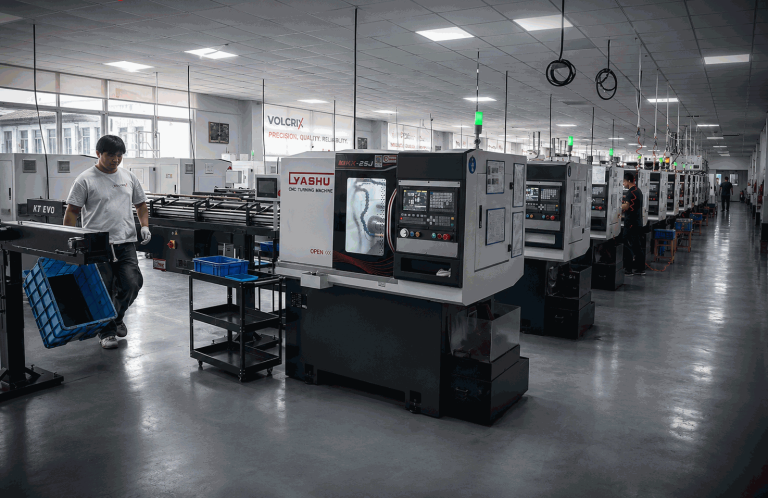
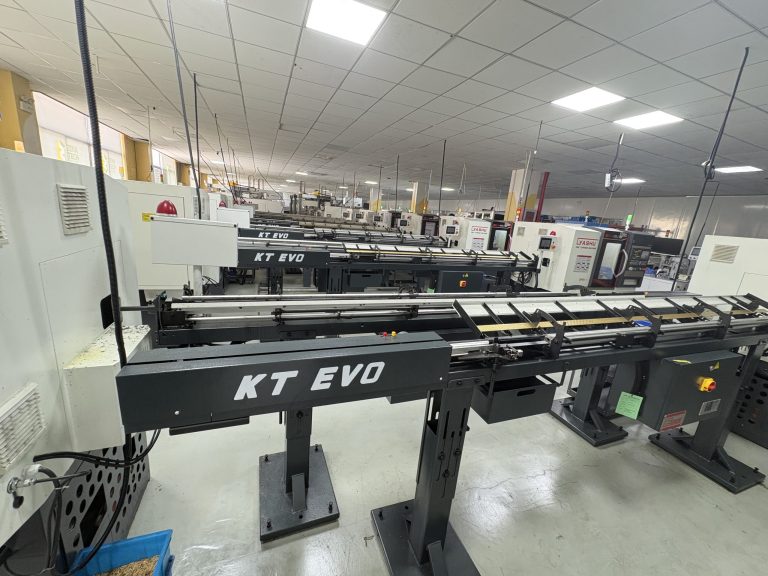
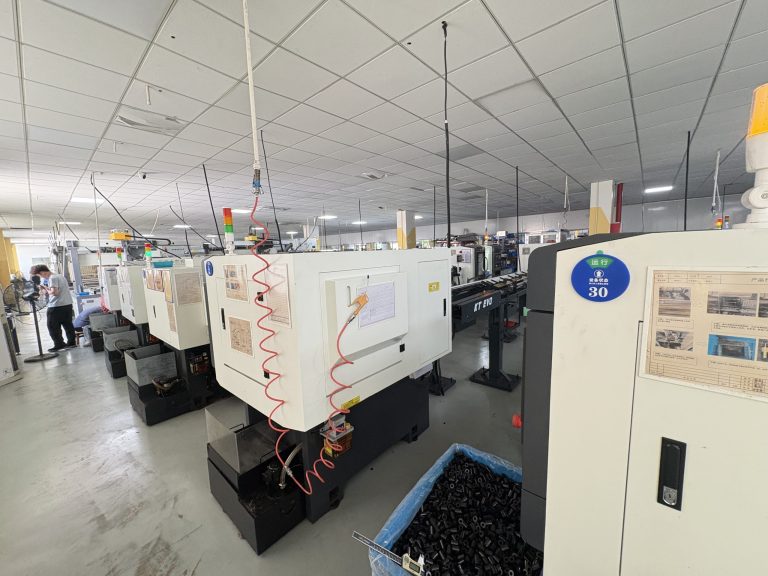
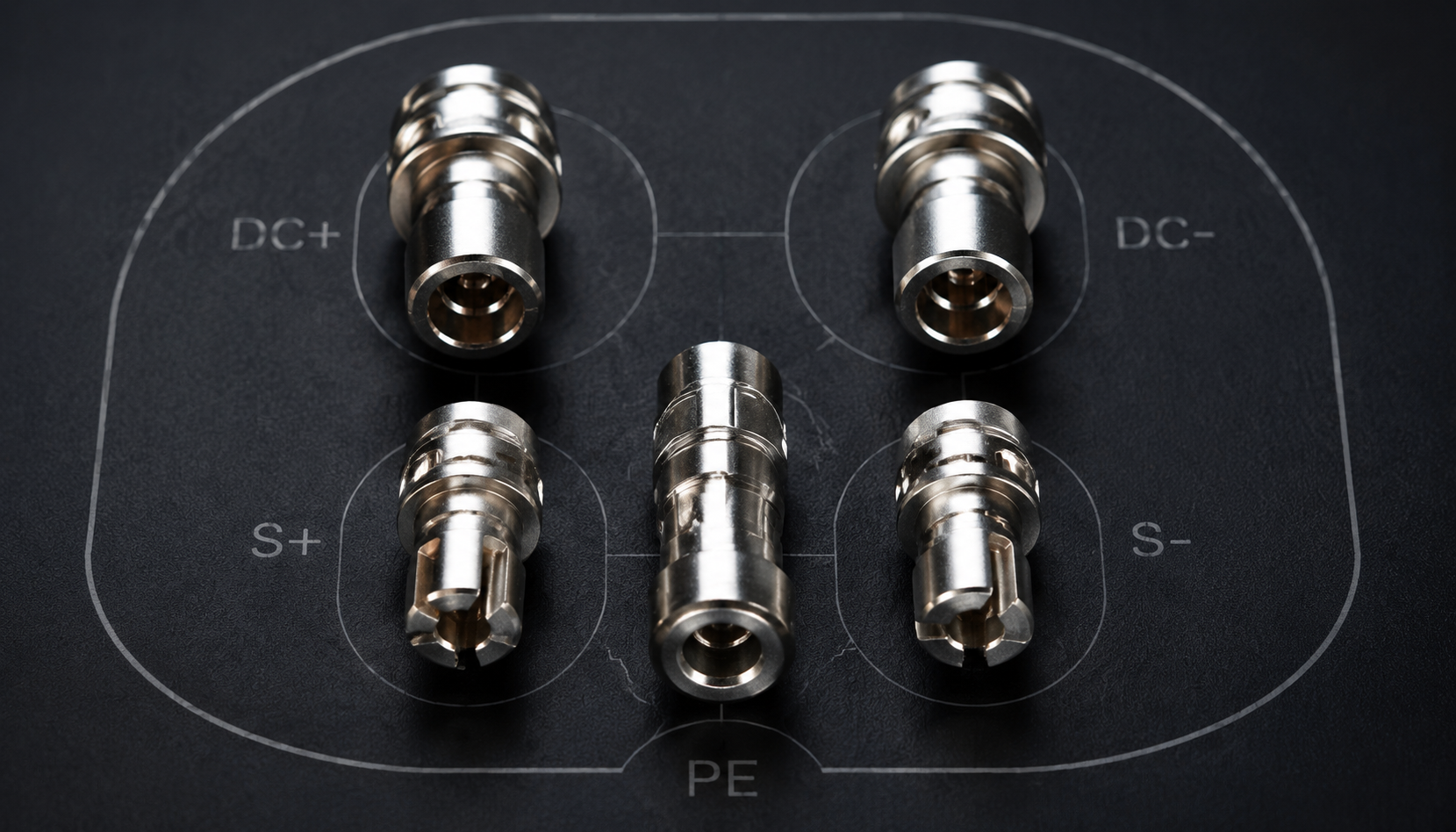
Direct answer: NACS (North American Charging Standard, formerly Tesla connector) was standardized as SAE J3400 in 2023. NACS charging pins are precision-machined electrical contacts designed for 500V AC and up to 1000V DC fast charging. VOLCRIX manufactures NACS charging pins on 60+ Japanese Star Swiss turning machines to ±0.01 mm tolerances from C18150 Cr-Zr copper with 3-5 µm silver plating, certified to SAE J3400 and UL 2251.
Ready to Start Your NACS Charging Pins Project?
Free DFM review · Quote within 24 hours · Prototype in 7–15 days
Common Applications
- NACS DC fast charging pins — for 250 kW to 350 kW DC fast charging stations deployed across North America (the former Tesla Supercharger network, opened to non-Tesla vehicles in 2024-2025)
- NACS AC charging pins — for 240V AC Level 2 home chargers and workplace charging stations, supporting 9.6 kW to 19.2 kW AC charging
- NACS vehicle inlet pins — for OEM automotive integration — Ford, GM, Rivian, Polestar, Volvo, Hyundai, and other manufacturers adopting NACS for 2025+ model year vehicles
- NACS adapter pins — for NACS-to-CCS1 adapters allowing CCS-equipped vehicles to charge at NACS stations during the multi-year transition period
- NACS charging connector components — for charging gun assemblies (handle pins, latch springs, signal contacts), station-side connector pins, and cable strain relief hardware
- NACS high-power charging pins — for emerging 800V-1000V vehicle architectures requiring higher current density pins with optimized thermal management
Manufacturing Support from VOLCRIX
- SAE J3400 standard compliance — pin geometry, current rating, mechanical keying, and electrical performance per the standardized NACS specification published by SAE International
- High-current copper alloy machining — C18150 chromium-zirconium copper for thermal stability at elevated temperatures (350+ kW continuous operation) and C11000 ETP copper for AC charging pins
- Tight tolerance Swiss turning — ±0.01 mm on pin diameter, ≤0.01 mm TIR concentricity, and Ra ≤0.8 µm contact zone surface finish verified on Zeiss CMM
- Silver plating with controlled thickness — 3-5 µm silver over 1-3 µm nickel strike, with X-ray fluorescence (XRF) verification per ASTM B568 and ASTM B700
- UL 2251 safety certification — dielectric withstand testing (2500-4000 VAC), insulation resistance (>100 MΩ), and temperature rise testing at rated current
Buyer Checklist
- Specify SAE J3400 standard on the drawing or PO — pin dimensions, current rating (typically 500V AC / 1000V DC), and mating cycle requirement (10,000+ cycles for high-cycle charging stations)
- Define current rating for the application — NACS supports up to 900A continuous for DC fast charging, requiring larger cross-section pins and high-conductivity alloys
- Specify plating specification — silver (3-5 µm) for high-current, gold over nickel for signal contacts, plus ASTM B117 salt spray rating (96h minimum, 240h-500h for outdoor installations)
- Confirm UL 2251 certification requirements — many North American charging station operators and OEMs require UL-listed charging components for insurance and regulatory compliance
- Indicate automotive IATF 16949 requirements for vehicle-side inlets — OEM automotive programs typically require IATF 16949 certification, PPAP submission, and full material traceability
Related Custom Manufacturing Services
- Custom EV Charging Pins — Type 2, CCS, NACS contact pins for electric vehicle charging
- Connector Pin Manufacturer Guide — complete guide for OEM buyers on connector pin selection
- Silver Plating for EV Charging Pins — why silver plating matters and how to specify
- EV Charging Pin Quality Control Testing — dimensional, surface, and electrical QC procedures
FAQ
What is NACS (formerly Tesla connector)?
NACS stands for North American Charging Standard. It was originally Tesla’s proprietary charging connector used in the Supercharger network. In 2023, Tesla released the design as an open standard, and it was standardized as SAE J3400 in 2023. Most major North American automakers (Ford, GM, Rivian, Polestar, Volvo, Hyundai, Honda) have committed to adopting NACS for 2025+ model year EVs. NACS supports both AC charging (240V) and DC fast charging (up to 1000V) in a compact 5-pin design.
How is NACS different from CCS (IEC 62196-3)?
NACS uses 5 pins (two power, two ground, one signal) while CCS Combo 1 uses 7 pins (two AC, two DC, two ground, one signal). NACS is mechanically smaller — about half the size of a CCS1 connector — allowing lighter, more flexible cables. NACS supports up to 1000V DC and 900A continuous current in the v3 Supercharger design, comparable to CCS2 high-power charging. The NACS standard SAE J3400 governs pin geometry, electrical performance, and mechanical keying.
What materials are used for NACS charging pins?
NACS pins are typically machined from C18150 chromium-zirconium copper (high current, high temperature stability) or C11000 ETP copper (lower cost, AC charging). Plating is silver (3-5 µm) for power contacts and gold over nickel for signal contacts. Pin diameter is typically 3.6 mm for power contacts. All materials comply with RoHS and REACH environmental requirements.
What is the difference between NACS and J3400?
NACS is the name of the standard (formerly Tesla connector). SAE J3400 is the standardized specification number published by SAE International in 2023. The two terms are often used interchangeably: NACS = SAE J3400 = North American Charging Standard. J3400 specifies pin geometry, current rating, mechanical keying, communication protocol, and certification requirements for NACS-compatible charging equipment.
What tolerances does VOLCRIX hold on NACS charging pins?
VOLCRIX holds ±0.01 mm on the pin outer diameter and ±0.05 mm on length. Concentricity is held to ≤0.01 mm TIR (total indicator reading) to ensure proper mating. Surface roughness on the contact zone is Ra ≤0.8 µm. All measurements are traceable to Zeiss CMM inspection per ISO 9001:2015 and IATF 16949 quality system requirements.
Can NACS pins be used with existing CCS charging stations?
No — NACS and CCS1 are mechanically incompatible. NACS uses a smaller 5-pin design, while CCS Combo 1 uses a larger 7-pin design. NACS-equipped vehicles need either NACS charging stations or NACS-to-CCS1 adapters. During the multi-year transition (2024-2026), most CCS-equipped vehicles use adapters to access the NACS Supercharger network, while NACS-equipped vehicles use adapters to access existing CCS stations.
Ready to Start Your NACS Charging Pins Project?
Free DFM review · Quote within 24 hours · Prototype in 7–15 days
Certifications, Standards & Compliance
VOLCRIX products are built to international standards and customer specifications:
- ISO 9001:2015 — Quality management system across all manufacturing processes
- IATF 16949 — Automotive quality management (replaces ISO/TS 16949)
- SAE J3400 — NACS (North American Charging Standard) for EV charging
- UL 2251 — Standard for plugs, receptacles, and couplers for EV charging
- IEC 62196-2 — Type 2 EV charging connector standard
- IEC 62196-3 — CCS (Combined Charging System) standard
- MIL-DTL-38999 — Military specification for circular electrical connectors
- IEC 60352-5 — Press-fit terminations for through-hole PCB connections
- SAE J1772 — SAE Electric Vehicle and Plug-in Hybrid Electric Vehicle Conductive Charge Coupler (predecessor to NACS for AC charging)
- ASTM B700 — Standard specification for silver plating
For specific compliance questions (RoHS, REACH, conflict minerals, country-of-origin), contact our sales team with your drawing and requirements.