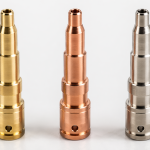

Connector Pin Manufacturer: A Complete Guide for OEM Buyers
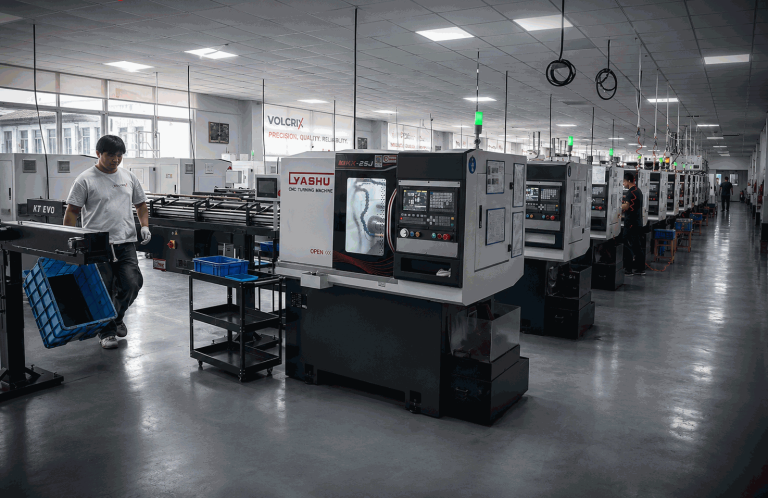
Direct answer: A connector pin manufacturer produces precision-machined electrical contacts for OEM connectors, charging systems, and electronic assemblies. VOLCRIX has manufactured connector pins since 1991 (35 years experience) on 60+ Japanese Star Swiss turning machines, holding ±0.01 mm tolerances on copper alloy pins (C11000, C18150, C36000) with silver, tin, gold, or nickel plating to IEC 62196-2, SAE J3400, and MIL-DTL-38999 specifications.
Ready to Start Your Connector Pins Project?
Free DFM review · Quote within 24 hours · Prototype in 7–15 days
Common Applications
- EV charging connector pins — Type 2 (IEC 62196-2), CCS (IEC 62196-3), and NACS (SAE J3400) charging pins for AC and DC charging guns, vehicle inlets, and charging stations up to 350 kW
- Aviation circular connector contacts — MIL-DTL-38999, MIL-DTL-26482, and ARINC 600 contact pins for cockpit avionics, in-flight entertainment, and engine control systems
- Industrial signal and power connector pins — Heavy-duty rectangular connector pins (Han, Harting-style), circular industrial connector pins (M12, M8, M23), and high-current modular contacts
- PCB headers and receptacles — Through-hole pin headers, press-fit pins compliant with IEC 60352-5 for PCB backplane connections, and shrouded header pins
- Battery contact pins — Coin cell battery contacts, cylindrical battery contacts (18650, 21700), and lithium-ion battery pack pin assemblies with gold or tin plating
- Test and pogo pin contacts — Precision spring-loaded test pins (pogo pins), spring test probes for ICT (in-circuit test) fixtures, and burn-in socket contacts
Manufacturing Support from VOLCRIX
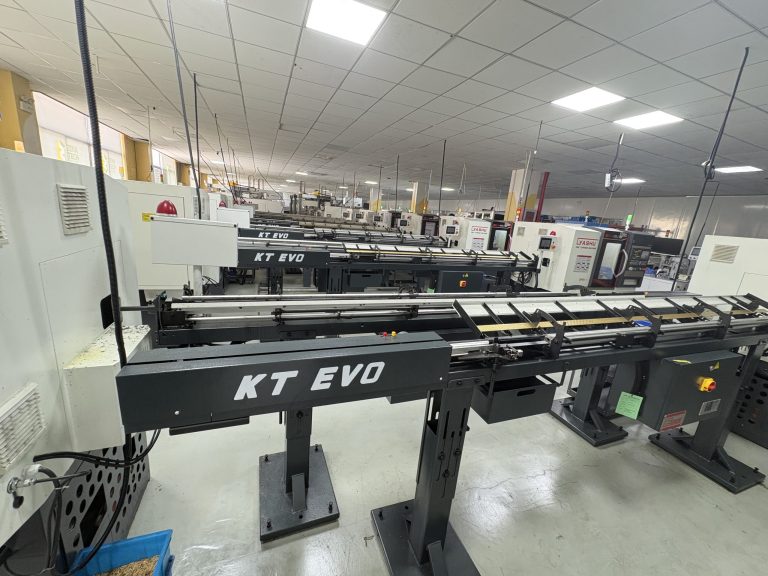
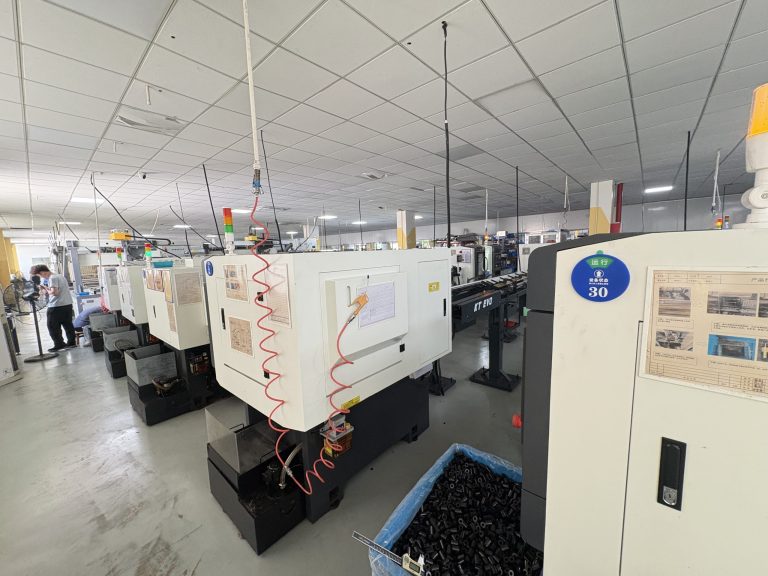
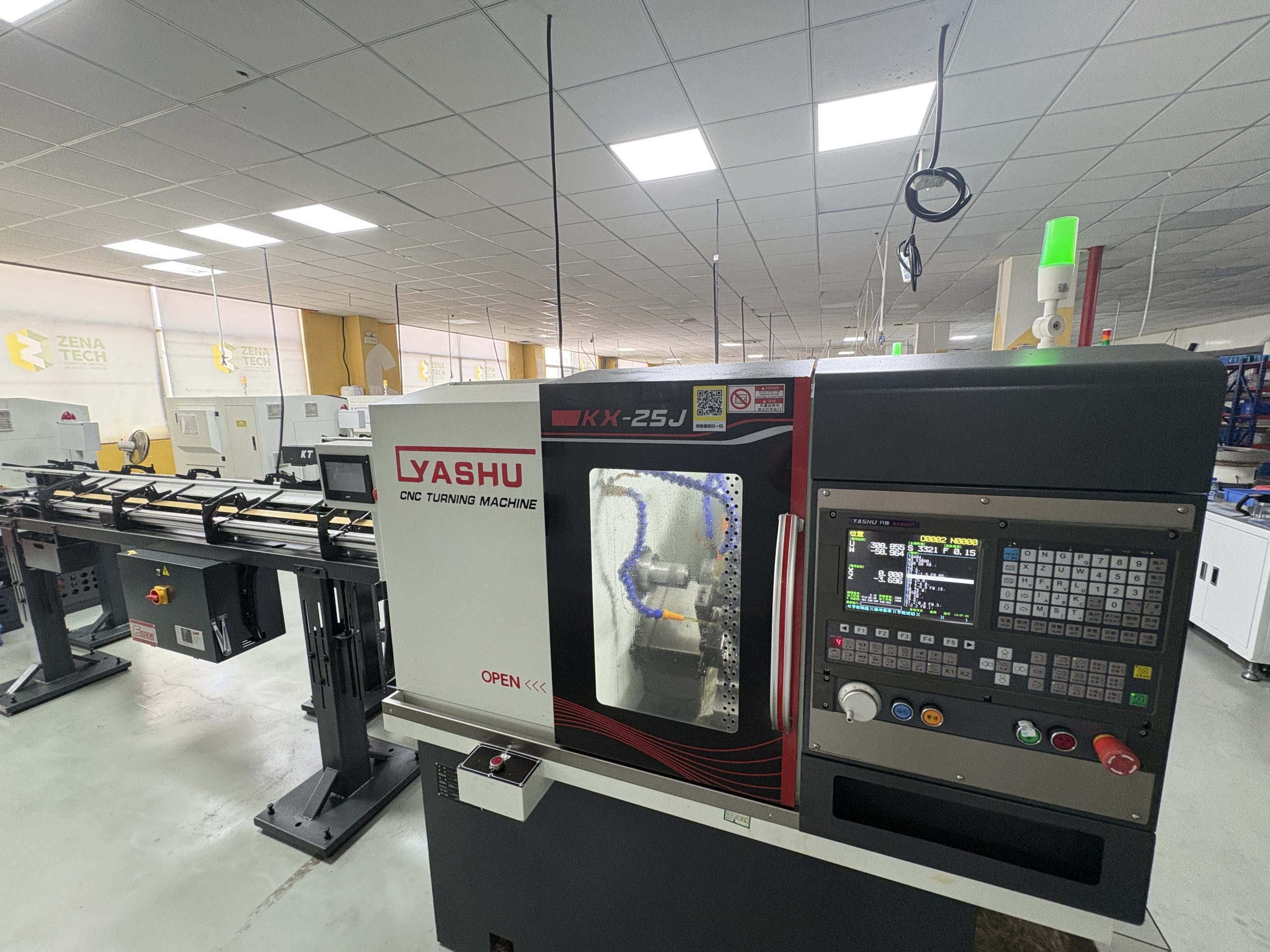
- 60+ Japanese Star Swiss turning machines with diameter range from 0.5 mm to 25 mm for high-precision connector pin production
- Tight tolerance machining at ±0.01 mm standard on critical diameters; ±0.005 mm achievable for premium applications with Zeiss CMM verification
- Copper alloy expertise — C11000 ETP copper for signal pins, C18150 chromium-zirconium copper for high-current pins, C36000 brass for low-cost terminals, and beryllium copper for spring-loaded contacts
- In-house plating coordination — silver (3-5 µm), tin (3-8 µm), gold over nickel (0.5-1 µm gold, 1-3 µm nickel), and selective plating options to optimize cost on contact zones
- Standards compliance to IEC 62196-2, IEC 62196-3, SAE J3400, UL 2251, MIL-DTL-38999, and IEC 60352-5 with full material traceability and FAI documentation
Buyer Checklist
- Specify material grade using UNS designations (e.g. C11000, C18150, C36000) — material selection drives conductivity, strength, plating compatibility, and unit cost
- Define critical-to-function dimensions — diameter with tolerance, length, concentricity (TIR), and surface roughness on the contact zone (typically Ra ≤0.8 µm)
- Confirm current rating for the application — higher current (above 80A continuous) requires larger cross-section and high-conductivity alloys like C18150 Cr-Zr copper
- Specify plating requirements — silver for high conductivity, tin for cost, gold for low-current signal reliability, plus plating thickness per ASTM B700 (silver) or ASTM B545 (tin)
- Indicate applicable connector standard — IEC 62196-2, SAE J3400, MIL-DTL-38999, etc. — and mating cycle requirements (typically 10,000 cycles for EV charging, 500 cycles for aviation)
Related Custom Manufacturing Services
- Custom EV Charging Pins — Type 2, CCS, NACS contact pins for electric vehicle charging
- Custom Precision Shafts — Swiss turned shafts for motors, encoders, and sensor assemblies
- Custom Electronic Contact Pins — precision contact pins for electronics assemblies
- Press-Fit Terminals & Pins Guide — design and application guide for press-fit pins
FAQ
What is a connector pin and what does it do?
A connector pin is a precision-machined electrical contact that carries current or signal between two mating connector halves. Pins are typically Swiss turned from copper alloys (C11000 ETP copper, C18150 chromium-zirconium copper, or C36000 brass) and plated with tin, silver, or gold to control contact resistance and prevent corrosion. Diameter ranges from 0.5 mm to 25 mm with tolerances of ±0.01 mm.
What materials are commonly used for connector pins?
Copper alloys dominate due to high electrical conductivity. C11000 ETP copper is the most common. C18150 Cr-Zr copper is used for high-current applications requiring strength at elevated temperatures. C36000 brass is used for low-cost signal pins. Stainless steel (303, 304) is used where corrosion resistance matters more than conductivity. Beryllium copper is used for spring-loaded contacts.
How do I specify a connector pin on a drawing?
Specify: (1) material grade (e.g. C18150 per UNS designation), (2) critical diameters with tolerances (e.g. Ø3.00 ±0.01 mm), (3) length (e.g. 25.0 ±0.1 mm), (4) plating specification (e.g. silver 2-4 µm per ASTM B700), (5) concentricity (e.g. ≤0.01 mm TIR), (6) surface roughness (e.g. Ra ≤0.8 µm on contact zone), (7) applicable standard (IEC 62196-2, MIL-DTL-38999, etc.).
What is the typical tolerance on a Swiss turned connector pin?
VOLCRIX holds ±0.01 mm on critical diameters and ±0.005 mm on premium applications. Concentricity is held to ≤0.01 mm TIR. Length tolerance is typically ±0.05 mm for pins under 50 mm, ±0.1 mm for longer pins. All measurements are traceable to Zeiss CMM inspection.
What plating should I specify for EV charging connector pins?
Silver (3-5 µm) is the standard for high-current EV charging pins — best conductivity and lowest contact resistance. Tin (3-8 µm) is used for cost-sensitive applications but has lower conductivity and a risk of tin whiskers over time. Gold (0.5-1 µm) over nickel is used for low-current signal pins requiring long-term reliability. UL 2251 governs EV charging plug/receptacle safety requirements.
What is the difference between male pins and female sockets?
Male pins are solid cylindrical contacts that insert into female sockets. Female sockets have spring fingers that grip the male pin. Sockets require tighter forming tolerances and are typically made from beryllium copper or C18150 Cr-Zr copper for spring properties. Both can be Swiss turned and plated — pin design depends on current rating, mating cycles, and the connector standard.
Ready to Start Your Connector Pins Project?
Free DFM review · Quote within 24 hours · Prototype in 7–15 days
Certifications, Standards & Compliance
VOLCRIX products are built to international standards and customer specifications:
- ISO 9001:2015 — Quality management system across all manufacturing processes
- IATF 16949 — Automotive quality management (replaces ISO/TS 16949)
- IEC 62196-2 — Type 2 EV charging connector standard
- IEC 62196-3 — CCS (Combined Charging System) standard
- SAE J3400 — NACS (North American Charging Standard) for EV charging
- UL 2251 — Standard for plugs, receptacles, and couplers for EV charging
- MIL-DTL-38999 — Military specification for circular electrical connectors
- IEC 60352-5 — Press-fit terminations for through-hole PCB connections
- ASTM A240 — Standard specification for chromium and chromium-nickel stainless steel plate
- DIN 17440 — German standard for stainless steel wire and strip
For specific compliance questions (RoHS, REACH, conflict minerals, country-of-origin), contact our sales team with your drawing and requirements.