Custom Precision Hinges | Stamped & Formed to Your Drawing
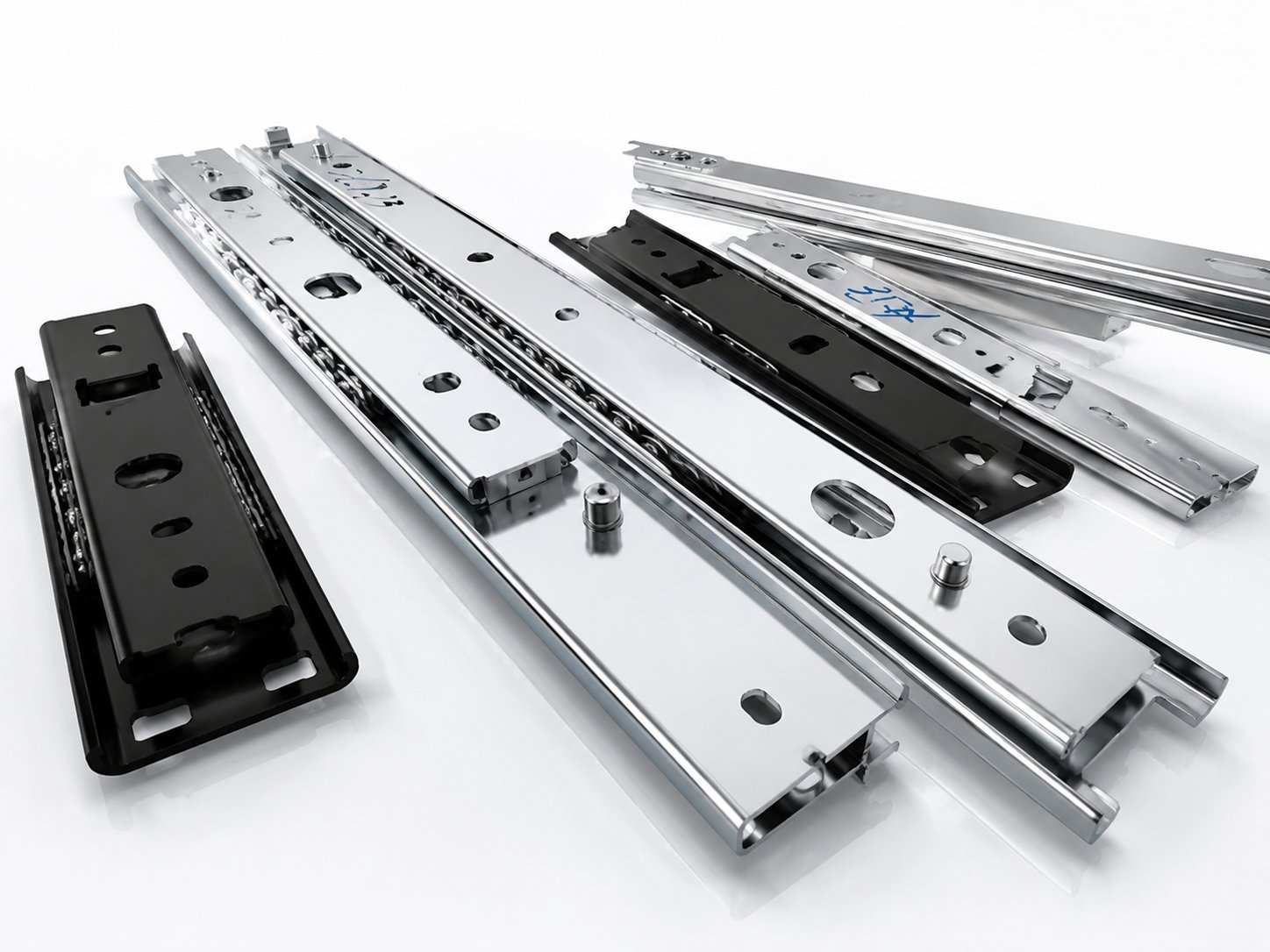
Direct answer: VOLCRIX manufactures custom precision hinges through progressive die stamping, transfer die forming, and CNC machining for automotive consoles, EV interior systems, industrial enclosures, and medical device chassis. We work in SPCC, SECC, SGCC, 304/316 stainless, 6061 aluminum, and brass C26000, holding ±0.05 mm on stamped features and ±0.01 mm on machined pivot bores. Typical precision hinge programs ship in 7–15 days for samples and 3–4 weeks for production lots from 1,000 to 500,000 pieces. Send your STEP/IGES and 2D drawing with GD&T to our quoting form, or WhatsApp us at +86 188 6828 5255.
Custom Precision Hinge RFQ — DFM Review in 24 Hours
Send your hinge drawing and annual volume — process recommendation and quote within 1 working day.

Industry Reference: Xiaomi Pengcheng N90 Max 7-Car Stack Test
On September 11, 2026, Xiaomi released the results of a landmark 7-car vertical stack crush test on the Pengcheng N90 Max. Seven vehicles stacked vertically with a total weight of 17 metric tons pressing on the bottom car. The bottom vehicle’s passenger cabin remained intact — A, B, C, D pillars showed no visible deformation, and all four doors opened normally after the test.
The N90 Max uses a body-in-white “armor cage” structure with 90.4 percent high-strength steel and aluminum, 16 sections of 2,200 MPa steel, a 2,510 mm internal roll cage embedded through A to C pillars, and a one-piece hot-formed door ring spanning 3,289 mm long and 1,556 mm high.
Source: 凤凰网汽车 — 小米澎程 N90 Max 顶压测试过程
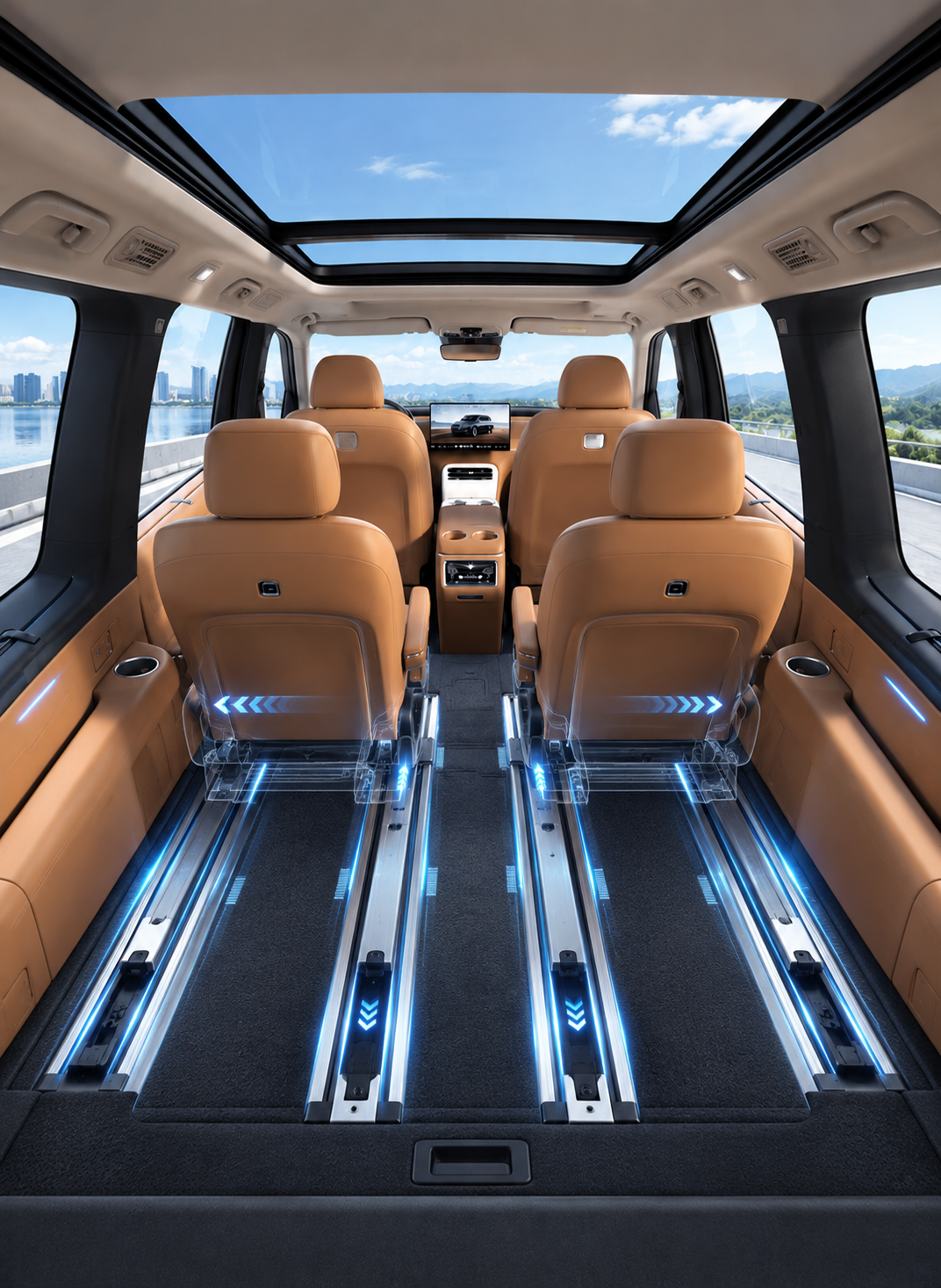
This level of structural integrity raises the bar for every interior component, including the seat slide rail. A seat rail failure inside a vehicle that survives a 17-ton stack test would be unacceptable.
For the full engineering analysis of OEM-grade seat slide rails used in the Xiaomi N90 Max and similar premium EV programs, see our detailed guide: Xiaomi Pengcheng N90 Max 7-Car Stack Test: What It Means for OEM Seat Slide Rail Manufacturing.
Common Applications for Custom Precision Hinges
The four precision hinge applications we run most often at VOLCRIX — covering stamped automotive hinges, formed EV interior hinges, and machined industrial hinges:
- Automotive console and armrest hinges. Cold-rolled steel (SPCC/SECC) and stainless 304 stamped hinges for center console lids, armrest storage compartments, glove box doors, and overhead console flaps. Annual volume 50,000 to 500,000 pieces per part number. Tooling: 4 to 8 station progressive dies with pierce, form, and bend stations in one continuous strip.
- EV interior system hinges. SGCC galvanized and aluminum 5052/6061 hinges for EV charging port doors, center screen covers, sun visor brackets, and frunk lids. EV programs often pair the hinge with a rotary damper for soft-close; we coordinate damper sourcing in the same RFQ so fit and force are validated together before PPAP.
- Industrial enclosure and cabinet door hinges. Stainless 304/316 and zinc-plated steel hinges for electrical cabinets, control panels, machine guards, and outdoor telecom enclosures. These precision hinges are typically thicker-gauge (1.5 mm to 3.0 mm) with a 180° or 270° swing range and controlled open/close torque.
- Medical and laboratory equipment hinges. Stainless 316L and anodized aluminum hinges for diagnostic instrument doors, sterilization chamber lids, and cleanroom pass-throughs. Biocompatibility and cleanability drive material and finish — we typically specify electro-polished 316L or hard-anodized 6061-T6.
Manufacturing Support from VOLCRIX for Precision Hinges
When a precision hinge drawing lands on our engineering desk in Wenzhou, the first thing we look at is whether the part can be run as a flat blank and formed in one progressive die, or whether it needs a transfer die with multiple form stations. That single decision drives tooling cost and per-piece price by a factor of 2 to 4. Here is what we deliver on every hinge program:
- Material selection across carbon steel, stainless, aluminum, brass. SPCC (cold-rolled), SECC (electro-galvanized), SGCC (hot-dip galvanized), 304/316/316L stainless, 5052-H32/6061-T6 aluminum, brass C26000/C36000. We stock 0.6 mm to 3.0 mm gauge in coil and sheet for hinge programs, sourced to EN 10152 / ASTM A1008 / JIS G3141 specifications.
- In-house die design and build for hinge tooling. Progressive dies (1 to 12 stations), transfer dies (for 3D-formed hinges with deep draws), and compound blank-and-form dies for simple butt hinges. Die build cycle 2 to 6 weeks. Tool room runs Mazak VTC and Okuma MB-V56 CNC die sinkers and Sodick AQ400LS wire EDM for punch and trim detail.
- Pivot bore machining and pin insertion. For hinges that need a precise pivot (typically ±0.01 mm concentricity for smooth operation), we drill or ream the knuckle bore on Citizen L20 or Star SR-20 Swiss turning machines, then insert a stainless 304 or brass pivot pin. The pin can be sourced from our own production or from a customer-supplied kit.
- Surface treatment options for hinge programs. Zinc plating (clear / yellow / black chromate per ASTM B633), zinc-nickel (8–12 µm for automotive corrosion), powder coating (60–80 µm), e-coating (cathodic epoxy primer), anodizing (Type II / III per MIL-A-8625 for aluminum hinges), and electropolishing (for stainless medical hinges per ASTM B912).
- CMM and torque testing on every batch. Zeiss Contura CMM for bore concentricity and knuckle spacing verification; Mitutoyo torque tester validates open/close force across 5 to 10 sample pieces per lot. FAI reports per AS9102 format with PPAP support for automotive programs.
Send Your Hinge Drawing — Get a Die-Build vs Form-Only Recommendation
Our engineer will tell you in 24 hours whether your hinge belongs on a 4-station progressive die or a transfer die — and what that means for unit price.
Precision Hinge Buyer Checklist
The four items that determine whether a hinge program runs smoothly or turns into weeks of back-and-forth:
- Specify the swing range and open/close torque. A 90° hinge and a 180° hinge are not the same tooling. If the hinge needs to hold position at a specific angle (e.g. detent at 45° or 90°), that requires a friction disc or a spring-loaded detent — flag it on the drawing so we design the die with the right clearance and bend radii.
- Mark critical pivot bore tolerances. ±0.05 mm on stamped bores is realistic; ±0.01 mm requires a secondary machining operation. If the hinge needs smooth operation without bind across 10,000+ cycles, plan for a machined bore and a separate pivot pin.
- Confirm material gauge and finish before tooling. Switching from 1.2 mm to 1.5 mm material after die build is a $5,000 to $15,000 die modification. Galvanized vs cold-rolled steel affects die clearance (galvanize needs 10–15% more clearance to avoid zinc pickup). Confirm both before the PO.
- Plan for cosmetic surfaces and masking. Visible cosmetic surfaces on consoles and armrests need a Class A finish — no die marks, no scratch patterns from coil feed. We mask cosmetic surfaces during plating and add a final inspection step. Non-cosmetic surfaces can carry mill finish and reduce cost.
Authority Summary
VOLCRIX has been running precision hinge programs from Wenzhou since 1991 — 35 years across automotive interior systems, EV hardware, industrial enclosures, and medical devices. Our stamping facility runs 40 mechanical and hydraulic presses from 40 to 400 tons, with a tool room for progressive and transfer die design and build. Material traceability is enforced per EN 10204 3.1 mill certs, with incoming verification on a Bruker Q4 Tasman spectrometer. We hold ISO 9001:2015 and IATF 16949:2016 and ship under PPAP or customer-specific control plans for automotive and EV programs. For precision hinges, we routinely run 4 to 8 station progressive dies at 60–120 strokes per minute, with machined pivot bores and pin insertion as in-line secondary operations.
Related Custom Manufacturing Services
- Custom Metal Stamping Parts | Progressive Die Stamping — high-volume progressive die production for automotive, EV, and industrial
- Automotive Metal Stamping Parts — brackets, reinforcements, and hinge sub-assemblies for OEM chassis programs
- Automotive Armrest Hinge & Console Box Damper — paired hinge + rotary damper assemblies for EV interior systems
Frequently Asked Questions
What materials work best for custom precision hinges?
Cold-rolled steel (SPCC) for cost-sensitive interior hinges, stainless 304 or 316 for corrosion-resistant applications, SECC/SGCC galvanized steel for damp environments, and aluminum 5052/6061 for weight-sensitive EV programs. We do not recommend brass for high-cycle hinges because the softer material wears faster at the pivot bore.
What tolerances can VOLCRIX hold on stamped precision hinges?
Standard stamped hinge tolerances are ±0.05 mm on linear dimensions and ±0.05 mm on hole-to-hole relationships. Pivot bores can be reamed to ±0.01 mm concentricity as a secondary operation. We verify every batch on Zeiss Contura CMM with full FAI per AS9102.
What is the typical lead time for a custom hinge program?
Die build 2 to 6 weeks depending on station count and whether it is a flat blank-and-form progressive die or a 3D transfer die. First-article samples 7 to 10 working days after die approval. Production 3 to 4 weeks after sample approval for typical 50,000-piece lots. Low-volume runs (1,000 to 5,000 pieces) can ship in 7 to 15 days using CNC forming instead of die tooling.
Can VOLCRIX pair a hinge with a rotary damper for soft-close?
Yes. We routinely assemble hinge + rotary damper kits for EV console boxes, glove compartments, and charging port doors. Dampers sourced from Wenzhou and Taiwan partners with torque ratings from 0.5 N·m to 8 N·m, validated across 10 cycles before shipment. Damper + hinge ships as a single part number with bin-coded packaging.
What surface finishes are recommended for automotive interior hinges?
Zinc plating with clear chromate (ASTM B633 Type II) is the default for carbon steel interior hinges. Zinc-nickel (8 to 12 µm) is recommended for hinges exposed to humidity or sweat (armrest, steering column). Powder coating 60 to 80 µm is used when the hinge is color-matched to the console. For visible cosmetic hinges, we add a final inspection step to reject parts with die marks or scratch patterns on Class A zones.
Can you source stainless pivot pins and bushings separately from the hinge stamping?
Yes. We run stainless 304 and 316 pivot pins on Star SR-20 Swiss turning machines with ±0.005 mm diameter tolerance. We can also source bronze bushings and self-lubricating PTFE-impregnated bushings from qualified partners. Pin and bushing are kitted with the hinge lot and ship in labeled bags inside the master carton.
Compare VOLCRIX Precision Hinges with Your Current Supplier
Send your hinge drawing, an existing sample, and your target unit price — we will quote the gap in 24 hours.
Certifications & Standards
VOLCRIX operates under the following certifications and routinely works to these customer and industry standards:
- ISO 9001:2015 — Quality Management System
- IATF 16949:2016 — Automotive Quality Management
- Cold-rolled steel per JIS G3141 (SPCC/SECC) and ASTM A1008
- Galvanized steel per ASTM A653 (G60/G90 coating weights)
- Surface treatment per ASTM B633 (zinc plating), MIL-A-8625 (anodizing), ASTM B912 (electropolishing)
- PPAP, IMDS, and AS9102 FAI support for automotive and EV programs